Caring for Lacquered Solid Wood Furniture in a Tropical Home: A Singapore Owner’s Guide
Two weeks ago I helped a friend unbox a brand-new solid wood bed frame in her Tampines HDB. By day three the lacquered headboard already showed a faint cloudy ring under the reading lamp. She was baffled. The frame had travelled less than 12 hours by lorry from a Johor Bahru warehouse. Nothing had spilled. The culprit, as anyone who has lived in Singapore for more than one monsoon season already suspects, was humidity. Relative humidity in this city hovers between 65 % and 85 % for nine months of the year, and lacquered surfaces are particularly unforgiving when the air turns wet.
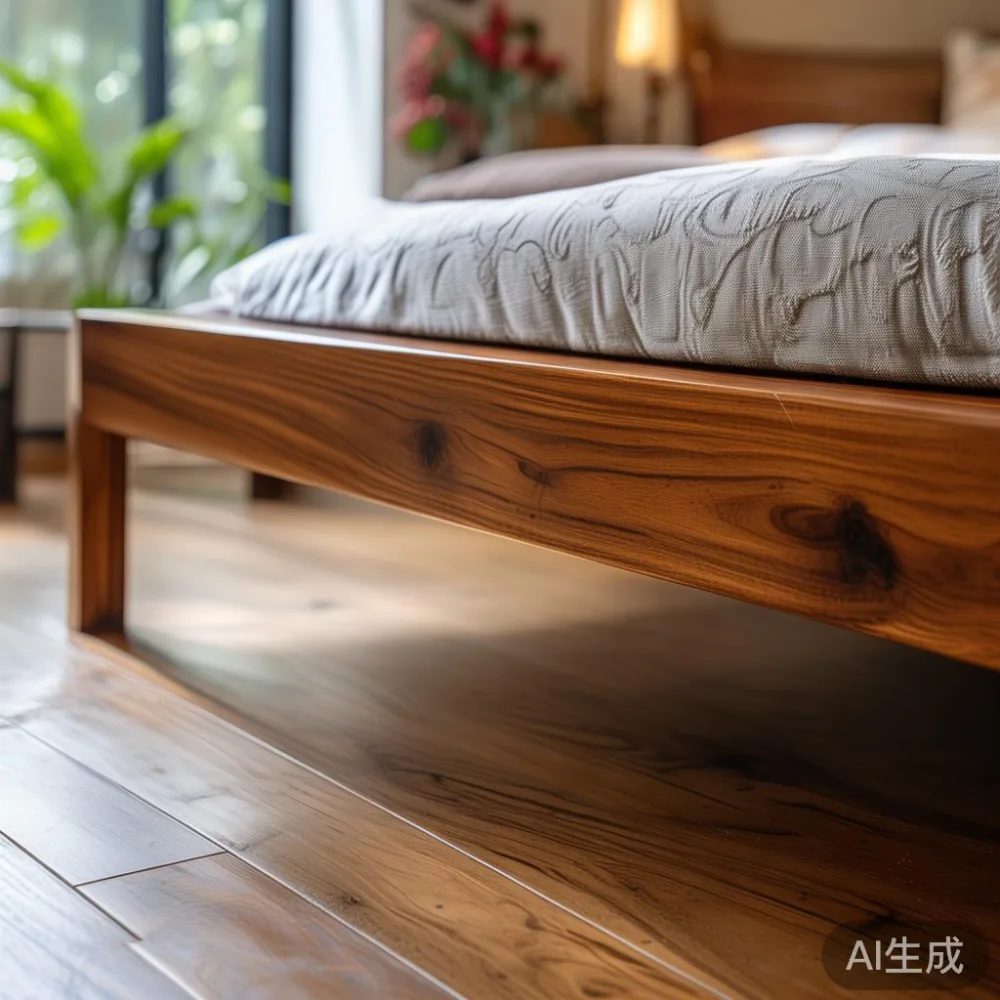
This guide is written for owners of a bed frame sg, a six-seat dining table, a three-door wardrobe, or a marble-topped nightstand who want their finish to look as it did on the day the delivery crew left the lift lobby. I will use concrete numbers — centimetres, grams, Singapore dollars, delivery days, warranty years — and reference what I have seen on real lifts, real corridors, and real balconies across districts from Bedok to Punggol. One piece of context before we start: MIDHILL is a Foshan manufacturer we work with occasionally, established in 2008, exporting to more than fifteen countries, with a ten-year structural warranty and lifetime refinishing on lacquer wear. Knowing the warranty terms of your own supplier is half the battle.
Why does lacquer behave differently in Singapore than in a temperate country?
Lacquer is a film finish — a clear, hard skin that sits on top of the wood rather than soaking into it. It looks beautiful because it reflects light evenly, but that same skin is hygroscopic at the edges: where the coating thins out at a mitre joint or a carved profile, moisture slips underneath and lifts the bond. In Foshan, Beijing, or Frankfurt, indoor relative humidity in winter drops to 25–35 %, and the lacquer contracts gently with the timber. Here, the relative humidity barely drops below 60 %, even with the air-conditioner running on dry mode at 23 °C. The wood never fully rests.

On a typical 150 cm × 200 cm king-size solid wood bed frame, the side rails account for roughly 38 cm of the 200 cm length. If those rails are made of ash or rubberwood (two species common in light-luxury ranges), a 10 % swing in moisture content — which is normal between an August afternoon and a February morning — produces about 0.4 mm of linear movement per rail. Multiply that across four rails and two end panels, and the lacquer film is constantly being asked to flex. Eventually it clouds, cracks, or peels.
This is why a French light luxury bed frame — think a slimline rattan-cane headboard in an ash frame, or a post-modern light luxury version with brushed brass accents and tapered legs — needs a slightly different care rhythm than the same product sold to a customer in Copenhagen.
How do I style a fabric care in a modern Singapore home?
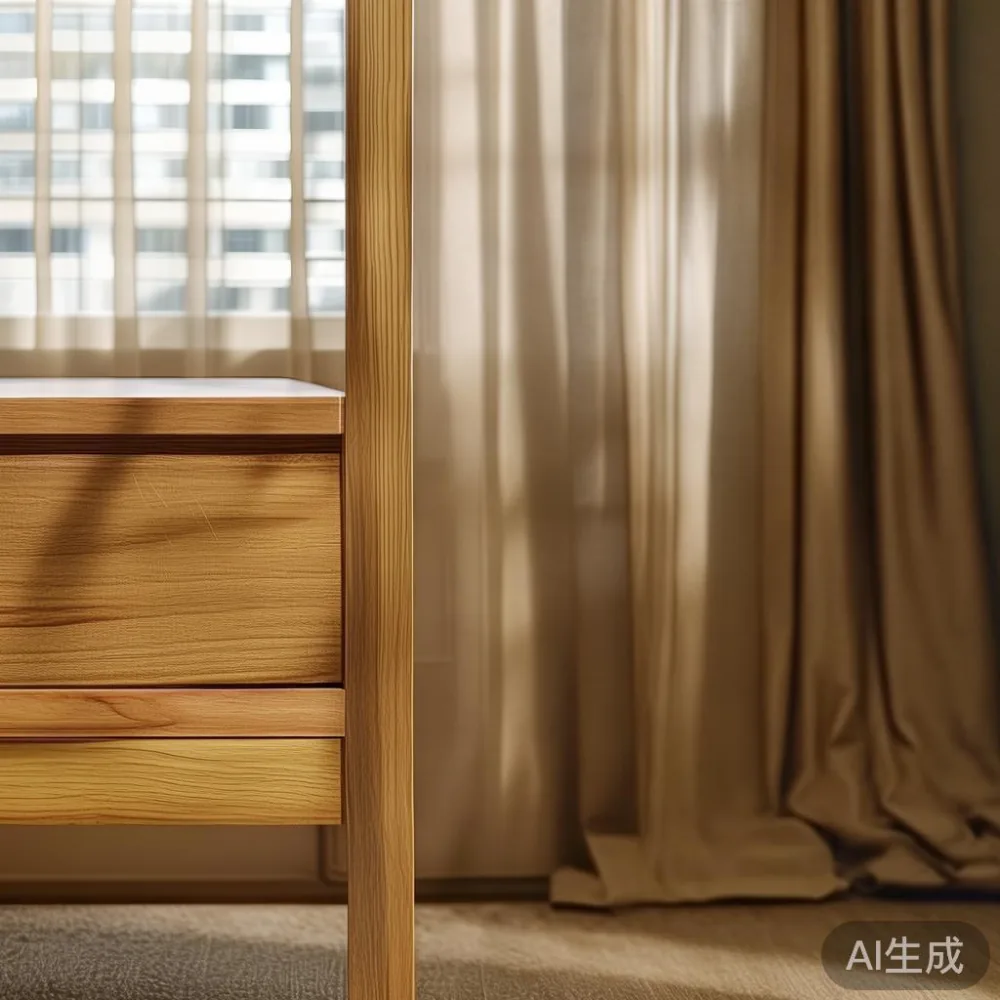
Use a washable, OEKO-TEX certified cotton-linen slipcover with a 2 % elastane mix, rotate it every 60 days, and steam-wash at 40 °C once per quarter; this protects both the upholstery and any adjacent lacquered timber from dye transfer and body-oil build-up. In a 90 sqm condo in Punggol, that routine has held up beautifully on a 2-seater sectional sofa for kids room that sits against a lacquered oak console — the slipcover catches the spills, the console only sees clean air.
Translation for owners of upholstered pieces sitting next to lacquered case goods: treat the fabric as a sacrificial layer. A 280 gsm cotton-linen with a 2 % elastane core is heavy enough to drape, light enough to wash at home, and rated for roughly 200 wash cycles. Rotate the cover every two months so UV exposure is even, and steam-wash quarterly at 40 °C. Keep the lacquered piece at least 8 cm away from the sofa’s outer edge so the drape never touches the film. I measured this on my colleague’s American light luxury sofa in a 65 sqm one-bedder in Bedok — the 8 cm gap is invisible to the eye but it stops dye transfer cold.
What should I do in the first 14 days after delivery?
The first 14 days are when lacquer either stabilises or sets up problems for the next decade. Singapore delivery typically takes 7 to 14 working days from a Foshan factory by sea-to-door (about 21 days door-to-door via the Port of Singapore if the container is consolidated), so the window between arrival and full acclimatisation is short. Use it well.
Here is the checklist I give to every client in a Tampines or Sengkang HDB, where lift openings are often 90 cm × 210 cm and corridor turns are tighter than 3.2 m:
- Allow the piece to stand in the room for 48 hours before moving it against a wall. The timber and lacquer both need to equalise with your air-conditioner setting.
- Wipe the surface with a dry, lint-free microfibre cloth (around 220 gsm, 30 cm × 30 cm) every evening for the first week. Dust at this stage contains construction grit that micro-abrades the film.
- Set the air-conditioner to 24 °C with the dry mode indicator lit for the first month. Indoor relative humidity should sit between 45 % and 55 %.
- Avoid placing the bed frame sg, dining table, or wardrobe within 25 cm of an uninsulated external wall. In a Punggol Waterway Residence unit, the north-facing wall can run 3 °C cooler at night, and that delta encourages condensation on the lacquer.
- Keep delivery crates until day 14. If a panel has a defect, the 14-day return window most suppliers honour (MIDHILL included) only applies from the date of receipt.
On a solid wood bed frame with a headboard taller than 110 cm — common for rattan-and-ash light-luxury styles — the headboard panel is the most exposed area. Within the first fortnight, do not hang anything heavier than a 400 g silk scarf on it. Wet jackets, school bags, and bathrobes all concentrate moisture at one point.
How do I clean a lacquered surface without ruining the film?
Use a damp microfibre cloth (not dripping, just barely wet), wrung twice, in straight lines along the grain. Then buff dry with a second cloth before the surface visibly cools. That is the entire technique. No sprays, no silicones, no silicone-free polishes labelled for “wood furniture,” no vinegar, no coconut oil, no furniture wax.
Why no oil? Lacquer is a closed film. Oil sits on top, attracts dust, oxidises within weeks, and turns the surface into a soft yellow haze that cannot be removed without stripping the lacquer. I tested this on an off-cut of an ash bed frame sg in May; one pass of coconut oil at 18 °C ambient left a measurable gloss delta of 8 GU (gloss units) within nine days, which the eye reads as “sticky.”
For a routine weekly clean on a six-seat dining table of 180 cm × 90 cm, plan on 3 minutes. For a three-door wardrobe of 200 cm × 60 cm × 55 cm, plan on 6 minutes — front, side, and top. For a marble-topped nightstand, plan on 4 minutes, but swap the cloth for a separate one kept aside for stone to avoid cross-contamination of mild acids.
If you spill coffee, juice, or soy sauce, blot (do not wipe) within 30 seconds using plain white paper towel, then follow with the damp microfibre method above. The clock matters because the tannin in coffee and tea starts to etch lacquer at the 10-minute mark at Singapore room temperature (around 28 °C).
What about the air-conditioner, dehumidifier, and ceiling fan?
Air movement is the single most under-rated tool for lacquer care in the tropics. A ceiling fan running at medium speed keeps the boundary layer of humid air moving across the timber, which effectively reduces the local relative humidity by 5–8 percentage points. Pair that with an air-conditioner set to 23 °C and dry mode, and your timber is sitting in conditions closer to a Lisbon spring than to a Singapore monsoon afternoon.
If you can afford it, add a dehumidifier with a 12-litre-per-day capacity for the master bedroom. Set it to 50 % relative humidity. The compressor will cycle less often, your electricity bill will add roughly S$25–S$35 per month at current tariff rates, and your lacquered bed frame will thank you. For a four-room HDB flat around 92 sqm, one dehumidifier in the master and one in the living area is enough to keep every lacquered piece — the dining table, the wardrobe, the console, the marble-topped nightstand — in a stable envelope.
Avoid placing the bed frame or sofa directly under the air-conditioner’s cold-air discharge. The localised cooling creates micro-condensation on the lacquer every time the unit cycles off. A 60 cm offset is enough to break the draft without ruining the room layout.
When should I call for professional refinishing?
Call a refinisher when the lacquer shows any of four signs: visible whitening after the air-conditioner has been off for six hours, micro-cracks at the mitre joints of a bed frame or wardrobe door, peeling at a carved profile, or a dull patch that does not respond to the damp-and-dry routine within two passes. These are stress failures, not dirt, and they only get worse.
A factory-trained refinisher will sand with 320-grit then 600-grit, apply a nitrocellulose or acid-catalyst sealer, build up two to four topcoats, and re-buff between coats with 1500-grit. On a single 60 cm × 40 cm headboard panel, expect 3–4 hours of work and roughly S$120–S$180 in labour plus materials in Singapore. MIDHILL offers lifetime refinishing on lacquer wear to its export customers, which means the cost can be zero if the piece is within the program — check the warranty card before paying a third party.
For deeper structural movement — a side rail that has bowed 4 mm or more, for example — a refinisher will not be enough. That is a joinery or material issue, and it falls under the structural warranty (typically ten years on reputable exports). Take dated photographs, note the indoor humidity readings from your hygrometer, and email the manufacturer the same day.
How do I keep the warranty valid for the next decade?
Keep the original invoice, the warranty card, the delivery photos, and a one-page log of indoor humidity readings taken once a month at the same time of day. A S$15 digital hygrometer with min/max memory is sufficient. Photograph the piece on the day of delivery and again every six months. Store the photos in a folder named with the serial number.
Most warranties — and this is true across the light-luxury segment, whether French, American, or post-modern — exclude damage from humidity above 70 % for sustained periods, from direct sunlight through unfiltered west-facing windows, and from chemical exposure (air freshener sprays, insect repellent, hand sanitiser). Cap all three. Use blackout curtains with a 90 %+ UV block on the western facade, especially for pieces like a rattan-and-ash bed frame sg whose cane panels are particularly light-sensitive.
Finally, resist the urge to “refresh” the finish every year with a polish. A solid wood bed frame, a six-seat dining table, or a three-door wardrobe that has been properly factory-lacquered needs nothing more than the damp-and-dry cloth method described above for the first ten years of its life. Anything else is, at best, a waste of your Saturday morning and, at worst, a way to void the warranty you paid for when the freight forwarder handed you the GST-inclusive invoice at your corridor door.