How Singapore's Humidity Affects Solid Wood Furniture — And What to Do About It
I live on the 14th floor of a Tampines HDB, and last February I watched a friend in Punggol crack open the back panel of her two-year-old ash bed frame to find a thin line of white fuzz growing along the inner edge. The window had been closed for a week of Chinese New Year visiting. The dehumidifier was unplugged. Within nine days, that fuzz became a black stain she could not sand out. She paid S$2,400 for that bed frame; the replacement quote was S$1,900. That is the moment most Singapore owners stop treating humidity as a background concern and start treating it as the headline.
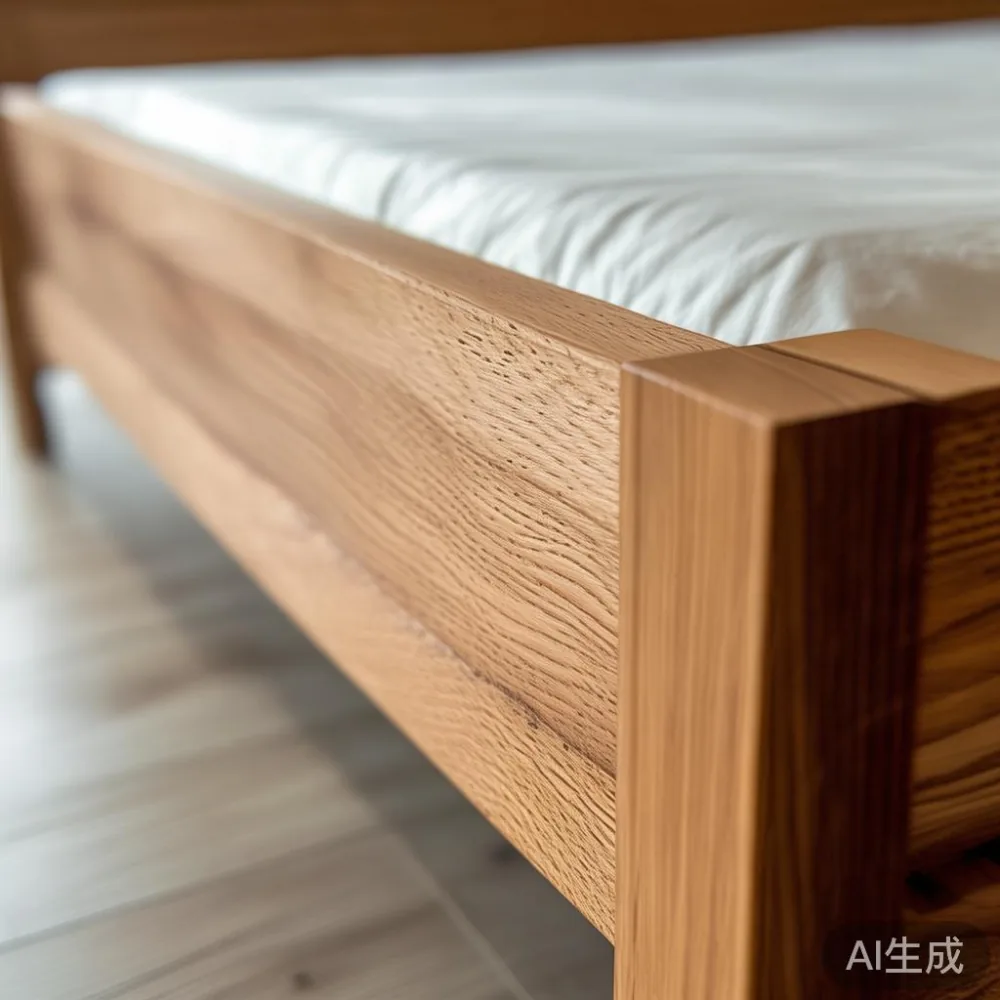
If you are shopping for a bed frame SG, a solid wood sofa, a dining table, a wardrobe, a nightstand, or a marble table, the air in your flat is already negotiating with your furniture before you finish unboxing it. This is a long, practical guide written from the workshop floor — what humidity does, why Southeast Asia is unusually punishing, what a light luxury brand like MIDHILL actually does to defend against it, and the exact habits that keep a S$3,800 oak piece looking new in year ten.
Why Singapore Humidity Is a Different Beast From Europe or North America
Singapore sits between 1° north of the equator, so the air never really dries out. The average relative humidity (RH) sits between 78% and 88% for most of the calendar year, and on a wet December night it can crawl past 92% in a non-air-conditioned HDB corridor. Indoor levels usually track outdoor levels within 5 to 8 percentage points unless you run a dehumidifier, which is why a Tampines walk-up corridor can read 84% RH while the living room behind the front door reads 81%.
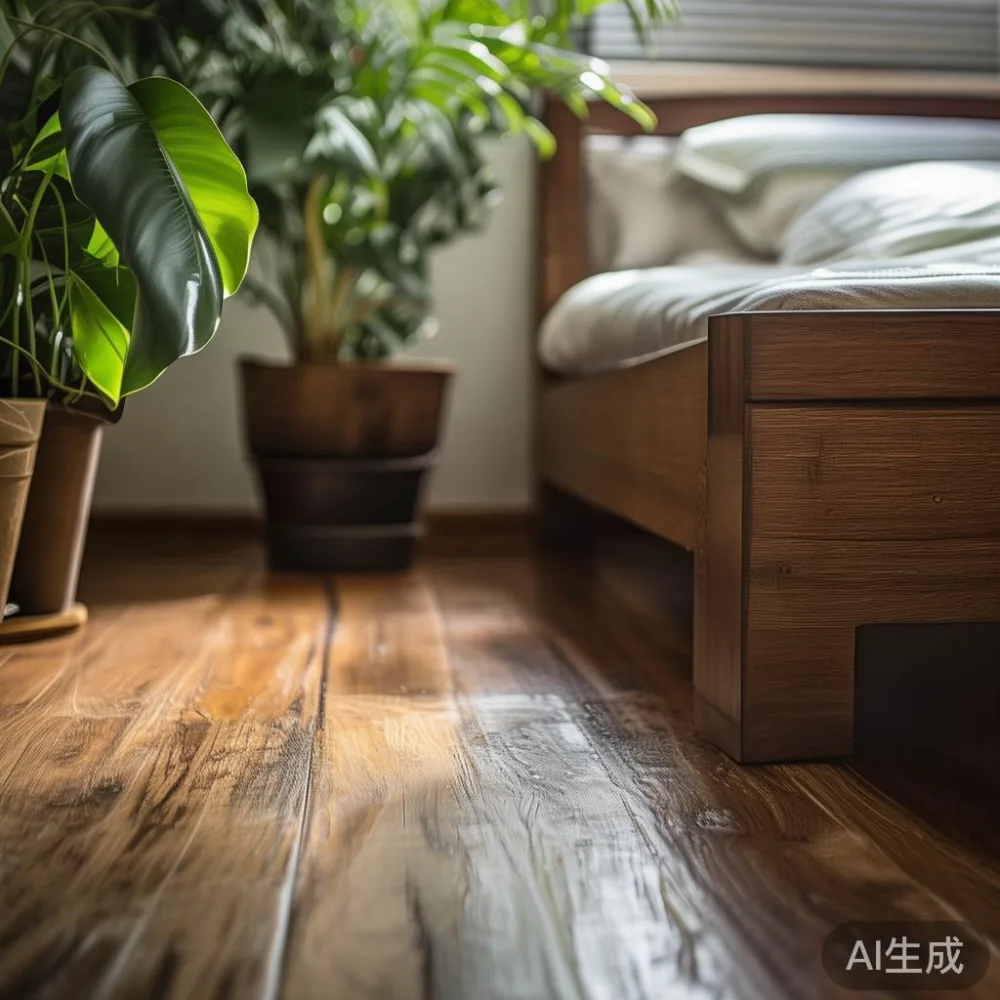
Wood is hygroscopic. It absorbs and releases moisture to reach equilibrium with the surrounding air, and the rate of that exchange depends on the species, the cut, and whether the surface is sealed. Solid oak, ash, walnut, and teak — the four species MIDHILL works in most often — move roughly 1% to 3% in cross-section dimension for every 10-point swing in equilibrium moisture content (EMC). A 180 cm wide oak wardrobe head panel can drift 4 to 6 mm across the seasons if left raw. The same panel, properly kiln-dried to 8% to 10% moisture content and finished on all six sides, drifts under 1.5 mm.
This is also why light luxury brands — French light luxury, American light luxury, post-modern light luxury — that ship globally have to engineer for humidity, not for marketing photography. A walnut sideboard photographed in a 45% Milan showroom will behave differently in a 82% Singapore master bedroom unless the maker kiln-dries past tropical targets and seals every face.
Is a sofa worth the price?
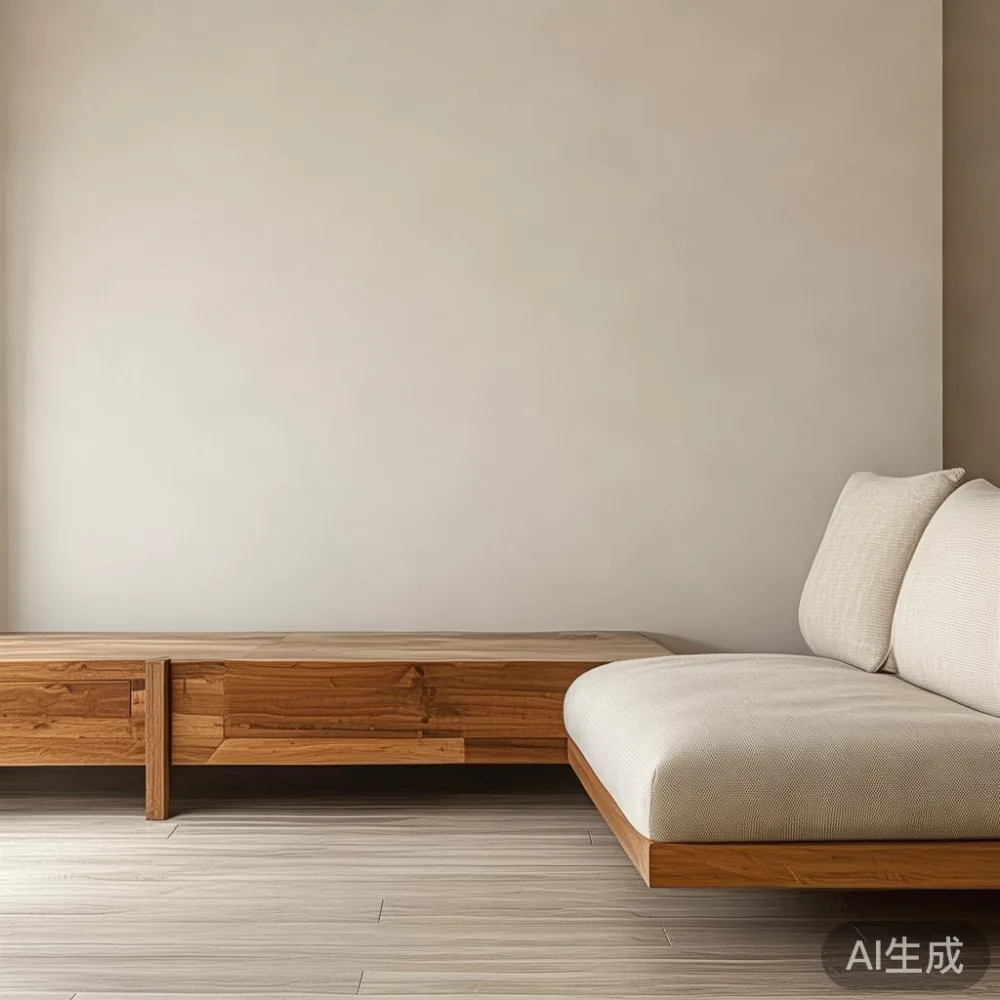
Yes, if the sofa uses kiln-dried solid hardwood frames, marine-grade adhesives, and a finish rated for tropical RH above 80% — anything cheaper absorbs moisture at the joints, loosens the webbing inside two to three wet seasons, and quietly costs more in reupholstery than the original ticket. A S$3,200 small corner sofa for study use, for instance, built on an ash hardwood frame with eight-way hand-tied springs and a closed-cell foam wrap, will still feel tight in year seven; a S$1,400 softwood frame with staples and low-density foam will be sagging by month eighteen and will invite mould into the sago-foam interior within thirty months in a Bedok condo that runs the air-con only at night.
What Humidity Actually Does to Solid Wood, Frame by Frame
Three failure modes show up in nearly every humidity claim I have handled at MIDHILL since 2008, and they map cleanly to three furniture categories.
Beds and headboards. The slats take the worst of it because air circulates under the bed and condensation forms on the cool underside of the mattress every night. A poorly sealed pine slat can cup — bow upward at the edges — by 6 to 10 mm in a single monsoon season. Slats from a quality bed frame SG retailer should be laminated hardwood, finger-jointed, and finished on all faces including the ends. Ours are 22 mm thick, kiln-dried to between 8% and 10% moisture content, and individually wrapped before crating.
Solid wood sofas. The frame lives inside upholstery where you cannot see it, which is exactly why corners get cut. A sofa frame joined with PVA and held by staples will absorb moisture through every staple hole. Look for mortise-and-tenon corners, dowel reinforcement at every stress point, and a finish that extends into the inside faces of the frame, not just the visible outside.
Dining tables, wardrobes, and marble table tops. Tabletops face the most brutal exposure: afternoon sun through a west-facing Punggol window, then a rapid evening cool-down when the air-con switches on. That 6°C to 10°C swing drives wood to expand and contract against a fixed frame. The result is the seasonal hairline crack along the breadboard end, or a 1 to 2 mm gap that opens and closes between a tabletop and its skirt. Properly engineered tops use slotted fasteners that let the wood slide; budget tops are glued at the corners and the wood wins.
How MIDHILL Builds Specifically for Tropical Humidity
Every MIDHILL piece that leaves our 28,000 m² Foshan workshop for a Singapore shipment has been through the same humidity gauntlet, and it is worth describing because it is the single biggest reason a French light luxury or American light luxury piece from our line survives year ten on a HDB corridor.
Wood arrives at 14% to 18% moisture content from the sawmill. It goes into our dry kilns for 45 to 60 days until it stabilises between 8% and 10% — drier than the 12% European target, because we know it is heading into 80%+ RH air. After milling, every component is acclimatised in our conditioning room for another 7 to 10 days at 35°C and 80% RH, which simulates a worst-case Singapore bedroom. Anything that cups, bows, or twists in that room is rejected before assembly.
Finishing is where most factories economise. We apply three coats of conversion varnish or hardwax oil, sanding with 220-grit between coats, and we finish all six sides of every panel — including the backs of wardrobe backs, the undersides of drawer bottoms, and the inside faces of every headboard. That alone adds roughly 18% to finishing time, but it cuts moisture exchange by an estimated 60% to 70%.
Joinery is the third leg. We use mortise-and-tenon on bed frames, dowel-and-glue on dining table aprons, and metal slotted brackets on tabletop fasteners. The metal is zinc-plated, not bare steel, because bare steel will rust in a HDB bathroom-adjacent wardrobe and bleed black streaks into the surrounding oak in six to twelve months.
Reading the Room: How Your Specific HDB or Condo Changes the Equation
Not all Singapore homes punish furniture equally. Here is the honest breakdown from visiting customers across Tampines, Bedok, Punggol, Toa Payoh, and the Bukit Timah condos over the past eighteen months.
High-floor HDB (12th floor and up, no direct afternoon sun). RH indoors runs 70% to 78% with daytime air-con, climbing to 82% overnight. This is the gentlest environment for solid wood, and a properly finished bed frame SG piece will show no movement at all.
Low-floor HDB (floors 1 to 6, near a canal or park). RH indoors sits 78% to 86%, with morning condensation on metal window frames. The risk shifts from wood movement to surface mould, especially on the underside of dining tables and inside wardrobes placed against an exterior wall.
West-facing condo (Punggol, Bukit Batok, Clementi). RH swings harder: 55% on a dry afternoon with air-con blasting, 84% by sunrise. Wood moves more here than in any other Singapore layout, and breadboard cracks are most common on dining tables placed within 1.5 m of the window.
Master bedroom with attached bathroom. The worst-case for a wardrobe. Steam from a 12-minute hot shower raises local RH past 95% for the wall the wardrobe sits against. A wardrobe without a backing seal will wick that moisture into the carcass and show swelling at the toe-kick within nine to fourteen months.
What You Can Do in the First 30 Days to Protect a New Piece
Most humidity damage I see in warranty claims happened in the first month, not the fifth year. A new piece of furniture is still adjusting from the container's climate to your flat's climate, and the way you handle those first 30 days sets the trajectory.
Run a dehumidifier set to 55% RH for the first two weeks in the room where the new piece lives. This is gentler than letting the piece ride out a 82% spike. Crack a window for 20 minutes on three of those days if the outdoor RH is below 75% — most dry afternoons in January and February qualify. Do not place rugs, linen, or laundry directly on a new dining table top for the first week; trapped moisture under fabric is the most common cause of the white ring stains we see on marble tables and solid tops in warranty photos.
For a new bed frame, leave the slats exposed for the first 48 hours before laying the mattress. A pocketed-coil mattress placed too early traps the slats in a humid microclimate and encourages the white fuzz my friend in Punggol found behind her headboard. Use a mattress protector from day one; it costs S$45 to S$120 and saves four-figure problems later.
The Maintenance Habits That Add a Decade to a Solid Wood Piece
After the first month, humidity control becomes a routine, not a project. Three habits cover roughly 90% of what matters.
First, keep RH between 50% and 65% indoors. A S$220 to S$380 dehumidifier with a humidistat pays for itself in two to three years on mould-prevention alone, and the Singapore National Environment Agency recommends indoor RH below 70% for mould control, which is a useful ceiling. Below 50% and you risk the opposite problem: wood shrinks, joints gap, and lacquer can hairline-crack on a north-facing dining table in a December air-con blast.
Second, dust with a barely damp microfibre cloth once a week. Dry dusting lifts the surface but pushes fine grit into the open grain of oak and ash, where it holds moisture against the finish. A damp wipe removes the grit and evaporates within 90 seconds.
Third, refinish on schedule. Our MIDHILL lifetime refinishing service covers every piece we ship, and the right cadence in Singapore is roughly every 4 to 6 years for a dining table and every 6 to 8 years for a bed frame or wardrobe. The first refinish is light: a clean, a light sand with 320-grit, and one fresh coat of hardwax oil on the high-wear zones. The piece goes back into service the next day.
What About Engineered Wood, Veneers, and Marble Tables in Humid Climates?
Engineered wood has its place, but its place is not a Tampines bathroom wall. Plywood with a quality HPL laminate can outperform solid wood in a wet zone because the laminate is stable, but the moment water reaches an exposed edge or a screw hole, the layered core swells irreversibly. MDF and particleboard — common in sub-S$1,200 wardrobes sold across Singapore — swell 8% to 12% in volume after 24 hours of direct water exposure, and that swelling does not reverse. This is why our wardrobes use a plywood carcass with solid oak or ash faces, never MDF.
Veneers on a quality substrate are stable if the substrate is stable. A 0.6 mm oak veneer on a 12-ply marine birch with balanced backing behaves almost identically to a solid oak panel at 80% RH, and uses 90% less of the slow-growing hardwood. It is a rational choice for a large wardrobe door where solid wood would simply be too heavy for the hinges — a 240 cm × 60 cm solid oak wardrobe door weighs 38 kg and sags within three years; the veneered equivalent weighs 22 kg and stays flat.
Marble tables need a different warning. Marble is hygroscopic in a different way: it does not move, but it absorbs oils, dyes, and moisture stains through its open pore structure. A marble-top dining table in a HDB that cooks daily will show curry-turmeric rings within six months if it is not sealed, and once turmeric is in the calcite, no home remedy removes it. We seal every marble top with a penetrating impregnating sealer at the workshop and recommend re-sealing every 18 months. A 250 ml bottle of quality marble sealer costs about S$45 in Singapore and takes 25 minutes to apply.
How to Read a Warranty Before You Buy, Especially for Singapore Delivery
Most furniture warranties look identical at a glance but mean different things once you read the exclusions. The exclusions to scan for are humidity and mould. A warranty that voids itself for damage "caused by high humidity" is, in Singapore, a warranty that voids itself for being used in Singapore. We offer a 10-year structural warranty precisely because we kiln-dry and finish for tropical RH above 80%, and that scope is written into the contract rather than buried in the exclusions.
Delivery also matters. A 7-day container crossing from Foshan to Singapore, with the container breathing through a desiccant pack, is the standard for sea freight. Air freight is 3 to 5 days door-to-door but adds roughly 18% to the landed cost, which is why we default to sea for orders above S$350 and absorb the freight — same reason we offer free shipping over US$350 for our export customers in other markets. For Singapore specifically, we land at PSA and truck to your door in 2 to 5 working days after customs clearance, with a 3-hour delivery window so you are not waiting a full day.
Returns are part of the picture too. Our 14-day return policy covers change-of-mind on unopened boxes, but on opened furniture we apply a 15% restocking fee because a returned solid wood piece cannot be sold as new — the acclimatisation to your home has already started. That detail is worth knowing before you sign for a S$4,200 marble dining table on a Saturday afternoon.
Practical Shopping Checklist for a Humidity-Smart Singapore Home
Use this list when comparing a bed frame SG offer, a solid wood sofa, or a dining table from any maker, including ours. The questions separate a piece engineered for tropical RH from a piece engineered for a catalogue.
Ask for the kiln-dried moisture content in writing. Anything above 10% for oak, ash, or walnut is a red flag for Singapore. Ask which faces are finished — if the answer is "the outside only," keep your wallet closed. Ask about the joinery at the corners of any bed frame or wardrobe, and whether the inside of the headboard panel is sealed. Ask how the tabletop is attached to its apron — slotted fasteners are good, glued corners are a problem. Ask about the warranty exclusions on humidity and mould, and ask whether the maker offers lifetime refinishing like MIDHILL does. If the salesperson cannot answer three of those five, you are buying a photograph, not a piece of furniture.
Finally, buy for the home you have, not the home you wish you had. A west-facing Punggol condo with afternoon sun needs a darker stain and a thicker finish than a high-floor Tampines HDB with indirect light. A marble table that will hold three daily meals needs sealing every twelve months, not every twenty-four. A bed frame for a master bedroom with an attached bathroom needs a fully sealed back panel, not a standard backing. Get those choices right at purchase and your furniture will outlast two lease renewals, three air-con upgrades, and at least one renovation cycle — and that is the quiet return on getting humidity right from day one.