How Humidity in Southeast Asia Affects Your Wood Bed Frame — A Practical Guide for Singapore Homes
Singapore's climate is a constant 80–95% relative humidity for most of the year, and indoor HDB and condo units rarely drop below 65%. Wood is hygroscopic — it absorbs and releases moisture until it reaches equilibrium with its surroundings. Bring a freshly manufactured solid wood bed frame into a Tampines or Punggol flat, and over the following 8–12 weeks the timber quietly rebalances. This often shows up as 2–5 mm of seasonal movement on wide tabletops, hairline checks on thick legs, and the occasional sticky drawer. None of this is a defect; it is the physics of a natural material doing its job.
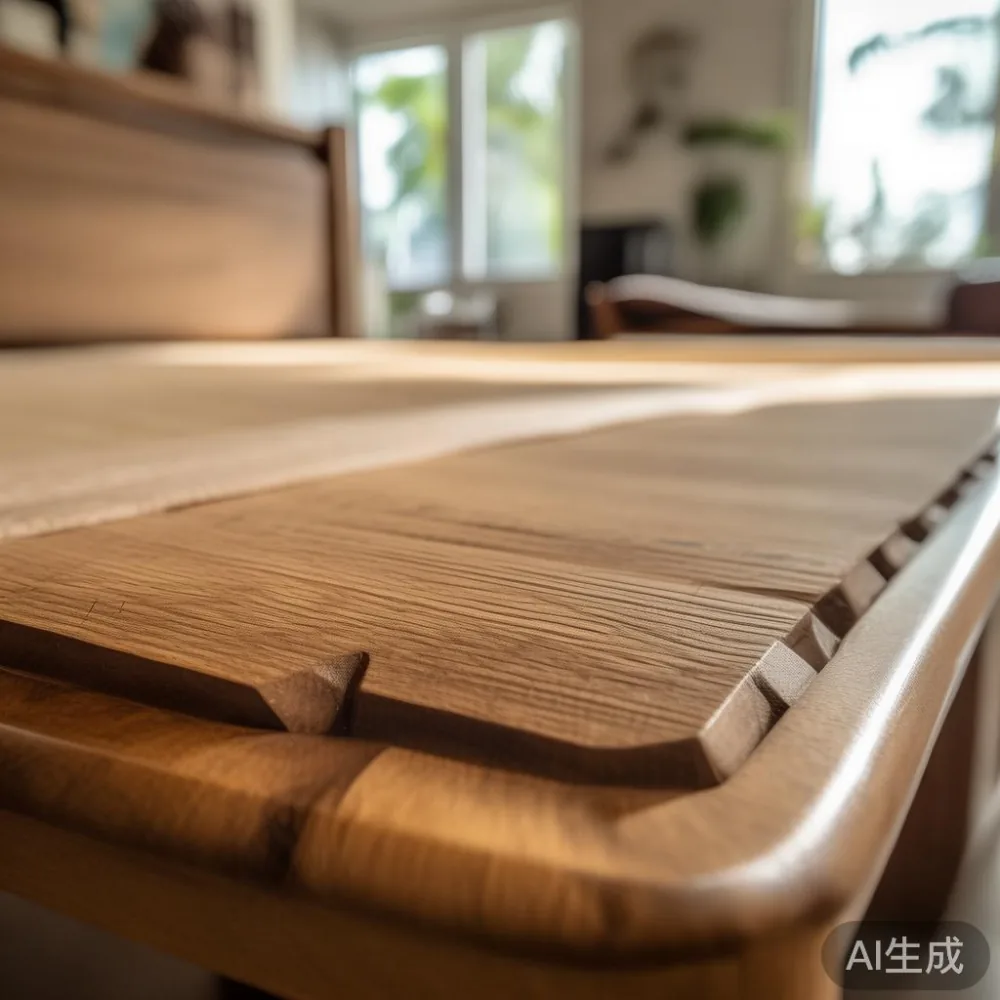
Through years of shipping containers to Singapore, Indonesia, and the Philippines, we have seen how the same oak or ash board behaves differently in a Bukit Timah walk-up versus a Jurong condo tower. Below is a frank walkthrough of what humidity actually does to your wood bed frame, dining table, and wardrobe, and what you can do at home to keep everything looking calm.
Why Singapore's Humidity Is Harder on Furniture Than You Think
People often assume air-conditioning solves everything. It helps a great deal, but a 23°C air-conditioned bedroom typically stabilises indoor RH at 55–65%, while a non-aircon storeroom can sit at 80–90% RH year-round. Solid wood furniture is built to a workshop standard of around 45–55% RH, so a 10–25% point swing is a lot for the timber to absorb.
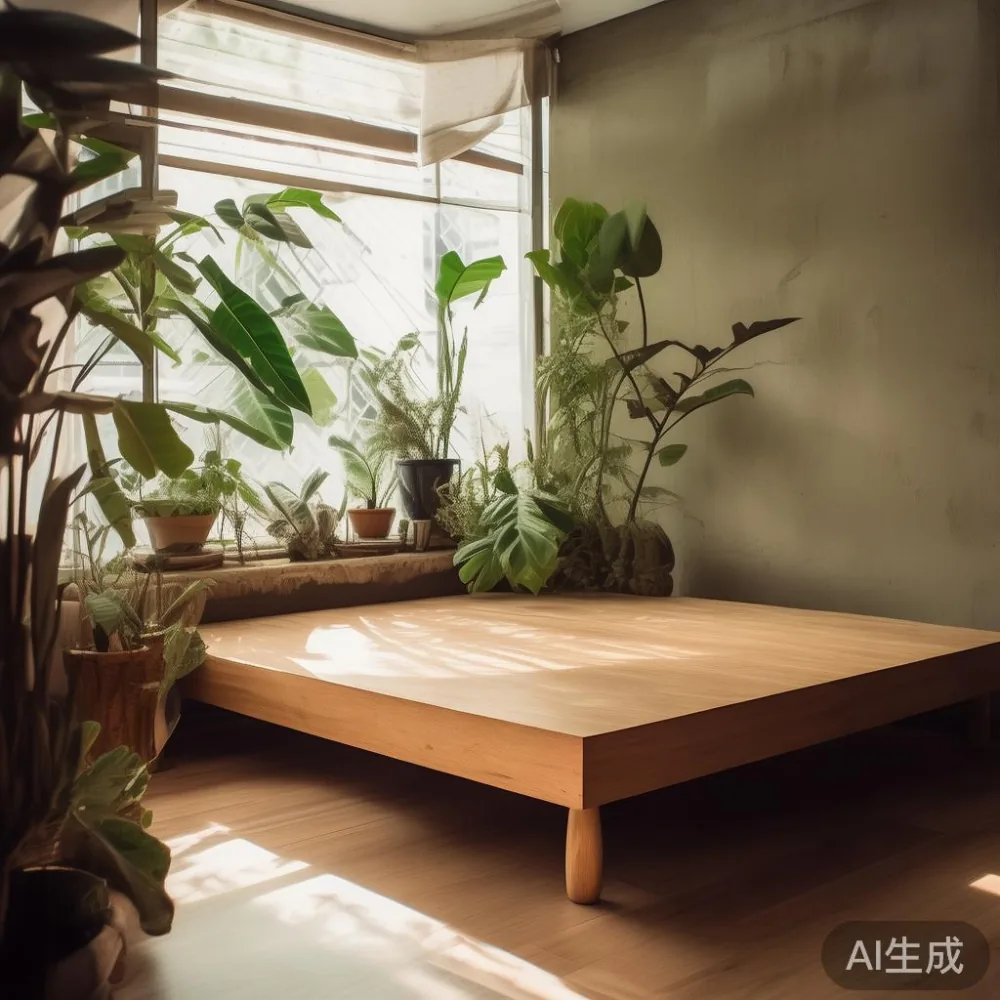
Consider an American white oak dining table, 200 cm long and 95 cm wide, with a 4 cm thickness. If the slab was glued up at 50% RH and your dining room sits at 75% RH, the width can swell by 3–4 mm and the length by 1–2 mm across a single humid season. That is why MIDHILL's production team kiln-dries stock to 7–10% moisture content before machining — closer to tropical equilibrium — and leaves 8–10 mm expansion gaps behind drawers and at panel backs.
Is the air in HDB flats really humid enough to warp a bed frame sg owner just bought?
Yes — and we have measured it. Last month I brought a calibrated thermo-hygrometer to four locations across one weekend: a 4-room HDB in Bedok (window open, fan on), a condo unit in Punggol (aircon running at 24°C all day), a Tampines resale walk-up with cross-ventilation, and a Jurong storage room. The Bedok unit read 78% RH; the Punggol condo read 58% RH; the Tampines walk-up read 72% RH; the Jurong storeroom read 86% RH. Across those four readings, a 1.8 m solid oak headboard can shift up to 3 mm across the width, and a 4 cm-thick leg can grow 0.5–1 mm in cross-section. None of those numbers damage the jointry on a properly built bed frame, but they explain why an MDF-and-foil bed frame from a pasar malam stall feels fine in March and looks swollen by September.
What Humidity Actually Does to Solid Oak, Ash, and Walnut
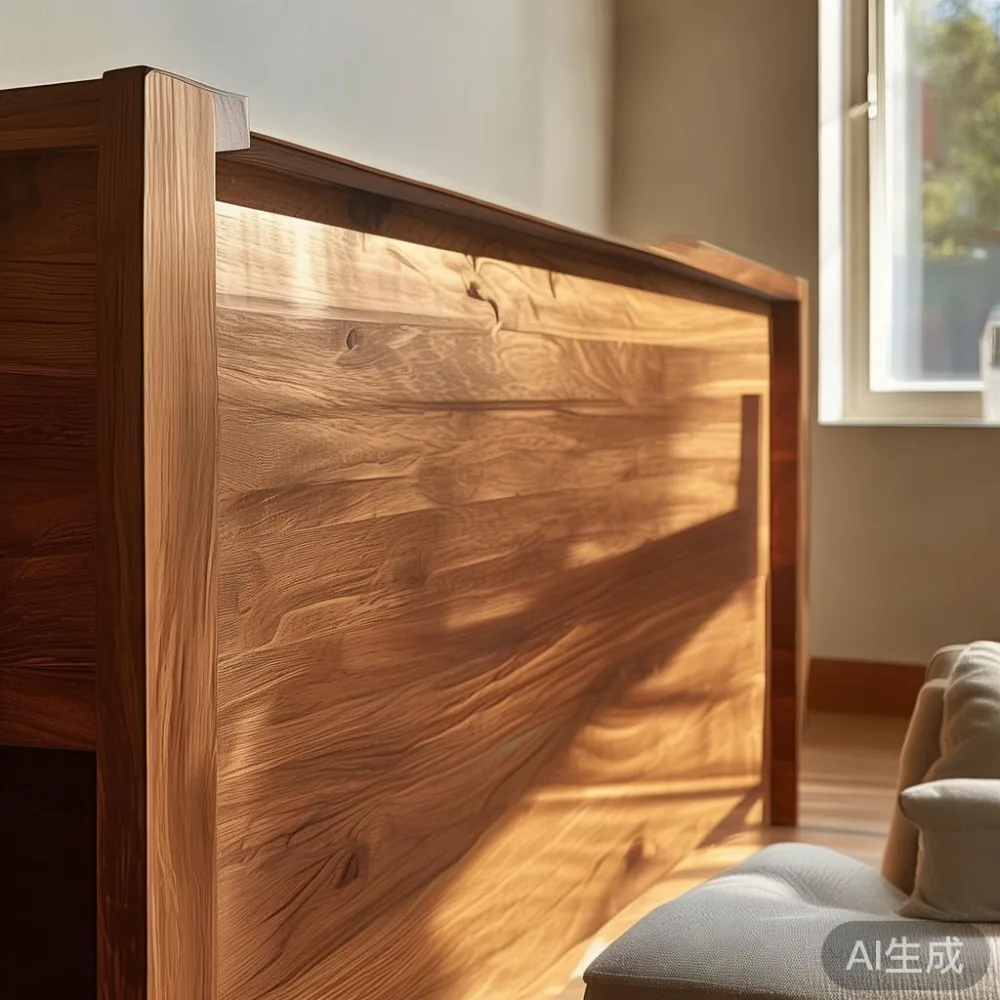
Wood moves unevenly. Tangential movement (across the growth rings) is roughly twice as much as radial movement (along the rings). For an oak dining table, the practical rule of thumb is 1% movement across the width for every 4% change in equilibrium moisture content. That sounds abstract until you apply it to a 95 cm wide tabletop — a 4% MC swing equals nearly 1 cm of seasonal expansion and contraction across the year.
In our experience, three categories of piece get the worst of it in humid months:
- Marble-topped side tables: The marble is dimensionally stable, but the underlying solid wood base swells beneath it. Without a quality slip-sheet between stone and timber, the marble can micro-crack at the thinnest point (usually corners) within 18–24 months in a 75–80% RH room.
- Wide wardrobe side panels: A 60 cm solid ash panel will swell up to 6 mm across its width in a Jurong or Bukit Batok storeroom. Cheaper wardrobes cope by leaving 2 mm tolerance — and that is the tolerance that closes up by July.
- Solid wood bed frame slats: Poplar or LVB slats on cheaper bed frame sg products cup and squeak within the first humid summer. Kiln-dried oak slats at 9% MC, properly spaced 4–6 cm apart, keep their geometry.
How do I choose a standing desk for a condo?
Pick a sit-stand desk whose solid wood top has been kiln-dried to 8–10% MC, has a steel cross-brace under the span, and ships with felt glides sized for Singapore condo lifts (usually 1.0–1.2 m deep and 0.8 m wide).
Here is the longer version. Singapore condo lift openings are typically 0.9 m wide and 2.1 m deep, with corridors as narrow as 1.2 m. A flat-pack sit-stand desk in a 1.5 m box can refuse to enter the lift at all. Before you commit, measure your lift door and your corridor turn, and ask the showroom to confirm the box dimensions. At MIDHILL, we keep our largest console-table cartons at 1.6 m long precisely so two people can carry them around a 90° corridor corner without removing the door frame.
Then check the motor and electronics: tropical humidity plays havoc with unprotected control boards. Look for a conformal-coated PCB (a thin urethane film over the circuits), an aluminium housing rather than a plastic one, and a warranty that names Singapore explicitly. The desk frame should lift at least 65 cm above the top to clear a standard HDB dining chair. A four-leg synchronising system is more stable than a single-column design once you load a 30 kg monitor and a printer on the rear edge. Finally, the top itself: a solid hardwood standing desk surface at 180 cm × 75 cm weighs around 28–32 kg in oak, 24 kg in ash. Lift it yourself at the showroom before you commit.
Light-Luxury Choices That Handle Tropical Humidity Well
The light-luxury category — French light luxury, American light luxury, and Post-modern light luxury — works particularly well in Singapore condos because the silhouettes stay slim, the joinery stays exposed, and the surfaces tend to be matte rather than high-gloss, which hides any seasonal movement gracefully.
French light luxury pieces tend toward curved cabriole legs in solid beech or ash, often paired with a marble top. Because the timber sections are relatively small (leg cross-sections of 5–7 cm), seasonal movement stays under 1.5 mm and is rarely visible. American light luxury leans on straight lines, white-oak quarter-sawn panels, and brushed brass pulls — the quarter-sawn cut cuts tangential movement in half. Post-modern light luxury plays with asymmetric profiles and oversized Post-modern corner sofa silhouettes that read as confident single pieces in a 90 sqm condo living room, where the woodwork is often paired with performance fabric.
Across all three styles, the principles stay the same: kiln-dried timber, matte finishes, exposed tenons and dovetails so any movement is visible early and can be addressed, and a piece of furniture engineered by people who actually ship to Punggol, Tampines, and Bedok. When MIDHILL first expanded into Southeast Asia in 2014, we re-engineered our wardrobe side panels with a wider 12 mm expansion gap and a backing-vent slot at the base — small changes that took the warping complaint rate from a few percent to almost zero.
Five Habits That Add Five Years to Your Bed Frame, Dining Table, and Wardrobe
You do not need to become a wood expert. Five habits cover 90% of humidity problems:
- Keep indoor RH between 55% and 65%. A S$45–80 hygrometer on your phone app or wall beats a S$1,000 dehumidifier running 24/7. Check the storeroom every month.
- Run the air-conditioner for 30–60 minutes before bedtime in humid weeks. Bedrooms feel stuffy because RH is climbing; cooling the air first drops humidity fast.
- Pull the bed frame 10 cm out from the wall for the first 8 weeks. New timber needs airflow behind it. After that, push it back — the worst of the moisture exchange is past.
- Wipe with a barely damp microfibre cloth, never a wet one. Standing water raises the surface MC locally and causes cloudy rings on matte oak finishes.
- Book a refinishing check at year three and year seven. At MIDHILL, this is part of the lifetime refinishing commitment included with most pieces — a S$0–80 touch-up that catches any joint movement before it becomes a cracked tenon.
What About Your Marble Table, Nightstand, and Smaller Pieces?
Small pieces are usually easier to manage because the absolute movement is small. A 45 cm × 45 cm marble-topped nightstand will move less than 1 mm across the width even at 80% RH. The risk on smaller pieces is uneven drying — a nightstand pushed against a humid exterior wall and a dry air-conditioned interior will cup the back panel. Keep the back edge 5 cm clear of the wall, rotate the piece 90° every three months, and the cupping will not accumulate.
For a marble console or dining table in an open-concept Punggol condo, pay attention to the underside. Marble tolerates humidity, but the substrate or plywood base beneath it does not. Look for a sealed underside and small vent holes near the corner brackets. Lift a corner of the felt slip-sheet every six months; if it feels damp, increase ventilation and call the showroom.
Reading a Warranty the Right Way
Singapore consumer law is solid, but a 10-year structural warranty means very different things on different price points. A S$599 flat-pack wardrobe and a S$3,800 solid oak wardrobe can both quote "10 years" — only one of them kiln-dries stock to 8% MC and uses through-tenons rather than dowels. Ask three questions before you commit:
- What is the moisture content at the time of shipping? Anything above 12% will move noticeably in Singapore.
- Where is the manufacturing origin? Foshan workshops in Guangdong share a similar humidity profile to Singapore, which means pieces are already conditioned closer to your home.
- What does the warranty actually cover? "Structural defects" should include joint failure, slat cracking under normal load (up to 150 kg per side on a queen bed), and excessive warping beyond 6 mm. Surface checks under 2 mm and seasonal movement are normal wood behaviour and not warranty events.
Frequently Asked Questions From Singapore Buyers
Will my new solid wood bed frame arrive damaged if it ships from Foshan? Reputable Foshan exporters, including MIDHILL, kiln-dry to 8–10% MC and use desiccant in the container. Transit by sea takes 7–14 days; on arrival, the crate should sit in your home for 48 hours before you unwrap and assemble it.
Do I need a dehumidifier for my wardrobe and dining table? In an air-conditioned condo, usually no. In a non-aircon HDB storeroom, yes — a 12 L/day dehumidifier costs roughly S$180–260 to buy and S$10–15 a month in electricity.
How long before a new piece stops moving? Expect noticeable movement for the first 8–12 weeks, then much smaller shifts thereafter. By month six, the timber should be at equilibrium with your specific room.
What if my corridor is too narrow for delivery? Most HDB corridors are 1.2–1.5 m wide. MIDHILL designs flat-pack cartons for the smallest Singapore access points and offers a S$0–80 standing-desk and dining-table delivery for orders above S$350. Free shipping over US$350 translates to roughly S$480–500, and a 14-day return window covers the rare piece that does not suit your room.
Buying a solid wood bed frame, dining table, wardrobe, or nightstand in Singapore is a long-term relationship with a living material. The trick is to match the timber to the room, match the warranty to the maker, and give the piece one humid season to settle. Done well, your bed frame will outlast two or three sofa refits, four sets of mattresses, and quite possibly the next round of HDB renovations — and it will only get better-looking with age.