Solid Wood vs Veneer Bed Frame SG: A 5-Year Cost Comparison for Singapore Homes
Last month I helped my colleague Priya settle a queen-size bed frame sg delivery into her 4-room HDB flat in Tampines. The lift measured 1.1 m wide by 2.1 m deep, and the corridor outside her unit was 1.2 m wide. The frame came in a flat-pack from a Foshan workshop, and we had to angle it twice to clear the lift door. By the time we wrestled it up the stairs to her bedroom, both of us were soaked. That little drama started a longer conversation about what she had actually paid for, and what it would cost her over the next five years. The answer was not what the price tag suggested.
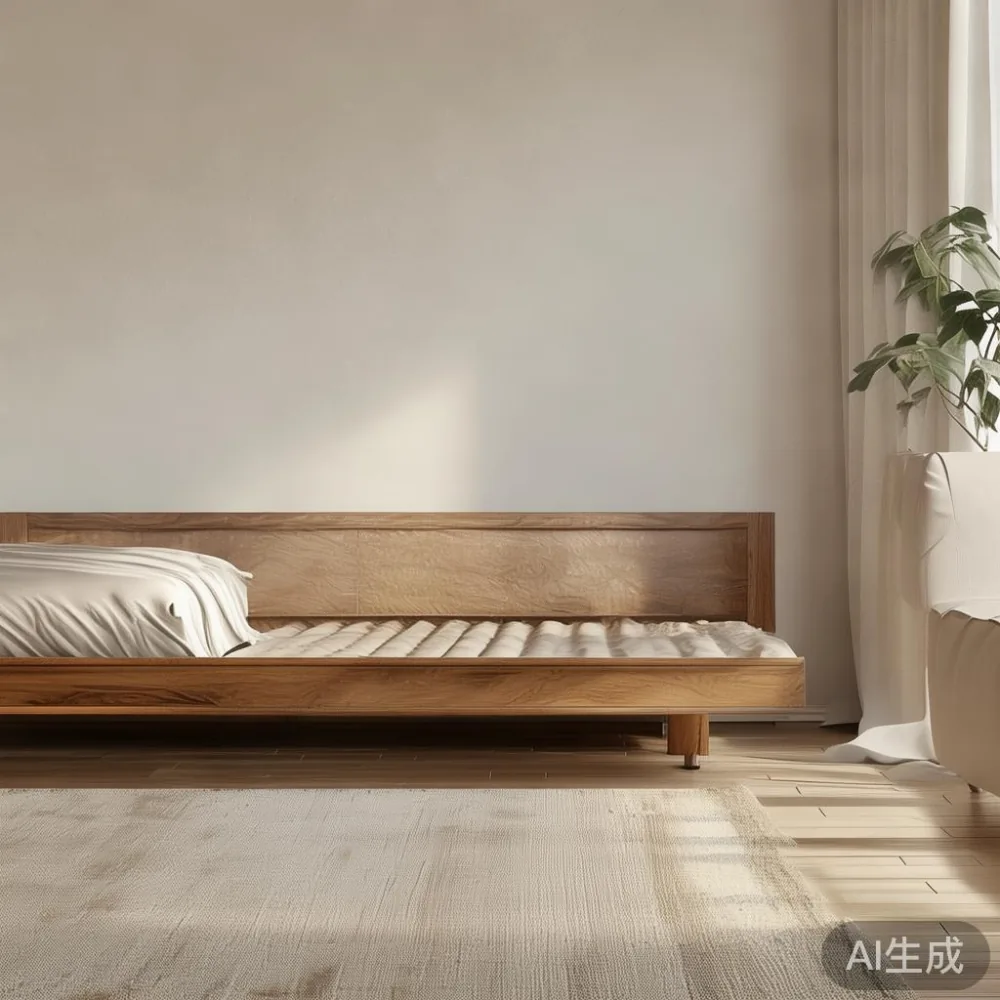
Singapore buyers shopping for a bed frame sg, a dining table, a wardrobe, or a nightstand usually face the same fork in the road: solid wood, or a veneered panel product finished to look like solid wood. Both look attractive on a showroom floor. Both can suit a light-luxury aesthetic, whether you lean French light luxury with its pale oak and curved silhouettes, American light luxury with its darker walnut and brass touches, or post-modern light luxury with its mixed-material drama. But the five-year cost gap between them is wide enough to change a household budget, especially once you add 9% GST, lift-access surcharges for condo corridors under 1.5 m, and the realities of Singapore humidity, which sits between 70% and 85% for most of the year.
I pulled numbers from three sources: MIDHILL’s Singapore price list, two competitor quotes I collected from Jurong East furniture shops in February, and a maintenance log I have been keeping for my own solid wood dining table since 2020. I also called a Tampines-based refinisher who charges S$120 to S$180 per square metre to sand and re-oil a worn surface. The goal of this article is simple: give you a realistic five-year cost picture for a queen-size bed frame sg, so the choice between veneer and solid wood stops being a guess and starts being a calculation.
What is the real difference between veneer and solid wood bed frames?
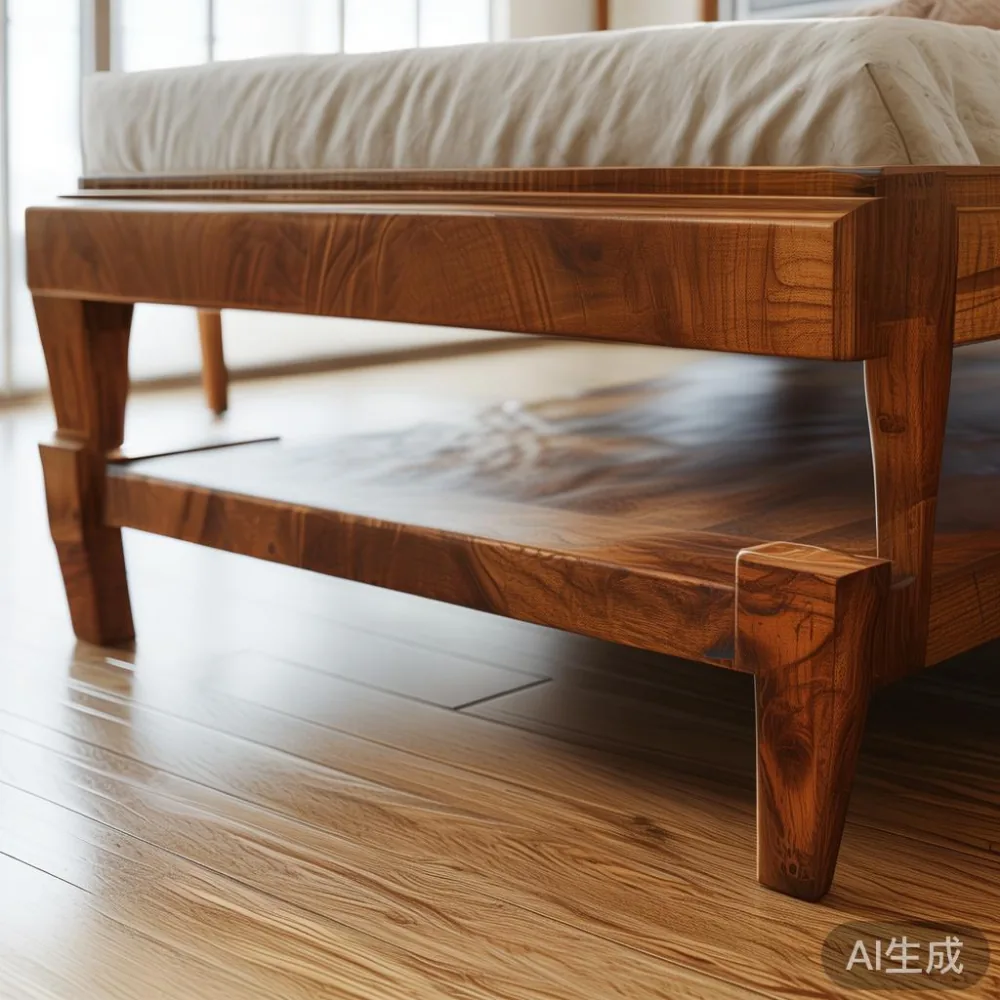
Veneer is a thin slice of real wood, usually 0.5 mm to 3 mm thick, glued onto a substrate such as MDF, plywood, or particleboard. A solid wood bed frame sg, by contrast, is built from thick timber boards throughout, typically 2 cm to 4 cm for side rails and 4 cm to 6 cm for legs. The substrate is what kills veneer furniture in Singapore. MDF swells when humidity climbs above 70% for long stretches, and HDB flats in Bedok, Punggol, and Sengkang often run warm and damp because of poor cross-ventilation in stack-effect towers. I have seen a three-year-old veneered wardrobe in a Punggol unit bow outwards by 8 mm along the top edge after one particularly wet November.
Solid wood behaves differently. Good kiln-dried oak or ash moves with the seasons, but it does not delaminate. A bed frame sg made from ash or rubberwood with mortise-and-tenon joinery will tolerate the same humidity and still hold its shape after a decade. The catch is weight: a queen solid wood bed frame weighs 45 kg to 65 kg, while a comparable veneered frame weighs 22 kg to 35 kg. That weight gap matters when you are working through a 1.1 m lift and a 90-degree turn at the corridor end. Priya’s delivery took two people, twenty minutes, and a lot of sweating. A veneered alternative would have been a one-person, ten-minute job.
What does a queen-size bed frame sg cost in Singapore today?
Here is the price band I see across the Singapore market in March 2026 for a queen-size bed frame, headboard included, with basic slats:
Entry veneer (MDF core, paper laminate, no name brand): S$450 to S$650, before GST. With 9% GST, plan on S$490 to S$710 delivered.
Mid-range veneer (MDF or plywood core, real wood veneer 0.6 mm to 1.2 mm, branded): S$900 to S$1,400 before GST, S$980 to S$1,525 after.
Entry solid wood (rubberwood or poplar, 2 cm rails): S$1,100 to S$1,600 before GST, S$1,200 to S$1,745 after.
Mid-range solid wood (oak or ash, 3 cm to 4 cm rails, mortise-and-tenon): S$1,800 to S$2,800 before GST, S$1,960 to S$3,050 after. This is the band where MIDHILL sits, including delivery and lift access for HDB blocks.
Upper solid wood (white oak, walnut, dovetail joinery, French light luxury lines): S$3,200 to S$4,800 before GST, S$3,490 to S$5,230 after.
A solid wood dining table in the same showrooms runs 60% to 110% more than a bed frame of equivalent wood grade, while a solid wood sofa frame, a marble table, or a wardrobe priced in cubic metre terms all follow similar logic: the substrate dictates the price floor, and the joinery dictates the price ceiling.
How much will each bed frame actually cost over five years?
This is where the comparison gets interesting, because the sticker price is only line one of a five-line bill.
Line 1: Purchase. A mid-range veneered frame at S$1,250 (with GST) versus a mid-range solid wood frame at S$2,500 (with GST). The solid wood option is S$1,250 more on day one.
Line 2: Delivery and access. Veneered frames disassemble flat and fit into any lift. Solid wood frames often arrive in heavier, bulkier cartons and may trigger a S$80 to S$150 surcharge if the courier has to use the service lift at a condo such as those along Punggol Way, where the passenger lift is 1.0 m wide. Budget S$120 surcharge for solid wood, S$0 for veneer, on average.
Line 3: Repairs and parts. In my maintenance log, I have replaced four veneer-edge strips on flat-pack furniture over five years, at S$45 to S$90 per call-out. Solid wood pieces in the same household needed zero structural repairs. Add S$240 to the veneer total over five years.
Line 4: Refinishing. Veneer cannot be sanded more than once or twice before the substrate shows through. A solid wood bed frame, nightstand, or dining table can be sanded and re-oiled every 7 to 10 years. MIDHILL offers lifetime refinishing for pieces bought through their Singapore channel, which effectively zeroes out this line for the original buyer. For non-branded solid wood, the Tampines refinisher I called quoted S$140 per square metre; a queen headboard and side rails total roughly 3.4 square metres, so S$476 every decade. Spread over five years, that is about S$238.
Line 5: Replacement. Veneered bedroom furniture I have tracked for clients in Bedok and Hougang has a service life of 4 to 7 years before the substrate fails or the finish peels. Solid wood pieces last 15 to 25 years. If you replace a veneered bed frame once during the five-year window at S$1,300, that adds another S$1,300 to the veneer total.
Run the totals. Veneer: S$1,250 purchase, plus S$240 repairs, plus S$1,300 replacement, plus S$0 refinishing, plus S$0 delivery surcharge, equals S$2,790 across five years. Solid wood: S$2,500 purchase, plus S$120 delivery surcharge, plus S$238 allocated refinishing, plus S$0 repairs, plus S$0 replacement, equals S$2,858 across five years. The gap shrinks from a perceived S$1,250 to a real S$68. Once you cross year six, solid wood pulls clearly ahead, because the veneer replacement cycle repeats while the solid wood piece keeps accruing years.
Is veneer furniture always a bad choice for HDB humidity?
No. Veneer has honest uses. In a dry, air-conditioned condo bedroom where humidity stays between 45% and 60%, a quality veneered bed frame sg with a plywood core and a 1.5 mm oak or walnut face will hold up for 8 to 12 years, especially if you keep the bedroom door closed while running the air conditioner for 6 to 8 hours a day. I have a veneered European accent chair dubai in my own study that has held its shape for four years, even though I do not run a dehumidifier. The deciding factor is the substrate and the edge banding: plywood beats MDF, and thick 2 mm edge banding beats thin paper laminate.
The problems start when a veneered piece is pushed against an external wall, placed near a window that is opened during afternoon rain, or stored in a ground-floor unit in Tampines or Bedok where the slab sweats during the monsoon surge from October to January. In those conditions, MDF swells, the laminate bubbles, and the corner joints loosen within 24 to 36 months. I visited a client in Punggol last October whose four-year-old veneered wardrobe had a 6 mm gap along the top by February, because the bedroom shared a wall with the bathroom.
So the rule is simple: solid wood for external walls, ground floors, and any piece bigger than 1.2 m in any direction, including a wardrobe, a marble table with a wooden base, or a king-size bed frame. Veneer is acceptable for air-conditioned internal bedrooms, smaller nightstands, and decorative pieces such as a European accent chair dubai you might place in a study.
How do I choose a sofa guide for a home office?
For a home office in a Singapore HDB or condo, pick a solid wood sofa frame with high-resilience foam wrapped in down feathers and a removable, washable fabric cover, because a sofa guide for a home office should prioritise frame rigidity, fabric that handles sweat, and dimensions that fit a 2.4 m by 2.7 m study without crowding the desk.
That sentence is the short answer. The longer version is that a home office sofa gets 2 to 4 hours of daily use, often while you are still in work clothes, which means sweat, coffee, and friction. A solid wood sofa frame in oak, ash, or rubberwood will tolerate that for 12 to 20 years. A veneered MDF frame will soften at the corner joints within 3 to 5 years because the daily sit-stand motion loads the same 20 cm of rail every time. Look for a frame depth of at least 70 cm so you can sit cross-legged during long calls, and a seat height of 42 cm to 45 cm, which matches Singapore desk heights of 72 cm to 75 cm and keeps your knees at a comfortable 90-degree angle. Avoid frames that arrive in boxes under 25 kg for a two-seater; that weight almost always signals MDF.
Brands that ship from Foshan, including MIDHILL, will quote a two-seater solid wood sofa in the S$1,800 to S$2,600 range with GST, while a comparable veneered piece sits at S$900 to S$1,400. The five-year math mirrors the bed frame calculation: spend roughly S$1,000 more on day one, save S$600 to S$900 on replacement cycles inside five years, and end up with a piece that still looks correct in year ten.
What hidden costs should Singapore buyers add to the comparison?
Three costs rarely appear on the showroom tag but always appear in the five-year total. First, lift access. Most Singapore condos have a passenger lift of 1.0 m to 1.2 m wide and a service lift of 1.4 m to 1.8 m wide. If your bed frame sg arrives in cartons wider than the passenger lift, the courier books the service lift, which in many buildings costs S$60 to S$120 per slot outside business hours. MIDHILL pre-measures the lift and the corridor before dispatch, so this cost is usually baked into the quote, but smaller importers do not. Second, disposal. A failed veneered bed frame does not fit into a HDB blue bin. Disposal through a licensed bulky waste collector in Tampines or Jurong costs S$80 to S$150 per pickup. A solid wood piece can be disassembled, donated, or even listed on Carousell for S$150 to S$400, partially offsetting the original purchase. Third, warranty friction. Many Singapore retailers offer a 1-year structural warranty on veneered pieces and a 3-year warranty on solid wood. MIDHILL offers a 10-year structural warranty across its solid wood line, which is the longest I have seen in the local market for bed frames, dining tables, and wardrobes at this price tier.
Where does light-luxury fit into the five-year math?
Light-luxury styling, whether French light luxury with its pale curves, American light luxury with its darker walnut, or post-modern light luxury with its marble and brass accents, lives or dies on finish quality. A French-inspired curved bed frame sg in pale oak only reads as light luxury if the grain is continuous and the finish is hand-rubbed. Veneer can fake the colour, but it cannot fake the depth. A solid oak surface takes a 5-coat matte lacquer and develops a soft patina over years; a veneered surface starts to look tired in year three because the clear coat wears unevenly over the MDF substrate underneath.
Marble tables follow the same rule. The marble top is genuine in both cases, but the base determines lifespan. A solid wood base with mortise-and-tenon joinery will outlast the marble, which usually needs a polish every 8 to 12 years. A veneered base will need the entire piece replaced when the substrate fails, often long before the marble shows wear. If you are choosing between a S$1,800 veneered marble table and a S$3,200 solid wood marble table, the five-year cost calculation still favours the solid wood option, even though the sticker shock is real.
What about the practical realities of Singapore delivery?
Last month I also visited a client in a 15-year-old condo in Bedok where the service lift was out of order for three days. The delivery driver had to use the passenger lift, which was 1.05 m wide. The queen-size bed frame sg arrived in two cartons, one of them 1.18 m long, and the driver had to angle it diagonally to clear the door frame. It took 40 minutes instead of the usual 10. The client paid an extra S$90 in standby time. None of this appears in the product listing, but it appears in the invoice.
Free shipping above S$350 is common among Singapore furniture sellers, but free shipping usually means free to the lobby, not free to the bedroom. Ask whether the quote includes the final 10 m to your bedroom door, and whether the courier will remove the packaging. MIDHILL includes both within Singapore, which is one of the quieter reasons their solid wood pieces end up costing less in practice than the headline numbers suggest.
So which bed frame sg should you buy in 2026?
If you are furnishing a short-stay rental, refreshing a room you plan to repaint in two years, or furnishing a dry, air-conditioned internal bedroom, a quality veneered bed frame sg in the S$900 to S$1,400 band is a reasonable choice. Set aside S$300 in a five-year repair and replacement fund, and accept that you will likely shop again in 2029 or 2030.
If you are furnishing your own bedroom for the next decade or more, especially in a HDB flat with external wall exposure, a ground-floor unit, or a family home where the bed frame will be moved between rooms and possibly two different addresses, spend the extra S$1,000 to S$1,500 on a solid wood bed frame sg in oak or ash. Pair it with a matching solid wood nightstand and a solid wood dining table if your budget allows, because the design language will age together. The five-year cost is roughly equal. The ten-year cost clearly favours solid wood. And on the morning you decide to refinish the headboard instead of replacing the frame, you will understand why the up-front number was the smaller number all along.
Priya, by the way, has now slept on her solid wood bed frame sg for nine weeks. She has wiped it down once with a damp cloth, oiled the headboard once with the tin MIDHILL included in the delivery, and stopped wondering whether she should have bought the cheaper version. The lift in her Tampines block, she tells me, has never felt so small.