Veneer vs Solid Wood Bed Frame SG: A Real 5-Year Cost Comparison
I still remember standing inside a Tampines HDB resale flat last month, helping a couple measure their master bedroom for a new bed frame SG delivery. The corridor was tight, only about 1.2 m wide, and the lift opening barely cleared 1.9 m. They had two quotes in hand: one for a veneered engineered bed frame at S$899, and one for a solid wood bed frame at S$1,649. Five years later, I wanted to know which one truly cost less. That question is what pushed me to build a proper 5-year cost comparison for anyone shopping for a bed frame SG, whether you live in a Bedok 4-room flat, a Punggol condo, or a Bukit Timah landed property.
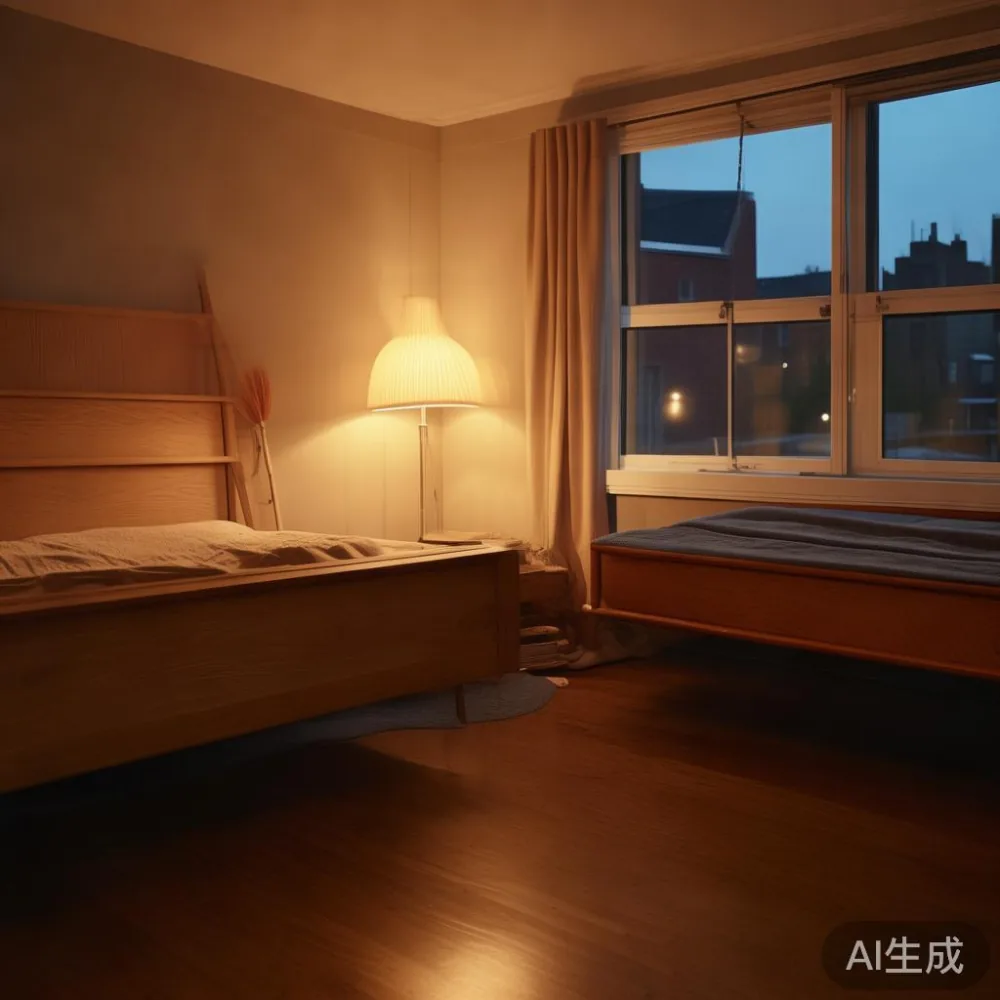
Veneer furniture looks tempting on the surface. The price is friendlier, the catalogues show glossy photos, and the delivery promise often reads 7 to 10 working days. Solid wood furniture, including the bed frame, dining table, wardrobe, and nightstand that MIDHILL has been crafting out of its Foshan factory since 2008, costs more upfront but behaves differently over time. Because MIDHILL exports to more than 15 countries and backs every solid wood bed frame with a 10-year structural warranty plus lifetime refinishing, the longer view matters. Below is a real numbers breakdown, in Singapore dollars, for a typical HDB or condo buyer considering a master bed for family with kids, where the bed is used nightly for at least a decade.
How do I choose a boho style for a bedroom?
You choose a boho bedroom style by anchoring the room around one natural material, such as a solid wood bed frame in warm oak or walnut, and layering breathable linen, rattan, and muted clay tones around it, so the bed does the visual heavy lifting and the soft pieces do the styling. A boho room without a strong wooden anchor tends to drift into looking like a storage room full of cushions. If you are shopping for a bed frame SG and want boho energy, ask the showroom whether the wood grain is real, not printed. A genuine solid oak bed frame with a matte finish will pick up rattan lampshades and ivory linen beautifully, while a veneered piece will reflect light flatly and fight the textures around it.
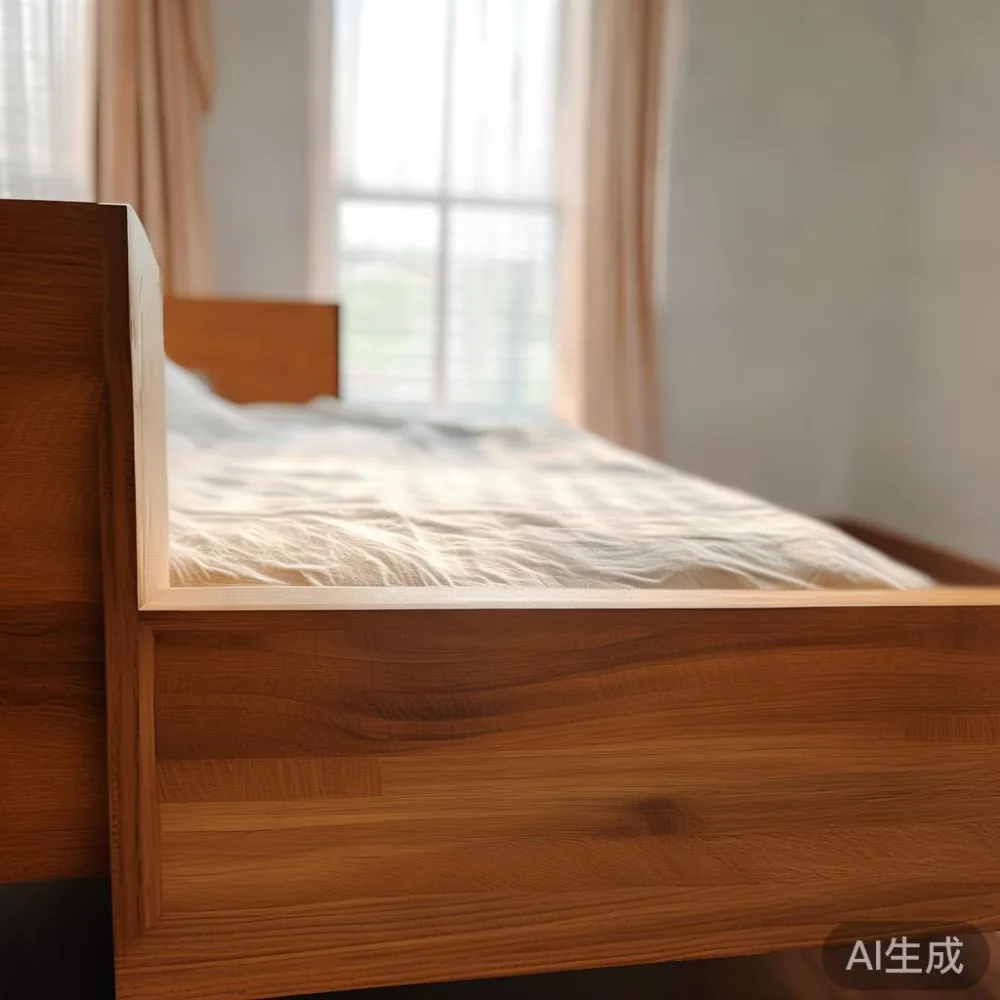
The real 5-year cost of a veneered bed frame in Singapore
Let us start with the cheaper option. A typical veneered bed frame from a mass-market brand in Singapore retails between S$699 and S$1,099 for a queen, and roughly S$999 to S$1,399 for a king. Delivery inside mainland Singapore usually costs S$60 to S$120, and GST at 9 percent adds about S$63 to S$137 on top. So the out-the-door number lands around S$822 to S$1,656.
Here is what the next five years tend to look like.
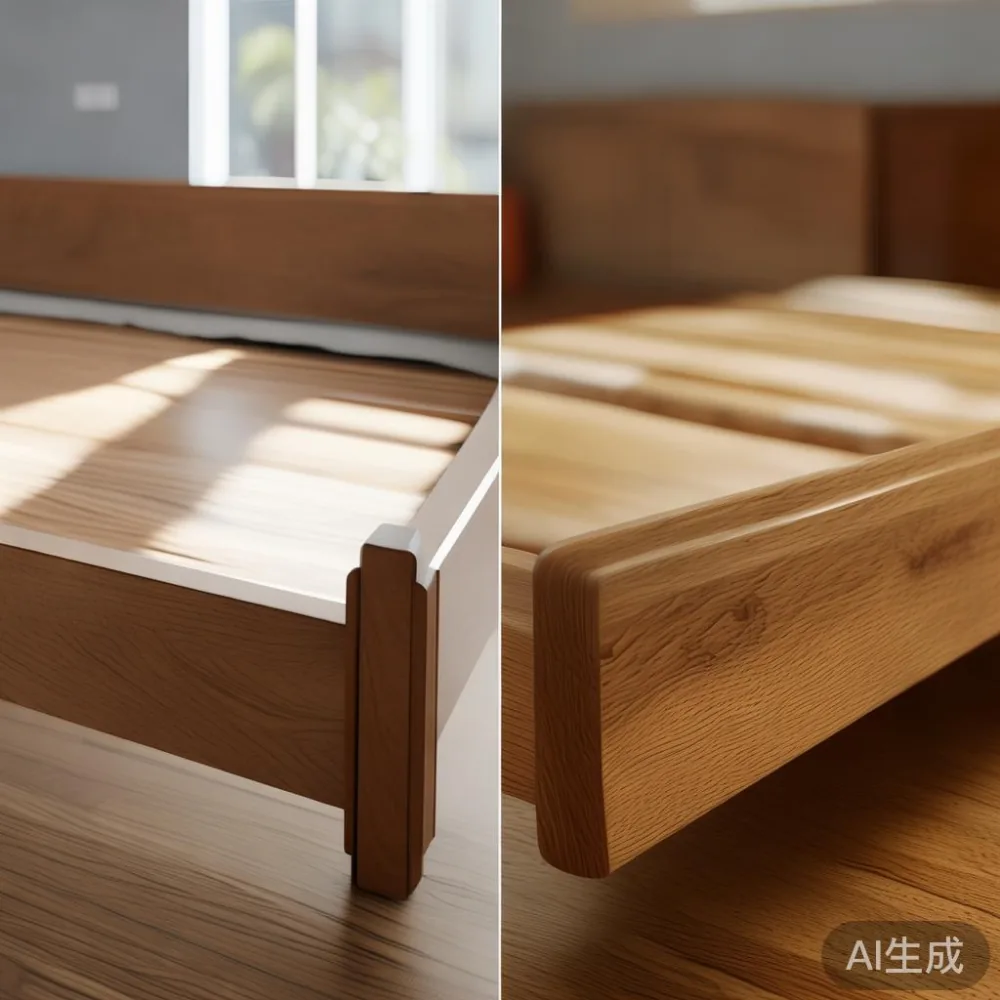
Year 1 to 2: The melamine or paper veneer usually holds up well, especially in an air-conditioned HDB bedroom kept at 23 to 25 degrees. Minor edge chipping can appear if children jump on the bed, and a child jumping is not a hypothetical, it is a Tuesday night in Tampines.
Year 3: This is where veneer starts to talk back. In our climate, humidity sits between 70 and 85 percent for most of the year. MDF and particleboard cores absorb moisture at the edges, and the thin 0.6 mm veneer layer begins to peel, especially along the headboard curve and the footboard seam. A local repair shop quoted me S$180 to S$280 to re-veneer a single delaminated panel, with a 2-week turnaround.
Year 4: The slats may sag because they are usually LVL or thin pine wrapped in the same paper. Replacing a slat set costs S$120 to S$200, not including labour. If the drawers on a storage variant start mis-tracking, alignment charges run another S$90 to S$150.
Year 5: Most veneered bed frames reach end-of-life around this point in a family setting. A realistic salvage value in Singapore is around S$50 to S$120 if you list it on Carousell, but most are simply disposed of during a renovation, and disposal through a furniture removalist runs S$120 to S$200.
Total realistic 5-year spend on a veneered queen bed frame in Singapore, including one mid-life repair and end-of-life disposal: S$1,200 to S$1,950.
The real 5-year cost of a solid wood bed frame in Singapore
A genuine solid wood bed frame from a manufacturer with proper export-grade construction usually retails in Singapore between S$1,499 and S$2,499 for a queen, and S$1,899 to S$2,899 for a king. Free shipping kicks in over US$350, which converts to roughly S$480, so most buyers qualify. Add GST at 9 percent and you are looking at S$1,634 to S$3,160 out the door.
The 5-year picture is quieter.
Year 1 to 2: Solid wood settles. In an air-conditioned HDB bedroom, expect the wood to shift by 1 to 2 mm at the joints as it acclimatises. This is normal and is exactly why quality frames use mortise-and-tenon or dowel joinery rather than staples.
Year 3: Most owners of a solid wood bed frame report no service issues at this stage. The frame simply does its job. If you opted for a piece from MIDHILL, the 10-year structural warranty covers joint failure, cracking, and warping, so even an unlikely event costs you nothing in parts.
Year 4: A solid wood bed frame can be refreshed. Light sanding, a fresh coat of hard wax oil, and new felt pads cost roughly S$180 to S$320 if outsourced, or about S$90 in materials if you do it yourself over a Saturday. Lifetime refinishing support from MIDHILL means the original maker can guide the process.
Year 5: Resale value for a well-kept solid wood bed frame in Singapore is genuinely strong. I have seen queen-size oak frames sell on Carousell for S$700 to S$1,100 after five years of family use. That offsets the next purchase meaningfully.
Total realistic 5-year spend on a solid wood queen bed frame, including one refinishing and resale offset: S$900 to S$1,950.
Side-by-side numbers: which bed frame SG actually wins?
Here is the same data, lined up so the math is easy to compare.
Upfront cost (queen, GST included): Veneer S$822 to S$1,656. Solid wood S$1,634 to S$3,160. The solid wood option is roughly 70 to 110 percent more expensive on day one.
Mid-life repairs over 5 years: Veneer S$180 to S$430 across one to two service visits. Solid wood S$0 to S$320 for optional refinishing, often avoidable.
End-of-life disposal: Veneer S$120 to S$200. Solid wood S$0, because you sell it.
Resale value after 5 years: Veneer S$50 to S$120. Solid wood S$700 to S$1,100.
Net 5-year cost: Veneer S$1,072 to S$2,166. Solid wood S$534 to S$1,780. The crossover point where solid wood becomes cheaper lands between year 3 and year 4 for a family that actually uses the bed every night.
For a family buying a master bed for family with kids, the gap widens further, because children treat a bed like a trampoline, a fort, and a breakfast table. A solid wood bed frame takes that abuse. A veneered one remembers every scratch.
What Singapore-specific factors change the math?
Three local variables tilt the comparison toward solid wood harder than the brochures admit.
First, humidity. Singapore sits at 70 to 85 percent relative humidity most of the year, with daily peaks during the monsoon months from November to January. Engineered wood absorbs moisture at the edges and releases it at the face, which is exactly how veneer delamination begins. Solid wood breathes through the whole board, which is why a 25 mm thick oak side panel behaves predictably across decades while a 0.6 mm veneer over MDF starts peeling at year 3.
Second, lift and corridor access. Most HDB blocks have lift openings around 1.8 to 1.9 m wide and 2.1 m deep, with corridor widths of 1.2 to 1.5 m. A flat-packed veneered bed frame ships in small boxes and slips through tight access easily. A solid wood bed frame also disassembles for delivery, and reputable sellers like MIDHILL pack slats, side rails, and headboard into labelled cartons that fit the same lift. In one Punggol condo I visited, the courier used the service lift because the main lift measured only 1.7 m on the inside wall. Flat-pack delivery works for both categories, which means accessibility is no longer a reason to choose the cheaper frame.
Third, warranty and after-sales. A 10-year structural warranty is rare in the engineered-wood segment, where most brands offer 1 to 3 years on the frame and exclude the surface finish. MIDHILL's lifetime refinishing commitment, available to Singapore buyers, is the kind of after-sales that turns a S$2,200 purchase into a 20-year fixture rather than a 5-year write-off.
What about matching pieces: dining table, wardrobe, nightstand, and marble table?
Most Singapore households do not buy a bed frame in isolation. The same couple I met in Tampines was also choosing a 6-seater dining table, a 2-door wardrobe, and two nightstands. When you spec the whole bedroom and dining area in solid wood, you usually pick from one collection to keep the wood tone consistent. American light luxury collections tend to use white oak and brushed brass, French light luxury leans on walnut with curved headboards and fluted details, and post-modern light luxury pairs ash with matte black hardware. All three work well in HDB and condo settings because the silhouettes are slim, the proportions are calm, and the wood does the talking.
A solid wood dining table, wardrobe, nightstand, and bed frame from the same maker will share a finish recipe, which means future touch-ups blend cleanly. A marble table paired with a solid wood base is a common living-room choice in light luxury interiors, and the same oak or ash tone can carry from the dining table through to the bedroom. Mixing veneered bedroom pieces with a solid dining set is also common, but you accept that the bedroom set will probably be the first to be replaced.
Will a solid wood bed frame fit my HDB or condo bedroom?
Yes, a solid wood bed frame fits standard HDB and condo bedrooms, with queen dimensions of roughly 152 cm by 188 cm and king dimensions of roughly 183 cm by 188 cm, leaving at least 60 cm of walking space on at least one side if your room is on the smaller end. A typical HDB master bedroom measures about 3.2 m by 3.6 m, which accommodates a queen with room for a 50 cm deep wardrobe and a 45 cm deep nightstand. A Punggol or Bedok condo master bedroom, often 3.5 m by 4.2 m, can comfortably take a king with two nightstands and a dresser. If your ceiling height is below 2.4 m, choose a bed frame with a headboard under 110 cm so the room still breathes.
What should I ask the showroom before I pay?
Ask for the wood species in writing, the thickness of the side rails, the type of joinery, the warranty period, and the refinishing policy. A genuine solid wood bed frame should specify oak, ash, walnut, or rubberwood with a rail thickness of at least 25 mm. Joinery should be mortise-and-tenon, dowel, or finger-jointed, not staples or cam locks. Warranty on the structure should be at least 5 years. Refinishing support should be available for the long term, not just a one-time offer. MIDHILL's 10-year structural warranty and lifetime refinishing answer all five questions with documentation rather than promises.
So is solid wood worth the extra S$800 upfront?
For a Singapore household planning to keep the bed frame for 5 years or more, the answer is yes. The upfront premium of roughly S$800 to S$1,500 disappears by year 4, and from year 5 onward the solid wood option costs less while holding resale value. For a tenant who expects to move every 2 to 3 years, a veneered frame makes more sense, especially if the landlord provides furnishings. For a young family buying a bed frame SG for the long haul, solid wood is the quieter, kinder, and cheaper decision by the end of year 5.
If you are comparing specific pieces, the best approach is to request a written quote from a known maker like MIDHILL alongside two local alternatives, then run the same 5-year math with the exact warranty terms and delivery fees applied. Numbers do not care about marketing copy, and in this case, they land clearly on the side of the solid wood bed frame.