Veneer vs Solid Wood Bed Frames in Singapore: A 5-Year Cost Comparison
Choosing a bed frame sg product for a Tampines HDB flat, a Bedok condo, or a Punggol home involves more than comparing the purchase price. The practical decision is how much money you will spend over five years on delivery, installation, maintenance, repair, replacement parts, and eventual disposal. A solid wood frame may cost more at checkout, but its long-term economics depend on timber species, construction, hardware, humidity exposure, and the care given by each household.

This comparison uses realistic Singapore prices in SGD and focuses on queen-size bed frames measuring 150 cm by 200 cm. It also accounts for common delivery conditions: a service lift with an internal depth of 110 cm and a door width of 90 cm, or a corridor turning clearance of approximately 125 cm. These measurements matter because a well-made frame can still be difficult to move upstairs if the packaging or headboard is badly proportioned.
What is the real difference between veneer and solid wood?
Veneer is a thin layer of wood, usually about 0.6 mm to 1.2 mm, bonded to a engineered or particle-board core. A 25 mm panel can therefore provide a stable, inexpensive structure with a wood-like face. The surface may look convincing, but a chip that penetrates the veneer exposes the core rather than another piece of timber.
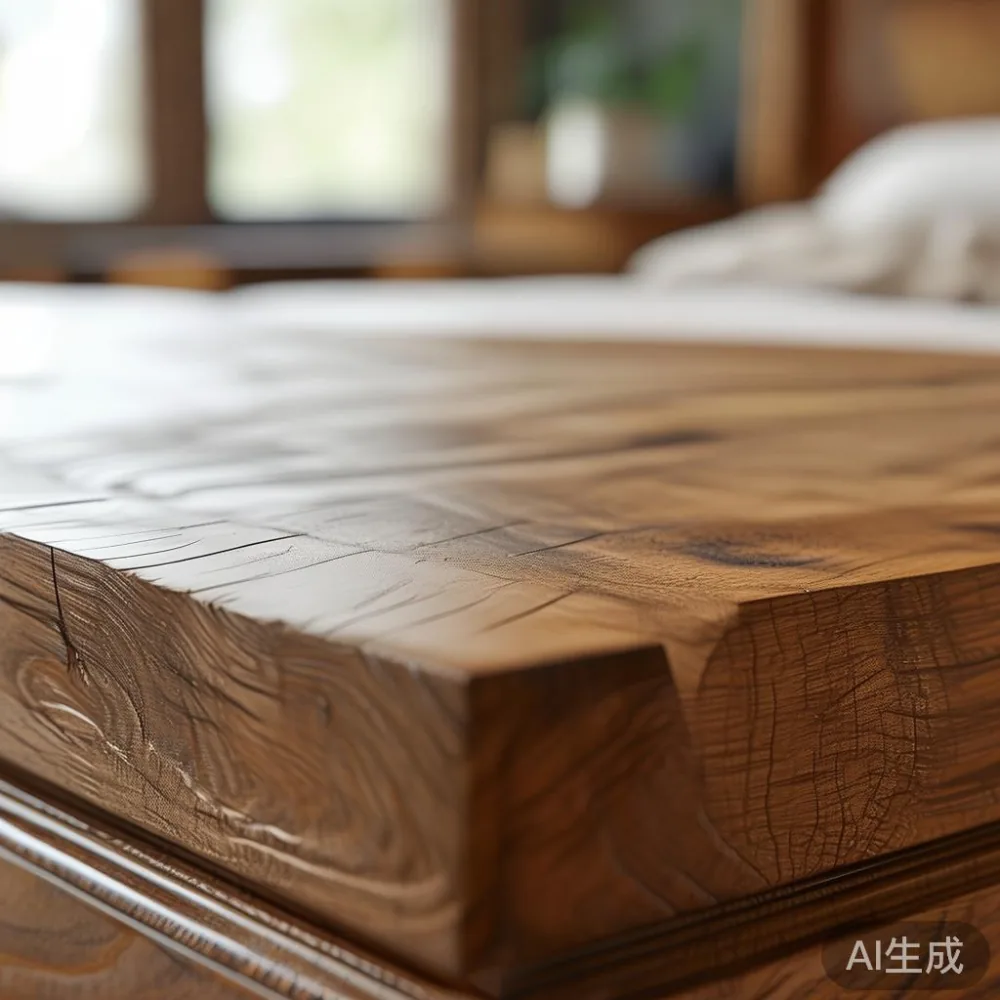
Solid wood uses solid timber through the visible rails, slats, and headboard. It is not automatically immune to movement: Singapore’s humidity, roughly 70–85% for much of the year, can cause seasonal expansion. However, properly kiln-dried timber and well-designed joints have more opportunity for repair. A scratch can often be sanded and refinished, while a swollen board or loose joint may require attention that a veneered panel cannot accept in the same way.
For the five-year calculation, the important distinction is not whether one label sounds premium. It is whether the frame is made from materials that can be maintained locally, whether replacement components are available, and whether the supplier supports the product after delivery.
How much does each type cost in Singapore?
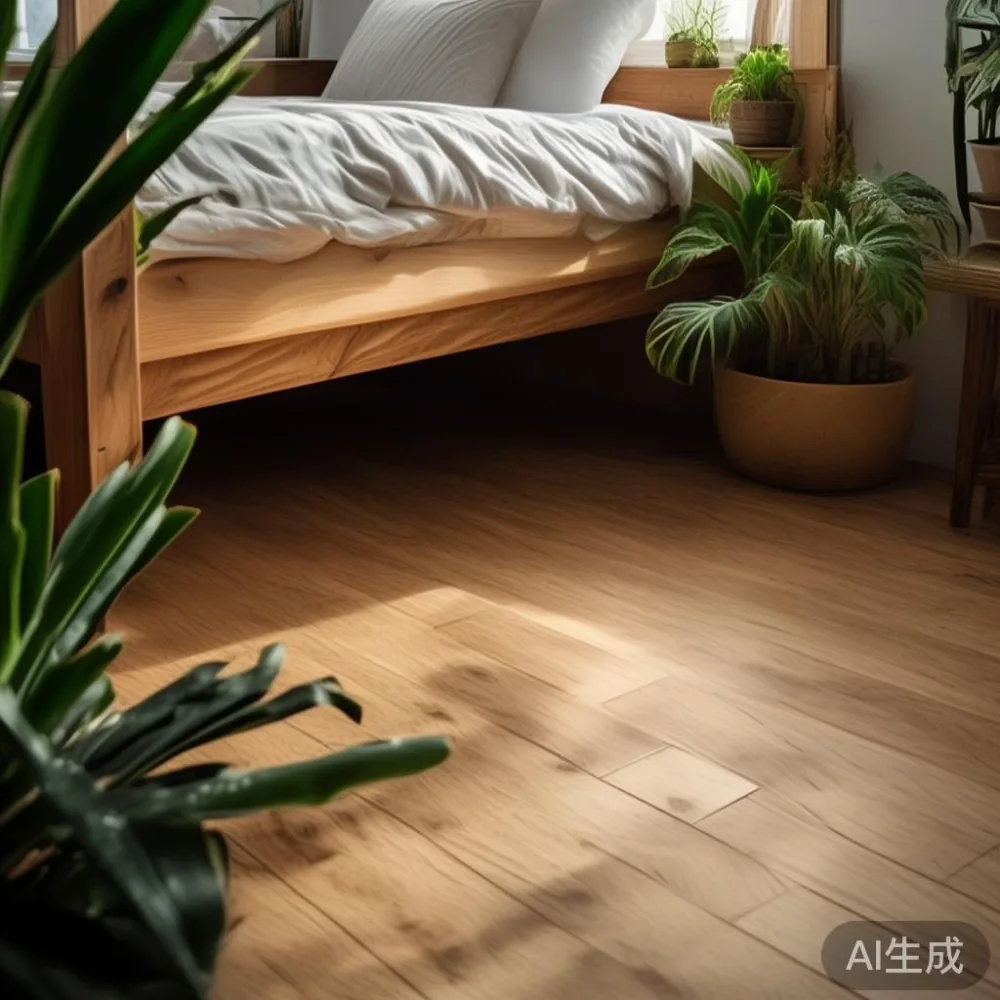
Consider three comparable queen-size frames. A veneered bed frame in a straightforward finish may retail for SGD 499. A mid-range solid oak or ash frame may cost SGD 899. A heavier solid wood frame with a slatted base, shaped headboard, and upgraded hardware may cost SGD 1,299. These figures represent typical retail bands rather than a single guaranteed quotation.
Use the following working figures for a 5-year comparison:
Veneer bed frame: SGD 499 purchase price, 28 kg shipping weight, delivery in 7–10 days, and a product warranty of 10 years. Mid-range solid wood bed frame: SGD 899, 46 kg, delivery in 10–14 days, and a 10-year structural warranty. Premium solid wood bed frame: SGD 1,299, 62 kg, delivery in 12–18 days, and the same 10-year structural warranty.
At 8% GST, the three purchase prices become SGD 538.92, SGD 970.92, and SGD 1,402.92. The heavier frames may attract a small additional delivery charge if the building has no loading bay, although delivery over US$350 is free under the stated MIDHILL shipping policy for eligible orders. Local access charges should still be checked before purchase, especially for a Punggol condo with a restricted loading schedule.
For this calculation, assume each frame needs one delivery, no lift booking fee, and no paid installation. A mattress is excluded because its replacement cycle and comfort preferences vary independently of the frame.
What maintenance costs should you budget over 5 years?
For the veneered frame, budget SGD 180 for five years of care: SGD 60 for dust management and frame cleaning, SGD 40 for screw and joint checks, and SGD 80 for one likely touch-up. If moisture causes the veneer to bubble or the particle-board core to swell, a full repair may cost SGD 250–SGD 450. That replacement is not certain, so it is included as a risk reserve rather than a guaranteed expense.
For the mid-range solid wood frame, allocate SGD 150: SGD 50 for cleaning, SGD 30 for hardware inspection, and SGD 70 for one refinishing session. The premium solid wood frame receives a similar SGD 160 allowance because its larger surface area takes more preparation, even though refinishing remains possible. A light scratch may require only a 30-minute local repair, while a deeper mark can take 2–3 hours including drying.
MIDHILL provides lifetime refinishing for eligible products, subject to its service terms. That policy changes the practical calculation: scratches, scuffs, and colour wear can be addressed without replacing a whole frame. The 10-year structural warranty also exceeds the five-year horizon of this comparison, giving more than 5 years of stated coverage for qualifying structural defects.
Annual humidity control matters. Keep the frame at least 20 cm from a wall where possible, use a bedroom hygrometer, and aim to keep relative humidity near 45–65%. Singapore frequently exceeds that range, so ventilation during the day and dehumidification in wet periods are useful habits. Avoid placing the frame directly against an air-conditioning outlet or near a persistent damp patch.
Which option wins after five years of ownership?
Here is a transparent cost model. The purchase prices include 8% GST. Delivery is recorded as SGD 0 because eligible orders over US$350 qualify for free shipping, while local access is treated as the buyer’s responsibility. Maintenance includes cleaning, inspection, and realistic refinishing reserves.
Veneer: SGD 538.92 purchase + SGD 180 maintenance + SGD 130 probable repair reserve = SGD 848.92 over five years. This equals about SGD 169.78 per year. If no repair is required, the total falls to SGD 718.92, or SGD 143.78 per year.
Mid-range solid wood: SGD 970.92 purchase + SGD 150 maintenance = SGD 1,120.92 over five years, or SGD 224.18 per year. If one SGD 220 refinishing job is required beyond the basic allowance, the total becomes SGD 1,340.92, or SGD 268.18 per year.
Premium solid wood: SGD 1,402.92 purchase + SGD 160 maintenance = SGD 1,562.92 over five years, or SGD 312.58 per year. A single SGD 300 repair changes that figure to SGD 1,862.92, or SGD 372.58 per year.
On direct cash outlay, veneer wins in this model. Its apparent advantage narrows when quality varies widely. A low-cost panel bed can lose its finish after 2–3 years and may need replacement at year 4, while a properly constructed solid wood frame can remain serviceable for 10 years or longer. The meaningful comparison is therefore between well-made examples of each material, not between a thin veneer product and a thick hardwood product.
Are delivery and building access problems worth including in the 5-year cost?
They should be checked before checkout, although they are not necessarily five-year operating costs. A flat-pack veneered frame weighing 28 kg may fit through a 90 cm door and ride in a 110 cm-deep lift in 2–3 cartons. A solid wood frame weighing 62 kg may arrive in 4 cartons, each approximately 160 cm long. If the lift door measures 90 cm but the lift car is only 140 cm deep, a long carton may not fit without tilting it carefully.
For a Bedok HDB flat, measure the stair landing and handrail clearance, not only the bedroom door. In Punggol and Tampimes, ask the building manager about loading-bay slots and lift reservations. A delivery from a Singapore warehouse may arrive within 3–7 days, while an imported or factory-assigned consignment can take 10–18 days. A supplier should provide packed dimensions rather than only the assembled weight.
Check whether the headboard detaches. A separate headboard measuring 120 cm by 65 cm can be carried through a 90 cm opening sideways, while a fixed 190 cm headboard may not. Installation also takes time: a simple veneered frame may require 20–30 minutes with an Allen key, whereas a solid wood frame with dowelled rails and a slat system may take 40–60 minutes. Two people are sensible for a frame above 50 kg.
How does bedroom style affect the material decision?
Material and visual language should be considered together. Italian light luxury for bedroom projects often use pale timber, restrained profiles, linen textures, and gentle contrast rather than heavy carving. Solid wood suits this approach when the grain remains visible and the finish has a matte oil or low-sheen coating. Veneer can also achieve the look, but repeating patterns across large panels may be noticeable under a bedroom’s warm lighting.
French bed vs Mid-century modern bed comparisons often focus on shape, but the underlying frame still determines durability. A French-style bed may have a curved, upholstered headboard that requires a stable center rail. A mid-century modern bed usually has clean tapered lines and a slatted base. Both work in solid wood, though the first may weigh 58–68 kg and the second 38–50 kg.
The same discipline applies to related categories. A solid wood sofa needs a frame that can be opened for spring or webbing repair, while a marble table requires careful weight planning because a 140 cm marble top can weigh 95–130 kg. A dining table should expand and contract with the room, and a wardrobe should resist door sagging. A nightstand should be stable at a useful height of 50–60 cm. These comparisons show why construction details matter across furniture, but the 5-year figures here remain limited to bed frames.
For broader room planning, American sofa vs French provincial sofa is a comparison of a heavier, more structured American profile against carved details and softer curves. French sofa vs Nordic sofa similarly contrasts ornament with pale, restrained forms. Minimalist for small living room schemes favour fewer visible objects and slimmer dimensions. Those references can inform visual taste, yet the bed frame sg purchase should still be judged by timber, joinery, slat spacing, and warranty terms.
What should you inspect before ordering a bed frame sg product?
Ask for the timber species rather than accepting “wood” as a vague description. Confirm whether the side rails, slats, headboard, and legs are solid wood or engineered components. A practical specification should state the queen mattress size of 150 cm by 200 cm, a recommended mattress height of 20–30 cm, centre-rail clearance of at least 8–10 cm, and slat spacing no wider than 7–10 cm, depending on the mattress type.
Inspect the joinery: screws should enter solid timber or metal inserts, dowels should be glued, and a centre support leg should sit beneath the slats. Check that the finish is water-based, low-VOC, and compatible with refinishing. For every frame, confirm the 10-year structural warranty and whether lifetime refinishing covers the visible surfaces. The 14-day return period also gives buyers time to check fit and finish, subject to the stated conditions.
Price should be evaluated after the full landed cost. Compare SGD 538.92 for a veneered queen frame with SGD 970.92 for a mid-range solid wood model, then add the likely maintenance reserve of SGD 180 or SGD 150. Over five years, the gap is about SGD 402 in the base case. If the veneer frame needs a SGD 250–SGD 450 repair, the gap narrows to roughly SGD 102–SGD 302. That is the moment solid wood becomes financially persuasive rather than merely aesthetically different.
Which material is more practical for Singapore homes?
For a smaller HDB bedroom, a veneered bed frame can be sensible when the budget is limited and the surface is protected from moisture. It offers lighter weight, faster assembly, and a lower initial cost. The buyer should accept that deep water damage, peeling edges, and core swelling may shorten the useful life, particularly in a ground-floor Bedok unit or a room with poor cross-ventilation.
For a condo owner expecting to keep the bedroom for at least 5 years, solid wood usually offers the stronger long-term proposition. It can be sanded, repaired, and refinished, and MIDHILL’s lifetime refinishing policy supports that approach. Its weight also makes it stable, but careful dimension checking is necessary for older HDB lifts and tight corridors.
The clearest decision rule is simple: choose veneer when the priority is the lowest initial outlay and replace it only after checking product quality. Choose solid wood when the priority is a repairable frame with a lower five-year risk of major cosmetic failure. Neither label guarantees quality, so inspect the actual frame, request written specifications, and measure the route from the loading point to the bedroom before delivery day.