How to Match Furniture to a Warm Minimal Interior (Without Losing the Cosy Bit)
I spent the last two weekends tramping around Tampines and Bedok with a tape measure and a notebook, photographing friends' flats and quizzing them on what they had actually bought. The honest answer most gave me was that they wanted a warm minimal interior but panicked halfway through, ending up with a cream sofa, a glossy marble table, and a bed frame that fought everything else in the room. This guide is the long-form version of the advice I gave them on the spot, tuned specifically for HDB flats and condos in Singapore where every centimetre, every kilogram, and every delivery slot matters.
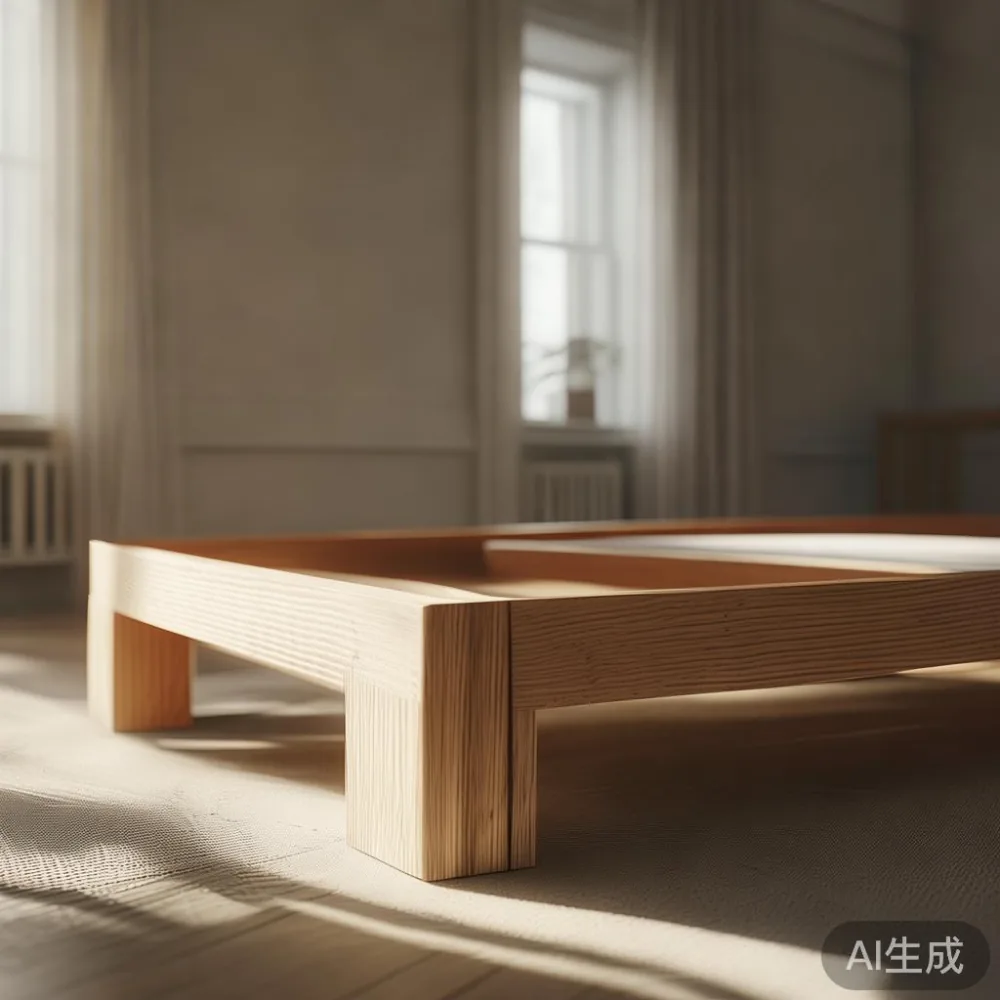
What does a warm minimal interior actually look like?
Warm minimal is a hybrid style: it borrows the clean lines and negative space of Scandinavian and Japanese interiors, then adds a creamy, tactile layer so the room does not feel like a hospital. Picture white walls at around 2.7 m height (the standard HDB ceiling), pale limed oak or American walnut flooring, and a single large piece of solid wood furniture anchoring each zone. The warmth comes from material, not colour. Linen, travertine, brushed brass, and honey-toned timber do the work that a bright accent wall would in a louder scheme.
The palette typically runs three or four tones deep: an off-white (Dulux Whisper White or Jotun Pure White work well under Singapore's tropical daylight), a putty or greige for soft furnishings, a mid-tone wood for the bed frame and dining table, and one darker note — a smoked oak, a charcoal rug, or a veined marble table — used once or twice in the room.
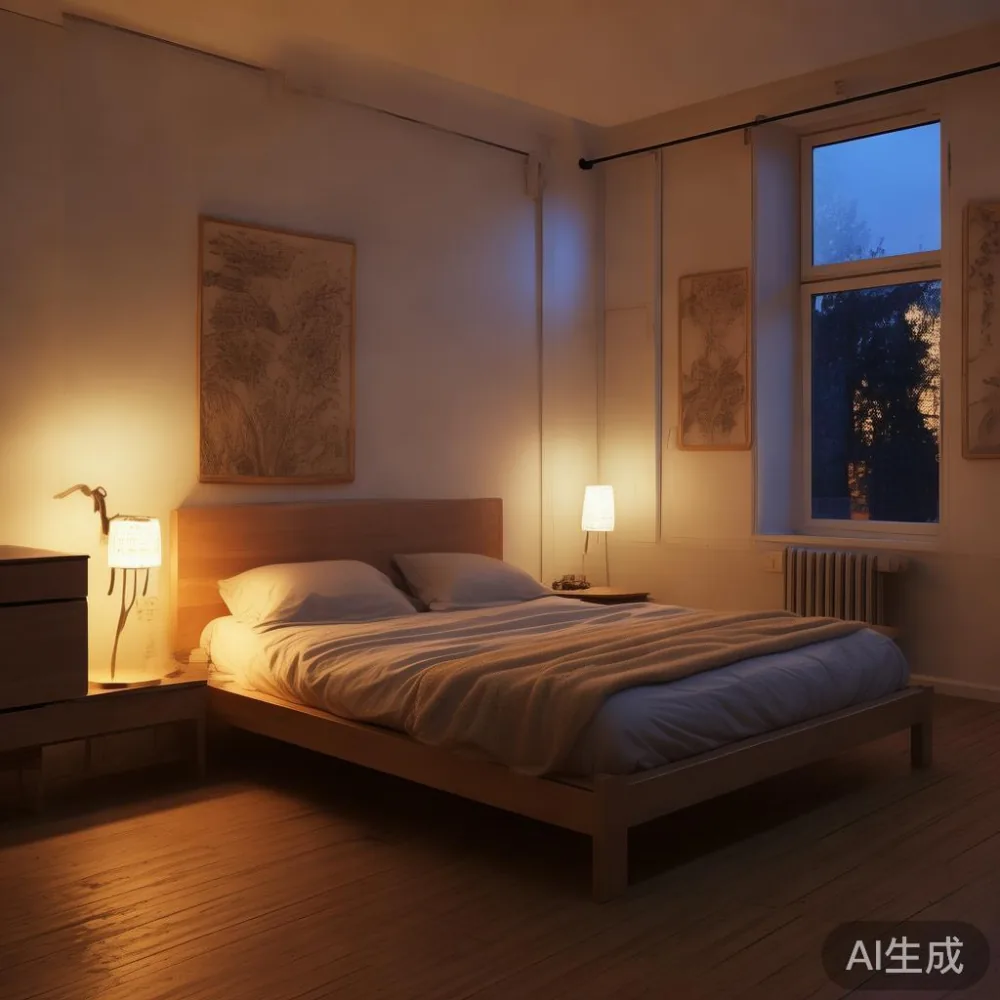
How do I match a bed frame sg to a warm minimal bedroom?
Pick the bed frame first, then design the room around it. In a 3-room HDB the master bedroom is usually 3.0 m × 3.4 m, so a queen-size bed frame at 152 cm × 188 cm leaves roughly 60–70 cm of walking space on three sides, which is the minimum a grown adult needs to make the bed without crawling. For a 4-room flat the secondary bedroom (around 2.7 m × 3.0 m) suits a super-single at 107 cm × 188 cm, freeing wall space for a 60 cm-wide wardrobe and a 45 cm nightstand.
Material-wise, an American light luxury direction works beautifully here: a low-profile solid wood bed frame in white oak or ash, raised on slim 12–15 cm legs so the floor reads as continuous. Skip button-tufted upholstered headboards in dark velvet — they belong to a heavier scheme. A plain timber headboard, or a low 90 cm-tall channel-panelled one in oat linen, sits squarely in warm minimal territory. Underneath, leave 18–20 cm of clearance for robot vacuums, which almost every Punggol household I visit now owns.
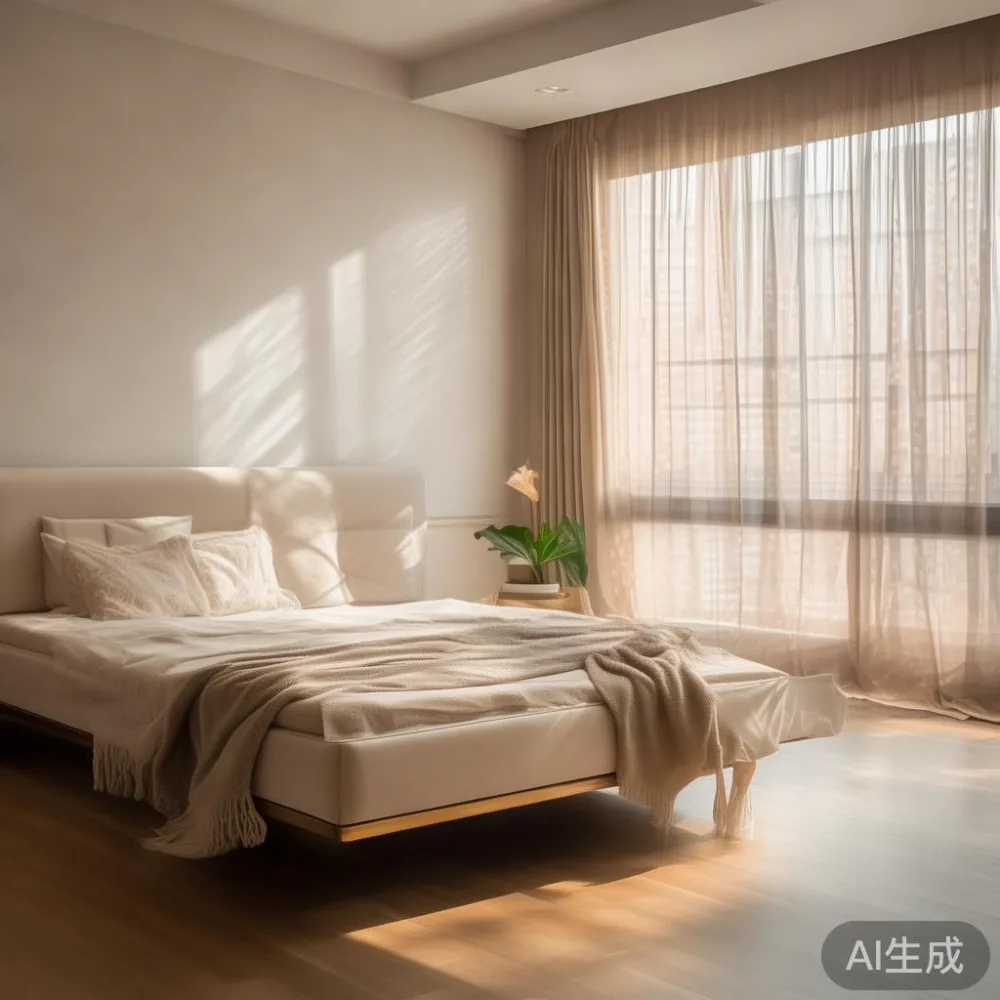
How do I choose a wardrobe sg for a small apartment?
For a Singapore HDB or small condo, choose a wardrobe with a sliding door (not hinged), measure the wall at three points — top, middle, bottom — because HDB walls are rarely dead straight, and allow 2 cm tolerance on each side for delivery through a standard 90 cm-wide corridor door.
That single sentence is the rule I give every friend who messages me about wardrobe shopping. Everything below is the justification. In a 4-room HDB the typical bedroom wall is 2.7–3.0 m long and 2.4 m high. A 240 cm-wide × 240 cm-tall × 60 cm-deep sliding wardrobe gives roughly 1.6 m³ of hanging and shelf volume, which covers two adults' daily wardrobes with room for a hard-shell suitcase (usually 78 cm × 55 cm × 30 cm) stored vertically at one end.
Internal layout matters more than the door finish. I last visited a colleague's resale flat in Bedok where she had paid for a beautiful French light luxury front — shaker panels in a greige lacquer — only to find the interior was a single rail and one shelf. Spend the money on the inside: two hanging zones (long for dresses at 150 cm, short for shirts at 95 cm), three adjustable shelves, two drawers 45 cm deep, and a soft-close full-extension runner (Blum or Hettich, around SGD 45–60 per drawer at retail). For warm minimal rooms, choose a timber-veneer door rather than high-gloss white; the matte surface hides fingerprints and matches the bed frame's grain.
Which sofa, dining table, and marble table work in an open-plan HDB?
Open-plan living-dining in Singapore condos and newer BTOs is usually 4.2 m × 3.6 m or thereabouts, with the kitchen balcony at one end. The furniture triangle — sofa, dining table, marble table — needs to be planned in centimetres, not vibes.
Solid wood sofa. A 220–240 cm three-seater in a performance linen (crypton or similar, around 12,000 Martindale rubs) suits most families. Depth should be 95–100 cm; anything shallower feels perching, anything deeper over 105 cm eats the walkway. Pair it with a 130 cm × 70 cm marble table or travertine-top coffee table, leaving 40–45 cm between sofa front and table edge — the standard reach zone. If you have a long balcony (many Punggol units run 6 m+), a compact two-seater at 150 cm works as a space saving sofa for balcony in the evenings without blocking the laundry zone.
Dining table. For a four-person household, 140 cm × 80 cm seats everyone with 60 cm per person; for six, push to 180 cm × 90 cm. A solid American walnut or white oak top on slim blackened steel legs is the warm minimal workhorse. Round tables under 110 cm diameter feel cramped and rarely work in HDB dining zones because they need 90 cm clearance all round for chair pull-out.
Marble table. Use one marble surface per room, not three. A round 90 cm Carrara or warm Emperador marble side table between two occasional chairs reads as a deliberate accent, whereas scattering the same material on coffee, console, and dining tables makes the room feel like a showroom. Real marble weighs 28–32 kg per cm of thickness for a 90 cm round, so check that your floor can take it — HDB screed is fine but older condo parquet may need a felt pad.
What are the real costs in SGD, and how do deliveries actually work?
Budget honestly before you fall in love with a piece. Below are the ballpark figures I tracked across three furniture visits in Tampines and one at a Punggol showroom in the last month. GST is 9% in 2025 and applies to all of these.
- Queen-size solid wood bed frame (white oak, American light luxury profile): SGD 1,400–2,200 retail; SGD 1,600 delivered.
- Super-single bed frame, same line: SGD 1,000–1,500.
- 240 cm sliding wardrobe, custom internal fit-out: SGD 2,800–4,200 installed.
- Three-seater solid wood sofa with linen covers: SGD 2,400–3,800.
- 140 cm solid wood dining table, walnut top, steel base: SGD 1,200–1,900.
- 90 cm round marble table (Carrara, honed): SGD 900–1,400.
- 45 cm nightstand, matching the bed frame: SGD 280–420 each.
Delivery is where Singapore furniture projects quietly fail. A standard HDB corridor is 1.2 m wide, a lift door is 80 cm × 210 cm (some older blocks 70 cm), and turns into the unit can be 90° at 1.4 m radius. Anything over 220 cm long or 90 cm wide usually needs to come unassembled, and the assembly fee is SGD 60–120 per piece. A queen bed frame in a flat-pack box typically weighs 45–55 kg across two cartons; two fit comfortably in a 3-tonne lorry, so the delivery fee clusters around SGD 60–120 for one item or free over SGD 350. Allow 14–28 working days for made-to-order timber pieces; off-the-floor stock can be 3–5 days. I watched a Punggol couple wait eight weeks for an imported Italian wardrobe that arrived with a chipped door, which is why I now lean towards regional makers with shorter, traceable supply chains — MIDHILL in Foshan, for instance, builds to order and ships to Singapore in roughly 30 days with white-glove delivery that actually carries the boxes up to the floor rather than leaving them at the lift lobby.
Will a post-modern light luxury direction clash with warm minimal?
Post-modern light luxury is the easiest style to over-apply in a small Singapore flat, and the easiest to rescue. The cues — curved silhouettes, fluted glass, brushed brass, soft mint or blush accents — work as seasoning, not the main ingredient. Use one curved piece per room (a bouclé armchair, a rounded marble table, a soft-arch headboard), and one metallic accent (a brass floor lamp, a tap on the kitchen, a slim picture light). Two of each is a styling decision; three is a theme park.
The clash with warm minimal happens when the post-modern pieces arrive in high-gloss lacquer or mirrored finishes. Stick to matte: honed marble, brushed brass, fluted reeded glass, boucle or chenille upholstery. A friend in a Punggol Waterway Crescent condo did exactly this — a fluted glass-front wardrobe, a curved bouclé reading chair, and a brushed brass arc lamp over a low oak bed frame — and the room reads as warm minimal with a post-modern wink rather than either style shouting over the other.
How do I keep a warm minimal interior looking warm, not sterile, five years in?
The style ages well only if the materials age well. Solid timber, natural stone, linen, wool, and brass all develop a patina that adds warmth; MDF with foil wrap, high-gloss laminate, and chrome do not. Ask before you buy whether the bed frame and dining table are real solid wood throughout or just a 6 mm veneer over engineered board — the price difference is usually SGD 300–600, and the lifespan difference is 8 years versus 25.
For care in Singapore's humidity (averaging 80–85% RH year-round), keep timber furniture 15 cm away from aircon vents to avoid uneven drying, run a dehumidifier in the bedroom at 60% RH overnight, and wipe lacquered surfaces with a damp microfibre cloth rather than chemical sprays. A solid wood dining table will need refinishing every 7–10 years; a wardrobe door will not. Some Singapore buyers I spoke with last month specifically chose MIDHILL because the workshop offers lifetime refinishing on timber pieces, which means the bed frame and dining table bought for a BTO in 2025 can be sanded and re-oiled in 2035 for the cost of transport only. That single after-sales promise is what separates a one-off furniture purchase from a long-term interior investment.
Practical checklist before you click "checkout"
Measure the lift (80 cm × 210 cm is standard, 70 cm × 200 cm in older blocks), the corridor (1.2 m minimum), and the final turning radius into your unit. Photograph the route. Confirm the assembled dimensions and the packed box dimensions with the seller. Check the warranty terms in writing — structural warranties of 10 years are the current benchmark for serious timber makers. Ask whether the bed frame and wardrobe can be disassembled for a future move; flat-pack reliability is worth more than a slightly prettier fixed build. And finally, order the nightstands at the same time as the bed frame, even if you only need one now, so the timber batch matches and you avoid a six-month hunt for the right tone.
Do all that, and the room you bring home in Tampines or Punggol will feel warm the day the boxes arrive and warmer every year after.