How to Match Furniture to a Warm Minimal Interior in Singapore
Warm minimalism is less about having almost nothing and more about making each remaining object feel calm, useful, and quietly luxurious. In Singapore, the challenge is often scale: a HDB flat in Tampines may have a compact bedroom, while a Punggol condo can offer larger living areas but stricter common-area rules. Lifts, corridors, and turning radii matter before colour does. MIDHILL furniture is designed around practical dimensions, solid timber construction, and restrained forms that can make a room feel composed without looking overfilled.

This guide focuses on the pieces that shape daily life: a solid wood bed frame, dining table, wardrobe, nightstand, and solid wood sofa. It also considers how marble can work as a small accent rather than a dominant material. All prices below are in SGD and include the 9% GST shown at the time of writing.
What makes a warm minimal interior work in Singapore?
Begin with a limited palette of 4 colours: warm white, pale oak, sand, and one darker tone. Add 2 materials with visible texture, such as matte-finished timber and woven textile. Avoid matching every wall, floor, and cabinet to the same beige. Warmth comes from variation, controlled contrast, and light. A cream wall beside a medium-oak bed frame can feel richer than three shades of cream placed together.
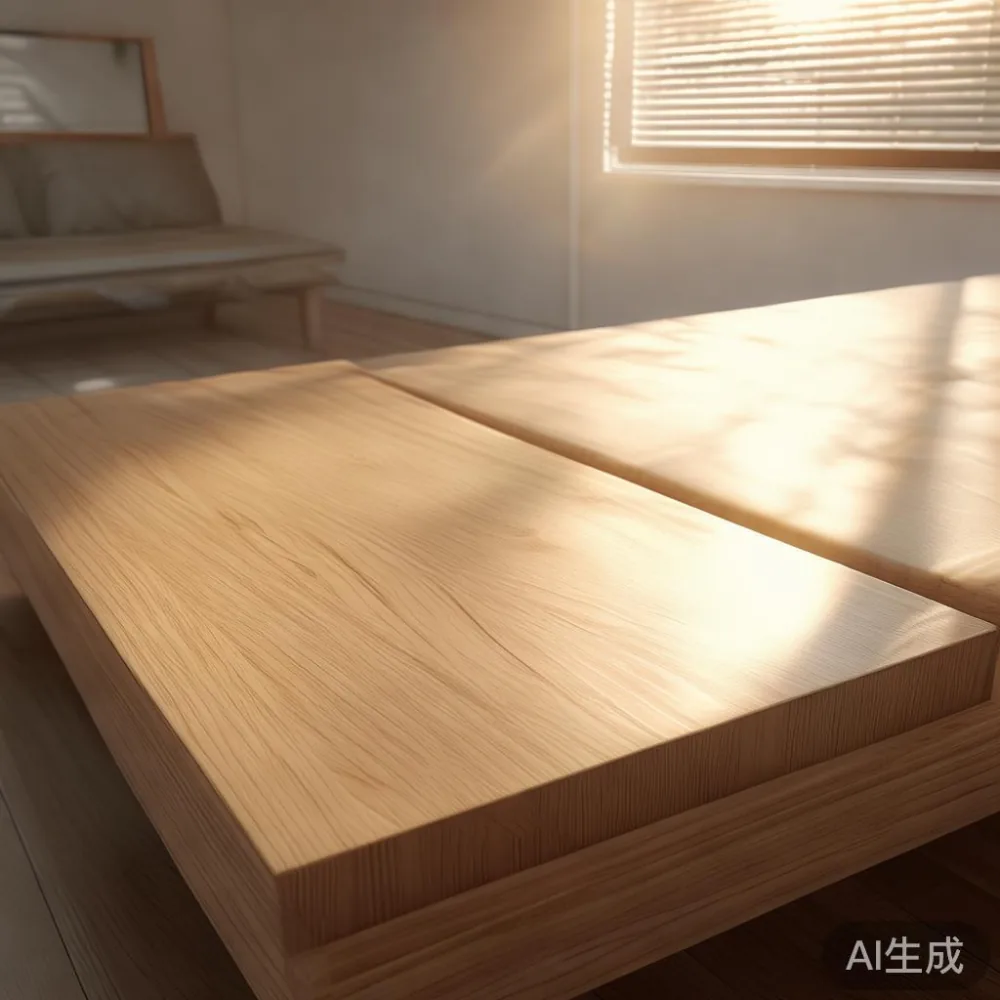
Singapore’s humidity also affects material selection. Solid wood expands and contracts slightly as moisture changes, so allow ventilation around a bed frame and avoid pushing furniture tightly against a cold wall. For a 90 x 200 cm queen bed, leave at least 5 cm at the headboard if the bed is placed against the wall, but leave 60-75 cm along one side where possible for drawers, bedding, and cleaning.
Light should be layered rather than switched on at full brightness. Use 3 levels: 1 warm ceiling fixture, 2 bedside lamps at 2700K, and 1 low task lamp at 3000K. Dimmers help because a room that feels bright at 9 p.m. can look severe. In a dark Bedok HDB bedroom, a light oak frame and warm-white walls will reflect more usable light than a very dark finish.
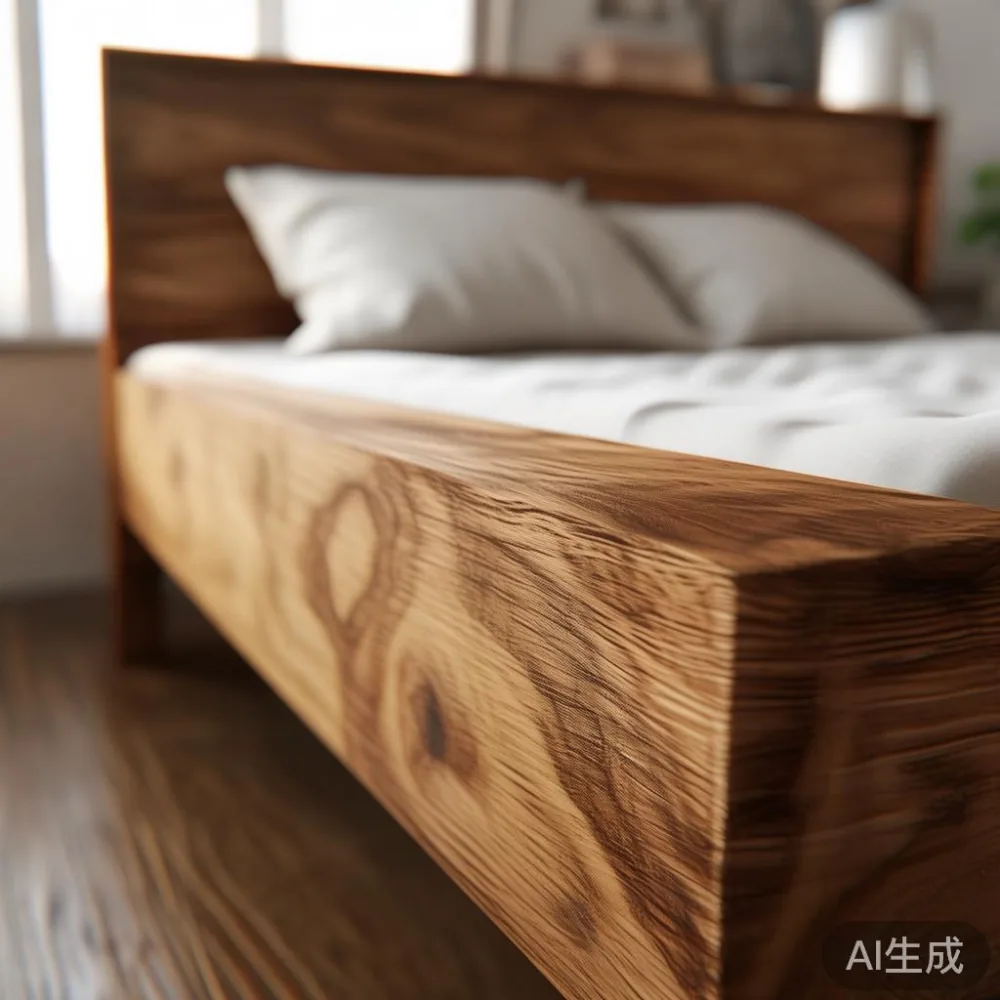
French light luxury is a useful reference because it emphasises pale woods, gentle proportions, tactile upholstery, and occasional curved edges. Post-modern light luxury offers another route through clean silhouettes with selected sculptural details. The common thread is restraint: decorative pieces should have a purpose and a place, not simply fill an empty surface.
How do I choose a bed frame that suits an HDB flat or condo?
The bed is usually the largest object in a Singapore bedroom, so its width determines how the room will function. A queen bed measuring 150 x 200 cm fits many HDB layouts, but an HDB room with only 240 cm of clear width may feel tight if the frame is 160 cm wide. A king at 180 x 200 cm demands at least 210 cm of wall length, plus 5-10 cm of clearance around the frame. Measure the lift door, corridor turns, and bedroom doorway before ordering.
For sloped-ceiling bedrooms, check the highest point of the headboard and the distance from the ceiling. Leave 20-30 cm above a tall headboard when possible. Low-profile frames suit rooms below 240 cm high; they preserve visual space and make moving through a narrow room less awkward. Slatted or upholstered heads can add softness, but solid timber slats age more gracefully in humid conditions if the finish is renewed correctly.
When comparing a light luxury bed vs French provincial bed, the former usually presents a cleaner, straighter outline with pale timber and subtle tailoring. French provincial styling often introduces curved posts, carved details, or antique-inspired finishes. For warm minimalism, choose the quieter proportion. If you are asking whether is European light luxury bed worth it in Singapore, consider the frame dimensions, finish maintenance, delivery route, and warranty rather than the label alone.
Search results for bed frame sg can be dominated by narrow product photographs, so request a dimensioned drawing. Confirm that the listed 150 x 200 cm refers to the mattress size and that the outer frame is not 10-15 cm wider. For especially tight rooms, an expandable or low-profile bed frame sg option may be more practical than a fixed frame with large side rails.
MIDHILL offers a 10-year structural warranty, which is useful when a bed supports daily use for 2 people and receives fewer moves than a dining table. Orders over US$350 qualify for free shipping, although Singapore delivery timing and any landed cost should be confirmed directly. A 14-day return window gives homeowners time to check access and fit, but protective packaging and mattress compatibility still need careful review.
Which wood tone makes a small bedroom feel warmer?
Warm minimalism generally works well with natural oak, ash, or walnut, but the undertone should match the room’s existing elements. If the floor is pale laminate, medium oak adds definition without making the space heavy. If the floor already has strong amber tones, choose a lighter ash finish with less orange colour. A dark walnut frame can look striking in a Punggol condo, yet it should occupy less visual area in a compact HDB bedroom.
Test a sample in morning and evening light. Hold it against the wall for 5 minutes and view it from the doorway. Paint colours can distort timber, so a warm grey wall may make honey oak look orange. In a North-facing room, choose a slightly lighter finish to prevent the bed from appearing flat. In a west-facing Tampines flat with late-afternoon sun, a matte surface will produce less glare than high gloss.
Coordinate the bed with 2 other objects rather than every item. For example, pair an oak frame with a cream solid wood sofa and a blackened-metal lamp. This controlled contrast gives a warm minimal room clarity. Repeating the same timber in the nightstand and dining table can also make an open-plan HDB unit feel planned, provided the finish matches exactly.
Texture matters more than expensive-looking detail. Linen bedding, a wool-blend throw, and lightly grained timber create depth without loud patterns. Keep colours within a range of approximately 30 cm to 60 cm on a neutral colour scale; this means differences are visible but not jarring. Avoid more than 3 patterns in one visible area, even if they use the same colour family.
Can a solid wood sofa work without making the living room look heavy?
Yes, if scale and base design are handled properly. A solid wood sofa with a 75-85 cm seat depth can feel visually substantial, especially in a room below 20 square metres. A slim frame, raised legs of 15-20 cm, and an open area beneath the sofa can reduce the weight. Measure the room before choosing a 3-seat model at 210-230 cm wide; a 2-seat version around 170-190 cm may leave a better 75-90 cm circulation route.
For upholstery, warm minimalism favours oatmeal, taupe, clay, or warm grey. Cream can brighten a compact room, while deeper beige works in a larger condo with strong natural light. A loose cover can create a softer French light luxury mood, whereas tighter tailoring fits post-modern light luxury. If you are comparing a light luxury sofa vs Modern sofa, note the visual difference rather than treating “modern” as a single style. One may use sculptural arms and pale timber; the other may use low, rectilinear cushions and darker metal details.
Searching for the best Scandinavian sofa for 2026 can help identify useful proportions: restrained legs, uncluttered forms, tactile fabric, and practical dimensions. “Best” here means a strong fit for Singapore homes, not a universal ranking. Before buying, check whether the sofa arrives assembled or in 2 modules, whether either part fits through the HDB lift, and how much space is needed to turn it into position.
Leave 40-45 cm between the sofa and a dining table for a main walkway. Allow 60-90 cm for a seated dining zone if the furniture is used simultaneously. In a compact flat, a dining table with a narrow depth of 75-85 cm may be more manageable than a 95 cm rectangular top. A round table measuring 100-110 cm can improve circulation around corners but may reduce usable edge length for 4 people.
How should I plan a dining table and a marble accent?
The dining table anchors the centre of an open-plan home. For 4 people, a 120 x 75 cm table is a practical starting point, giving about 55-60 cm of frontage per person. For 6 people, consider 160 x 85 cm or 180 x 85 cm. In an HDB kitchen-dining area where the table must sit close to a wall, allow at least 60 cm for chair pull-out and ideally 75 cm for comfort.
When researching a MIDHILL dining table, compare the top’s actual dimensions, leg clearance, and delivery configuration. A rectangular table can suit a long narrow bay; a round table can soften a square room. Avoid buying by seat count alone because a 120 cm table may squeeze 6 diners while a 140 cm table may fit the same group more comfortably.
Marble is best treated as an accent. One marble table, a tray, or a narrow console can introduce cool contrast while timber keeps the room warm. If a marble dining surface is selected, check the slab thickness, edge profile, weight, and lifting arrangement. A natural stone top may weigh 70-120 kg, compared with approximately 40-55 kg for a solid wood table of similar size. That difference affects delivery through a lift and corridor.
For homeowners comparing wholesale Italian light luxury furniture, the individual materials may be European while the actual product is assembled elsewhere. Ask for the country of manufacture, timber species, joinery, finish, and warranty terms. Design references can guide the look, but practical construction determines long-term suitability in Singapore.
What is the right way to combine a wardrobe, nightstand, and marble table?
A wardrobe should begin with usable internal dimensions, not only exterior appearance. HDB master bedrooms often have an existing recess, so measure width, depth, skirting, and the position of sockets at 3 points. A 150 cm wide built-in wardrobe can hold a 120 cm double wardrobe plus a narrow hanging zone, but clothing lengths and shelving needs determine whether that arrangement works. Allow at least 60 cm in front of sliding doors and 75 cm in front of hinged doors where chairs or circulation space are present.
Keep the nightstand within reach of the bed but outside the main circulation route. A 40 x 35 cm unit works beside a queen bed, while a 30 cm wide floating model may suit a tighter HDB layout. Match it to the bed frame only if the tones align; otherwise, intentional contrast can keep the room lively. A narrow table can also function as a marble table or bedside surface, but natural stone adds weight and should not float unsupported unless the fixing method is specified.
Use the “Nordic for dining room” phrase only as a design direction, not a substitute for planning. Pale timber, simple legs, uncluttered shelving, and warm lighting can create a Nordic dining atmosphere inside an HDB unit. The goal is not to reproduce a full Scandinavian catalogue, but to use one calm material family across the room.
A useful visual rule is 70% warm base, 20% secondary colour, and 10% accent. For a Tampines flat, that could be warm-white walls, oak furniture, charcoal details, and a few clay or brass objects. In a Bedok condo with more daylight, increase the proportion of pale upholstery and natural stone. In a compact Punggol home, use fewer objects but larger, well-proportioned pieces.
How do I check delivery access before ordering large furniture?
Measure the full route before selecting the largest item. Record the HDB lift door width and internal depth, the corridor width, doorway width, and any 90-degree turns. A sofa module of 85 x 85 cm may enter a lift diagonally but become difficult to turn in a 120 cm corridor. A bed frame with a long headboard may travel upright, while a 160 cm dining top may need a 2-person carry.
Ask for the packaged dimensions, not just the product dimensions. Add a margin of 5-10 cm when judging access. Check whether stair delivery is permitted and whether the service lift has a booking requirement. If the lift is unavailable, professional carrying may cost extra and can take 2-4 hours for a bedroom set.
Delivery time is separate from production time. MIDHILL states that it exports to more than 15 countries and has operated since 2008, but Singapore customers should request a written delivery estimate for the specific item. Standard production may take 30-45 days, with delivery commonly taking another 7-14 days for stock or made-to-order furniture. Peak periods around Chinese New Year, Hari Raya, and year-end sales can add 7-14 days. These are planning estimates, so confirm them before paying a balance.
For local pricing, expect a queen bed frame to sit around SGD 1,200-2,500, a solid wood dining table around SGD 1,800-3,800, a wardrobe from roughly SGD 2,200-5,500, and a 2-3 seat solid wood sofa around SGD 2,800-6,500. A smaller nightstand may fall between SGD 350-800, while a marble table can range from SGD 900-2,600 depending on stone and size. Natural timber, finish, size, and hardware create price differences, so compare specifications instead of assuming every model is equivalent.
Last month I visited a renovated HDB flat in Bedok with a 285 x 330 cm living-dining room. The owners had initially selected a 220 cm 3-seat sofa, but a 195 cm lift door and a tight corridor turn made the route impractical. We tested a 180 cm solid wood sofa in 2 sections; both sections passed through the lift with 3-5 cm clearance. A 150 x 85 cm dining table also worked because the box could be carried upright. The smaller pieces changed the room less than expected, while the improved circulation made the entire layout feel calmer.
How can I maintain warm minimal furniture in a humid climate?
Place solid timber pieces away from direct air-conditioning vents and windows with persistent condensation. Maintain indoor relative humidity around 40-65% where feasible, and wipe spills promptly. Use coasters, felt pads under table accessories, and a soft cloth rather than abrasive cleaner. Avoid dragging a bed frame or wardrobe across the floor; lift it where possible and use floor protection of at least 2 mm beneath a moved item.
Wood finishes should be checked every 6-12 months. Light scratches can usually be treated with a colour-matched repair product, while deeper damage may need sanding and refinishing. MIDHILL offers lifetime refinishing, which is a notable ownership benefit, but the service terms should be confirmed for the specific product and finish.
Leather or fabric upholstery requires a different care routine. Vacuum the solid wood sofa every 1-2 weeks, rotate cushions monthly, and keep pets away from pale fabric if hair removal is a concern. Marble needs a neutral cleaner compatible with its sealer; acidic liquids can dull some natural stone. Do not place hot cookware directly on timber or stone; use a trivet with at least 2 cm of clearance beneath the base.
Finally, resist the urge to fill every surface. Keep 70% of visible table tops clear, limit a nightstand to 3-5 objects, and provide one closed storage area for papers and cables. Warm minimal interiors remain comfortable because they retain breathing room. The furniture should support daily routines, withstand narrow Singapore access routes, and age with care rather than chase a temporary showroom effect.