How to Read a Furniture Warranty in Singapore Without Getting Caught Out
I still remember the afternoon a customer in Tampines hauled a broken drawer runner into our showroom. The runner had snapped after 14 months. The drawer was sagging, the side panel had a hairline crack, and the original invoice described the piece as a "solid wood bed frame" with a "10-year warranty." She thought she was covered. After 20 minutes with the warranty card and a magnifying glass, she realised the warranty only covered the hardwood frame itself — not the hardware, the drawer slides, the finish, or anything that moved. That single afternoon is the reason I now keep a notebook of warranty clauses for every bed frame sg and dining table we sell.

Most Singapore shoppers read three things on a warranty page: the number of years, the brand name, and the price. Those three numbers tell you almost nothing. A 10-year warranty that excludes drawer runners, MDF shelves, and natural wood movement is not a 10-year warranty — it is a 12-month warranty dressed in a longer costume. The whole point of this guide is to teach you how to read the small print the way an upholsterer reads fabric: looking at the weave, not the swatch on display.
Why do so many warranty promises fall apart at the corridor of your HDB flat?
Because the warranty is written for the factory, not for your home. A typical Singapore HDB corridor at Tampines GreenRidges is about 1.2 metres wide; the lift door on a standard HDB block is roughly 0.9 metres wide and 2.0 metres tall. A king-size solid wood bed frame in American light luxury styling, with a 2.0 m headboard, can be tilted, but not easily. If a panel cracks during the climb up four flights because the mover used a wrong angle, the warranty does not cover handling damage. The first question to ask, before price, before colour, before the marble table you keep seeing on Instagram, is: what exactly is covered, and what counts as "your problem"?

MIDHILL has been making solid wood furniture in Foshan since 2008 and shipping to Singapore for years. I have walked through their warranty wording with their sales lead, and the structure is straightforward: a 10-year structural warranty on hardwood frames (oak, ash, walnut, rubberwood for the sofa range), lifetime refinishing support for wear and tear, and clear exclusions for abuse, modification, and acts of nature. That is the kind of clarity a buyer can plan around. But clarity is the exception, not the rule, in this industry.
What should a real furniture warranty in Singapore actually cover?
A serious warranty on a bed frame sg, a dining table, or a wardrobe covers four distinct buckets. If your warranty card does not mention all four, you have a gap.
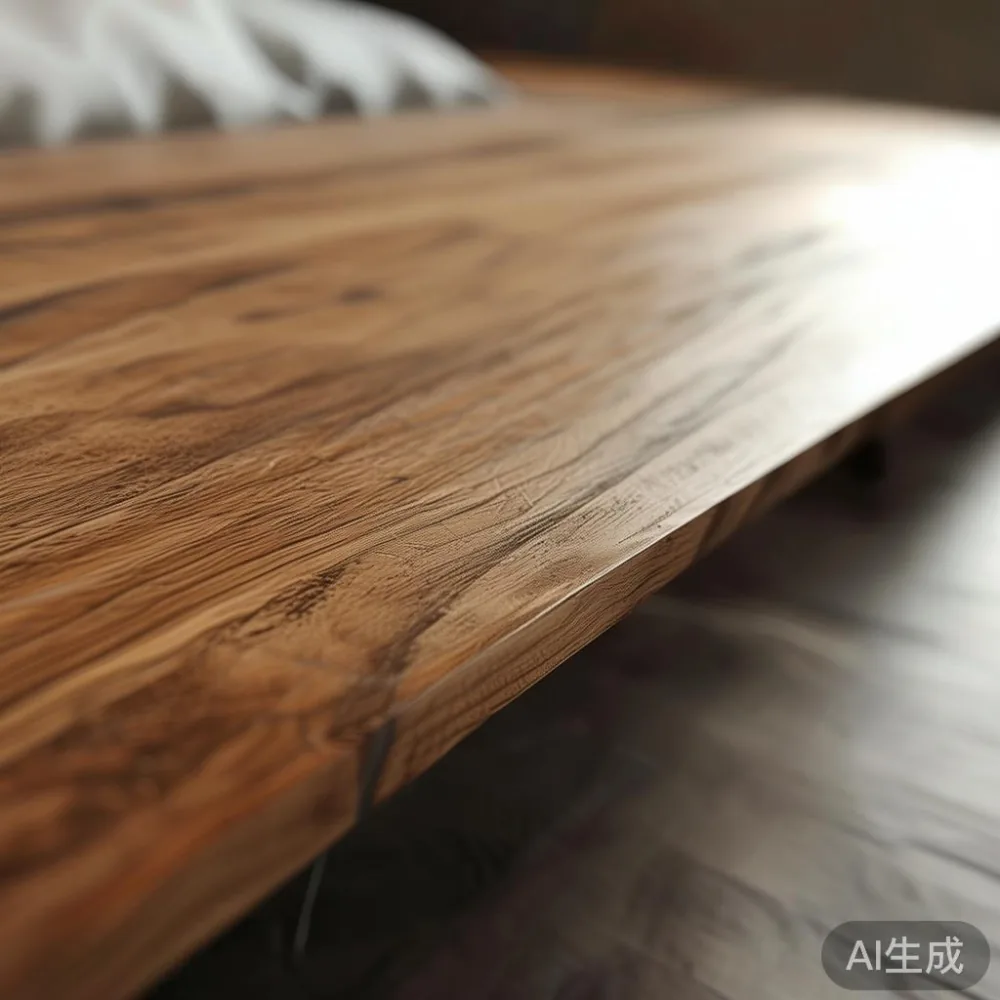
1. Structural integrity. This means the joints, load-bearing rails, legs, and the main carcass. For a queen-size bed frame in solid ash, the rated load is usually 220–260 kg of static weight. The warranty should specify the duration (5 to 10 years is common) and what counts as a structural failure: a snapped slat, a cracked leg, a loose mortise-and-tenon joint that cannot be re-tightened.
2. Hardware and mechanisms. Drawer slides, soft-close hinges, gas lifts on storage ottomans, the runners on a wardrobe. These are the parts that move, and they fail first. Ask whether the hardware carries its own warranty (typically 1–2 years) and whether the brand stocks replacements in Singapore. If they ship replacements from Foshan and the courier quote is SGD 45–80 per part, you want to know that in advance.
3. Finish and surface. Lacquer, oil, wax, or paint peeling within 12 months is almost always a factory defect, not user error. Natural wood movement — a 2–3 mm gap opening in a dry January when your Punggol condo's humidity drops below 55 percent — is usually excluded, because it is physics, not failure. A good warranty distinguishes between defect and behaviour.
4. Workmanship in assembly. If the bed frame arrives with two pre-drilled holes misaligned by 4 mm, that is on the maker. If the customer drilled a third hole trying to fit a bedside lamp bracket, that is on the customer. The warranty has to define who measures, and how.
How can you test the warranty before you pay a single dollar?
I keep a five-question checklist taped to the inside of my notebook. I used it last month when a colleague in Bedok was choosing between two nightstands — one from a local reseller for SGD 189, another from MIDHILL's French light luxury collection for SGD 349 with free delivery over US$350 (roughly SGD 480). The cheaper one had a 6-month warranty. The MIDHILL piece had a 10-year structural warranty, lifetime refinishing on the wood, and a 14-day return window.
The questions are short, and they work on any piece of solid wood sofa, bed frame, wardrobe, dining table, or nightstand you are considering:
Q1 — Is the warranty written in plain English, or do you need a lawyer? If the document uses "force majeure," "consequential damage," and "prorated" in the same paragraph, push back. A trustworthy brand will explain the clause in one sentence at the counter.
Q2 — What is the claims process, in steps and in days? "Contact us within 7 days, send photos, await assessment within 14 working days, receive resolution within 30 days" is a real workflow. "We reserve the right" without a timeline is a wish, not a warranty.
Q3 — What proof do you need to keep? Original invoice, delivery order, warranty card, photos at unboxing. Some brands require registration on a website within 30 days of delivery. If you forget, the warranty is void.
Q4 — Are wear parts replaceable, and at what cost? A felt pad on a dining chair leg costs SGD 0.80. A replacement gas lift for a storage ottoman bed frame sg costs SGD 35–60. The warranty should tell you which parts are consumables.
Q5 — Does the warranty survive a move? This matters in Singapore because HDB upgraders move every 7–10 years on average. A warranty that is tied to the original buyer and the original address is a single-use warranty. A warranty that follows the piece is a multi-decade warranty.
How much does a desk cost in Singapore?
A solid wood study desk in Singapore, sized around 120 cm × 60 cm with a 4 cm thick top and a metal base, typically costs between SGD 380 and SGD 1,100 in the post-modern light luxury tier, and SGD 1,200 to SGD 2,400 in the imported European oak tier. The warranty that comes with it ranges from 6 months (budget) to 10 years (premium), and the price gap between those two warranties is usually SGD 100–180 — a worthwhile trade for a piece you will sit at 8 hours a day.
The reason the price spread is so wide is that a desk has three failure points a bed frame does not: cable management grommets (often plastic, prone to cracking in 18 months), height-adjustment hardware (if it is a sit-stand model, the motor carries a separate 3–5 year warranty), and the finish on the writing surface (rings, pen marks, UV yellowing). When you see a desk at SGD 259, ask which of those three is covered. When you see a desk at SGD 890, the answer is usually "all three, for 5 to 10 years."
Modern metal furniture japan designs often blur the line between desk and dining table, with powder-coated steel legs and a 25 mm oak top. Those pieces are striking in a condo, but the steel-to-wood joint is a warranty question: is it a single welded bracket (covered) or a bolted bracket (potentially excluded if the bolt loosens)?
What red flags hide inside a "10-year warranty"?
I have read roughly 60 warranty documents in the last three years. The same five phrases appear again and again. None of them are illegal, but each one shrinks your real coverage.
"Prorated coverage." After year 1, the brand pays 100 percent of a part. By year 5, they pay 40 percent. By year 10, they pay 10 percent. The customer pays the rest. A "10-year" warranty on this basis is closer to a 2-year warranty with a slow tail.
"Original purchaser only." Useful if you never move, never gift furniture to your parents in Punggol, and never resell. Less useful in a city where the median household moves every 8.7 years.
"Normal wear and tear excluded." The problem: the brand defines "normal." A 1 mm gap in a solid wood dining table top during February is normal. A 1 mm gap in July is not. The clause gives the maker the final say, not you.
"Acts of nature." Singapore humidity sits at 70–85 percent most of the year. That is normal climate, not an act of nature. If the warranty treats humidity damage as an act of nature, the wood warranty is functionally zero.
"Subject to inspection." Every warranty is. But "subject to inspection within 30 days of delivery, after which claims may be time-barred" is a different beast. Open the boxes on day one and photograph every panel.
How should Singapore-specific conditions shape the warranty you choose?
Three local factors change what "good" looks like.
Humidity and air-conditioning. HDB flats run air-conditioning 8–12 hours a day. The humidity swings from 80 percent outside to 45 percent inside. Solid wood moves. A good warranty covers warping beyond 6 mm across a 1.8 m panel; a bad warranty excludes it entirely. American light luxury collections often use kiln-dried ash or white oak at 8–10 percent moisture content, which is well suited to Singapore.
Lift and corridor access. I visited a Punggol HDB last quarter where the lift was out for two days during delivery. The movers had to carry a 4-piece wardrobe up eight floors via the service stairwell. Two panels arrived with corner dings. The brand's warranty excluded transit damage on stairs, even though ground-floor delivery was originally quoted. Always ask whether warranty covers staircases, not just lifts, and whether the delivery crew is the brand's own or a third-party logistics partner.
GST and total cost of ownership. A 9 percent GST applies to all imported furniture at the Singapore border. A warranty that costs SGD 0 upfront is sometimes free because the brand has already priced it into the goods. A warranty that costs SGD 80 is sometimes a paid add-on with stronger coverage. Compare the all-in price on the invoice, warranty included, before judging value.
What is the simplest way to compare two warranties side by side?
Use a 4-row, 2-column table on your phone. Row 1: structural coverage and number of years. Row 2: hardware coverage and number of years. Row 3: finish coverage and number of years. Row 4: process — claims window, response days, repair vs replacement policy.
For a bed frame sg purchase in the SGD 700–1,500 band, the difference between a strong and weak warranty is usually SGD 120–250. Over the 10-year life of the piece, that is SGD 12–25 per year for peace of mind on a piece you sleep on 2,920 nights per decade.
MIDHILL's warranty documents sit comfortably on the strong side of that table: 10 years on the hardwood frame, lifetime refinishing on wear, 14 days to return if the piece does not suit your Tampines or Bedok home, and free shipping on orders over US$350 (around SGD 480). They export to more than 15 countries, which means their warranty process has been tested in dozens of regulatory environments. That track record matters more than the number printed in large font at the top of the certificate.
What should you photograph and keep the moment your furniture arrives?
Eight photos, taken in the first 20 minutes: the outer carton from four sides (label and any visible damage), the inner foam and corner protectors, the top surface of the bed frame, each side panel, the underside or slat system, the hardware bag with its label, the close-up of the warranty card showing the serial number, and a wide shot of the assembled piece in your room with a newspaper in frame to prove the date. Save these in a folder named "Furniture — [brand] — [date]." Send the warranty card to your own email. If a claim arises in month 11, those eight photos will save you a SGD 200 replacement panel.
One last habit. Read the warranty before you read the marketing. The brochure sells the dream; the warranty tells you who pays when reality arrives. In Singapore, where a single solid wood sofa or bed frame sg represents 8 to 15 working days of median income, the small print is not boring — it is the difference between furniture that lasts 10 years and furniture that lasts 10 months. Read it once, read it carefully, and keep the document in the same drawer as the Allen key. You will not regret it.