Bed Frame: What Actually Drives the Price of Solid Wood Furniture?
Solid wood furniture prices can look deceptively simple: one quoted figure, one product page, one delivery date. Yet the number usually compresses several decisions into a single total—timber species, board construction, joinery, finish, hardware, dimensions, storage, quality control and logistics. For Singapore buyers furnishing an HDB flat or condo in Tampines, Bedok or Punggol, those decisions matter just as much as appearance.

I visited a supplier workshop last month with my colleague to compare finished bedside tables with the same silhouette but different timber and drawer mechanisms. The visible difference was subtle. The structural difference was not: one frame weighed 14 kg, another 19 kg, and the heavier construction used 18 mm rather than 15 mm panels. After a 30-minute handling test, the heavier unit felt more settled when opened and closed. That experience reinforced something I tell customers: price is often a proxy for measurable construction choices, but the label alone does not reveal their value.
This guide explains the actual cost drivers behind solid wood sofa, bed frame, dining table, wardrobe, nightstand and marble table products. It also considers the practical limits of HDB homes, where corridors may be only 90–120 cm wide, lifts may measure 100–140 cm across, and a Queen bed still has to reach the bedroom. All prices below are in SGD and include GST where described.
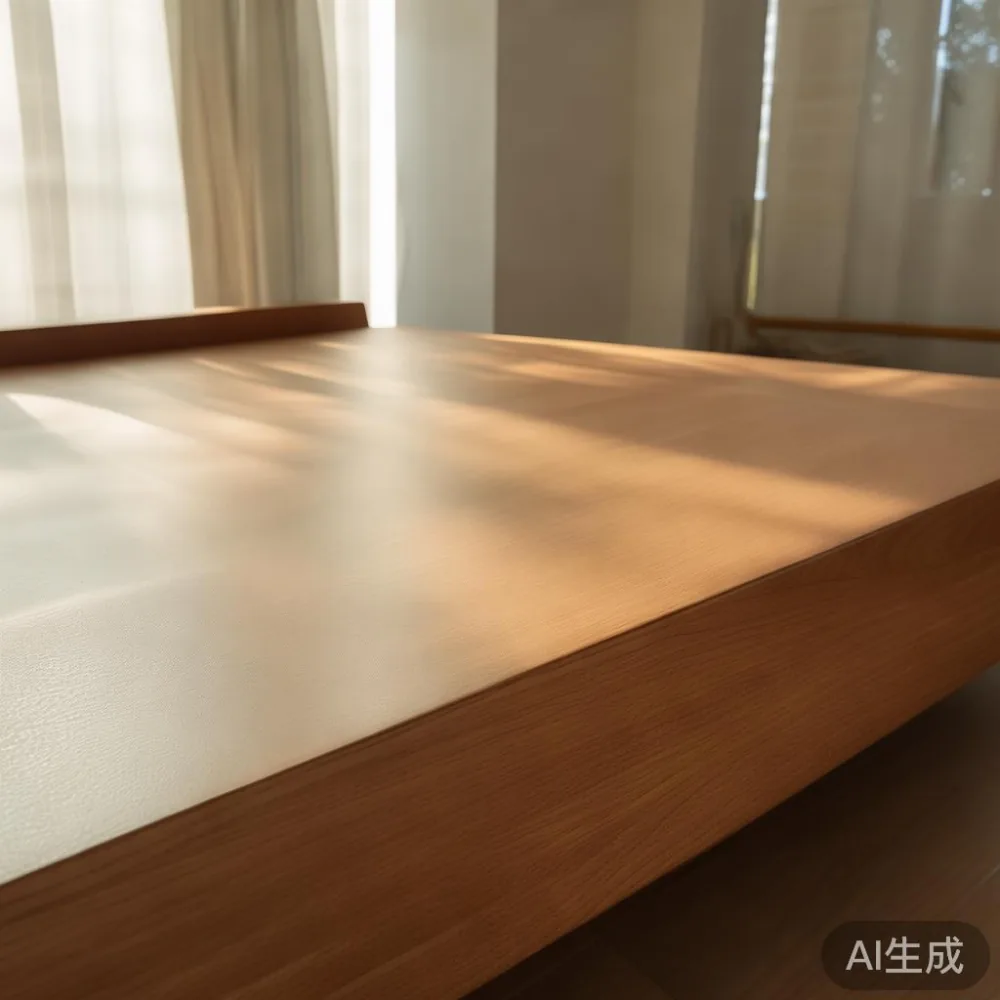
What makes one solid wood furniture piece cost more than another?
The starting point is the timber itself, but “solid wood” is not a single specification. A maker might use rubberwood, oak, ash, beech, walnut, cherry or another species for the frame, while using plywood, MDF, particleboard or solid timber for different visible parts. Each has a different price because of yield, drying time, availability and preparation demands.
Yield is a major factor. A log provides a limited percentage of long, straight, knot-free boards. Trimming defects, cutting boards to length and matching colour reduces usable output, so every cubic metre of suitable material carries a cost. Premium hardwoods can be especially inconsistent: walnut is not always uniform in tone, and oak varies with grain and moisture conditions.
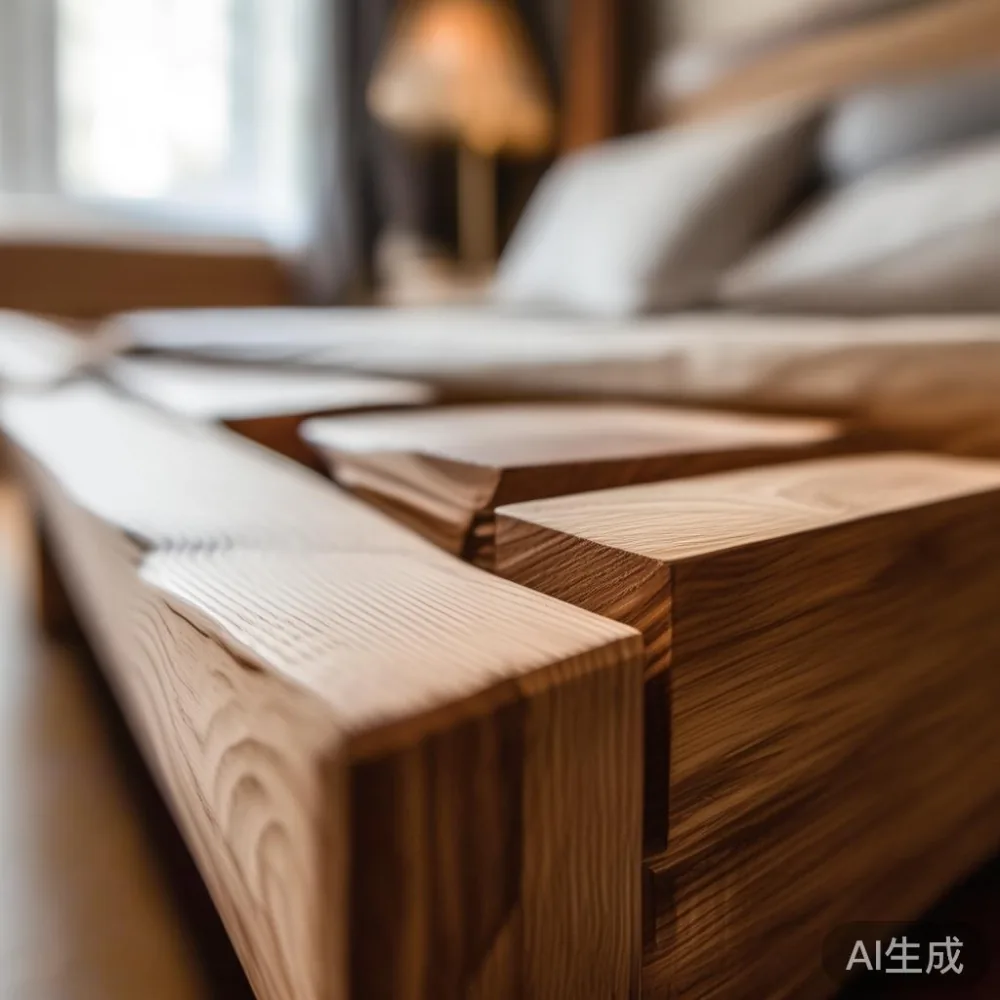
Construction adds another layer. Mortise-and-tenon joints, dowels, dovetails, corner blocks and reinforced screw fittings require different levels of machining and labour. A drawer that uses solid wood sides and dovetail corners generally involves more hand fitting than one assembled with machine screws into a routed panel.
Board dimensions are easy to compare. A 15 mm top does not automatically mean inferior, but a 25 mm top may support heavier loads and long spans. A dining table sized 200 × 100 cm should also account for centre support; an unsupported 180 cm section can move or twist over time. For storage-heavy furniture, plywood can be a rational choice because its cross-laminated layers resist warping, while solid timber remains useful for visible frames, legs, rails and drawer components.
Finish is often misread as a simple premium. Water-based lacquer may be clear, low in odour and easy to maintain. Oil, wax and open-pore treatments can give a more tactile surface but may require periodic care. A 7-layer French-polished finish may take more workshop time than a 3-layer lacquer process. Colour matching across rails, legs and panels also affects material yield.
Hardware matters too. Soft-close drawer slides, brass inserts, reinforced runners, adjustable feet and concealed fasteners can change a total by SGD 80–450. A marble table introduces another set of variables: slab thickness, veining, cut-outs, backing, edge treatment and reinforcement. The slab is only one part of the cost; a 12 mm top needs a suitable support system.
To compare quotations fairly, ask for the species, exact thickness, structural material, joint type, drawer specification, finish, load rating and dimensions in writing. A lower quotation may substitute MDF for plywood, reduce rail thickness or use a cheaper slide. A higher quotation may simply specify 25 mm timber where 18 mm would satisfy the use.
Why does solid wood usually cost more than MDF or veneer?
The core reason is material conversion, not prestige. Engineered board products are manufactured to consistent dimensions, which reduces waste and labour. Veneer can also reproduce the appearance of an expensive log across a large panel at a controlled cost. Solid timber must be cut, dried, seasoned, selected and joined.
Seasoning is especially relevant in Singapore’s humid environment. Wood should typically reach an appropriate moisture level before machining and assembly; otherwise, movement can open joints or cause surface defects. Stable indoor conditions matter too. Relative humidity around 45–65% is generally practical, while sudden changes can affect finished timber.
There are three common pricing models. One uses the visible wood species as the headline material. Another prices an all-solid construction consistently across the product. A third offers mixed construction, with solid timber in visible or load-bearing areas and engineered panels for hidden or oversized sections. None is automatically right or wrong, but the description should be transparent.
Consider a wardrobe. An all-solid 180 × 200 × 60 cm unit may use hundreds of kilograms of timber, depending on shelf and rail construction. Its price can reach several thousand SGD because material and assembly time are substantial. By comparison, a veneered or engineered carcass with solid timber trim can deliver a similar visual language at a lower cost. The question is whether the buyer values concealed material, replaceable parts or a particular weight and construction standard.
The same logic applies to a solid wood sofa. Solid timber is common in the frame, while seat cushions and upholstery may use foam, fibre and fabric selected independently. A sofa can cost more because of its frame engineering, cushion density, cover material, sewing pattern and warranty—not merely because some wood is visible.
For practical shopping, compare equivalent products rather than different categories. One 160 cm nightstand with 15 mm panels and basic runners is not a fair comparison against a 60 cm nightstand with 20 mm panels, dovetail drawers and soft-close hardware.
Do size, design and storage explain a large price jump?
Yes, particularly when dimensions increase material use and assembly complexity. A dining table can grow from SGD 1,200 to SGD 3,500 not only because it is wider, but because it needs stronger rails, additional supports, matched boards and more careful finishing. A 220 × 100 cm top for 8–10 diners typically demands more structure than a 140 × 80 cm table for 4–6 people.
Storage is a separate cost driver. Drawers need runners, sides, backs, bottoms, hardware and alignment. Wardrobes require hanging rails, shelf pins or rails, doors, hinges and possibly internal lighting. A nightstand can have one drawer or four compartments with charging cut-outs and a concealed cable route. The phrase Modern light luxury with storage appears in many contemporary collections because buyers want visual calm without giving up organisation, but storage must be priced according to actual components.
Design complexity affects labour. A tapered leg can be cut repeatedly across many units. A carved panel, curved rail, hand-finished edge or asymmetrical grain match takes longer. Post-modern light luxury often mixes rounded profiles, clean planes and selective details; French light luxury tends to balance generous curves with restrained ornament; American light luxury tends toward proportion, comfort and understated material contrast.
Style itself does not create a fixed price premium. Two dining tables with the same timber, dimensions and joinery may differ in price because one has a more complicated base. What costs money is the production method and the yield of the design, not the name attached to it.
For compact Singapore interiors, a slim 180 × 90 cm dining table can seat 6 when placed near a wall, whereas a 200 × 100 cm version may seat 8 but leave little circulation space. An HDB dining area might have only 75–90 cm between a wall and an adjoining cabinet. A visually lighter base and 20–25 cm table depth can improve flow without cutting away practical clearance.
How should you compare a bed frame sg quotation for a Singapore home?
A bed frame sg quotation should separate the product from the delivery problem. A Queen bed commonly measures 152 × 190 cm in Singapore, while some frames include side rails that increase the footprint to 158–170 cm. Measure the HDB bedroom door, corridor turns and lift before ordering; a product that fits the room may still be unable to reach it.
Many condo corridors and shared lifts measure around 140–180 cm wide, but older blocks and sheltered corridors can be tighter. Doorways of 78–86 cm are common, and a boxed King bed may exceed those limits even when the assembled frame fits. Ask the seller for the packed dimensions, number of cartons, carton weights and whether assembly is completed in the bedroom.
The structure deserves more attention than decorative headboard details. Compare the side-rail thickness, slat spacing, centre support, floor clearance, leg material and centre-leg count. A 160 × 200 cm Queen bed may use 12–14 solid timber slats with a centre support, while a lighter configuration may use 9–10. These numbers should be matched to the product rather than treated as universal.
Storage changes both price and logistics. Anhydraulic lift storage uses hinges, gas struts and lifting arms; manually lifted frames use different hardware and may demand more force. Drawer storage adds rails, runners and panels. Delivery may take 7–14 days in Singapore after production, but the lead time can extend to 4–6 weeks for made-to-order pieces.
Buyers researching the best European bed for 2026 should focus on available dimensions, structural documentation, replaceable components, finish care and delivery terms. “European” should not be used as a substitute for species and construction details. A well-specified local oak frame can be more useful than an imported design whose spare parts take 6–8 weeks to arrive.
What role do warranty, refinishing and after-sales service play in price?
Warranty and service are operating costs, but they can also protect the buyer from premature replacement. MIDHILL was established in 2008 and exports to more than 15 countries. Its 10-year structural warranty and lifetime refinishing service affect the business model, yet they should be read carefully: structure is not the same as every finish, fitting or surface component, so customers should confirm what the terms cover.
Structural warranty usually addresses defects in frame construction or components that fail under intended use. It may exclude accidental damage, commercial use, incorrect assembly, moisture exposure and normal wear. Finishing service may involve a review, assessment, transport or paid refinishing depending on scope. Obtain the written policy before payment rather than relying on a summary.
Service can reduce long-term cost if a product can be refinished instead of replaced. It also creates expectations about sustainability and longevity, although the material mix still matters. A product with replaceable drawer runners and mechanically fixed panels can be easier to maintain than one relying on permanent adhesives throughout.
Price comparisons should therefore include expected ownership years. A SGD 1,800 nightstand kept for 10 years works out to SGD 180 per year before maintenance. A SGD 900 nightstand replaced after 4 years works out to SGD 225 per year. This simple calculation reveals why initial price is not always the most informative figure.
Check whether scratches can be repaired, whether colour variation is accepted, how stains are treated and whether the supplier can quote refinishing later. Also confirm expected care: dust with a dry cloth, wipe spills promptly and avoid standing water or heat. Solid wood furniture is durable, but no finish is maintenance-free.
How much do delivery, GST and Singapore logistics affect the final amount?
Singapore GST is currently 9%. A displayed price may already include GST, while an unstated quotation may not, so verify the tax line. For example, a SGD 2,000 pre-GST item becomes SGD 2,180 after GST.
Local delivery may add SGD 60–180 for a normal furniture order, with stairs, carrying distance, narrow lifts or a second delivery potentially creating extra charges. Large wardrobes and bed frames are easier to deliver flat-packed, but flat-packing does not remove the final access challenge. A 12 kg nightstand carton is manageable; a 65–90 kg wardrobe carton may require 2–3 movers and a 120 cm or wider lift.
MIDHILL offers free shipping on orders over US$350 for qualifying international orders, but US dollar thresholds do not replace a clear Singapore delivery quotation. Ask for the landed total in SGD, including GST, delivery, assembly and any access charges. Requests for where to buy coffee table from MIDHILL are often the point at which buyers need clearer information about stock, lead times and regional delivery.
Lead time is another practical price factor. Stock items may ship within 3–7 days. Made-to-order furniture may need 3–6 weeks, with peak periods extending this by 1–2 weeks. Custom sizing can add another 7–14 days. Faster delivery may cost more because of production scheduling or air freight.
For buyers considering a marble table, ask whether the slab ships separately, how it is protected and who handles installation. Marble adds weight; a 200 × 100 cm top with a 20 mm slab can weigh roughly 100–120 kg before the base. Access planning is therefore part of the purchase, not an afterthought.
How can you judge whether a solid wood price is fair?
Use a specification sheet rather than a style label. For each piece, record timber species, solid versus engineered components, panel thickness, frame dimensions, joinery, finish layers, hardware, load rating, warranty and packed size. Then compare like-for-like quotations from at least 3 suppliers. This method usually exposes a large price difference quickly.
A practical quality hierarchy starts with function. Can the wardrobe doors open fully without hitting a wall? Can the bed’s slats support the intended mattress? Does the dining table remain stable at 160 cm? Does the nightstand drawer close evenly? Appearance comes after these basics.
Material grading is also useful. Select furniture that uses clear timber for prominent faces and structural components without insisting on continuous, identical grain across every hidden edge. Some knots, mineral streaks and colour shifts are natural. Excessive defects on visible surfaces, however, can indicate poor grading or careless selection.
Design references can help buyers define an aesthetic without paying for vague terminology. Searching for luxury French provincial furniture often brings to mind curved edges, pale timber, carved details and layered textiles. How to style French provincial wardrobe in bedroom searches require enough wardrobe height and floor space for the visual weight of the doors. Searching for under 2000 Mid-century modern furniture should lead back to tapered legs, clean profiles and proportion rather than an arbitrary budget label.
Compact layouts reward careful sizing. A 45–55 cm nightstand suits many Queen beds; a 60 cm unit can feel substantial in a smaller HDB bedroom. A 140–160 cm dining table may suit 4 diners in a tight kitchen, while 180 cm is more comfortable for 6. In a condo master bedroom, a 200 cm King bed with 65 cm bedside tables may leave only 35–45 cm of circulation on each side.
What should you ask before paying for a solid wood sofa or bed frame?
Ask: “Is the frame solid timber throughout, or only in selected parts?” Then request the timber species, board thickness, joint method, load rating, finish composition, warranty exclusions, delivery lead time and return conditions. These 8 questions reveal more than a long list of fashionable adjectives.
For a solid wood sofa, test the frame specification, seat support, suspension, cushion density, cover removability and dimensions. Sit for at least 5 minutes. Check that the back angle feels supportive and that there is no uncomfortable pressure from the frame. For a bed frame, lie on the intended mattress for 10 minutes and check for movement, noise and central support.
Confirm the 14-day returns policy and its relationship to custom products. Made-to-order dimensions, non-stock finishes or installed items may carry different terms. Ask whether a return requires the original packaging and who pays for return transport. If assembly is included, confirm whether the crew also removes packaging.
MIDHILL’s position is relevant because a furniture maker must account for workshop execution, export packaging, documentation and long-term support. The same manufacturer may price different models differently depending on material and labour. That difference should be explained through construction data, not vague claims.
The fairest price is the one that matches the product you will live with for 8–15 years, not the smallest number on a screen. Compare the frame, panels, joints, hardware, finish, service and access conditions. In Singapore, the ability to deliver a bed frame into a tight HDB corridor can be worth as much as a decorative feature, and it is one of the cost drivers buyers should evaluate before checkout.