The Practical Guide to Choosing a Bed Frame in Singapore: Sizing, Materials, and Long-Term Value
Why Singapore’s Climate Demands Smart Bed Frame Choices
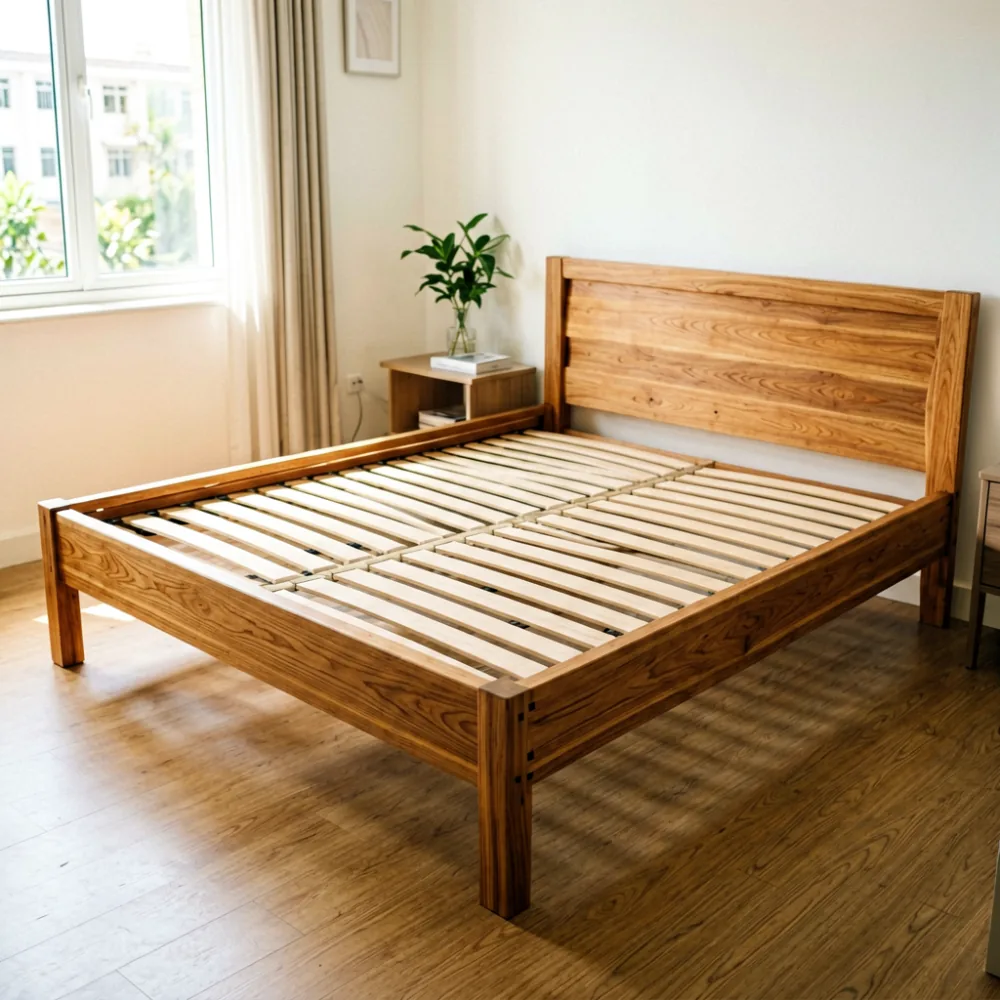
Wood Movement and Joint Integrity in High Humidity
Living in Singapore means dealing with relentless humidity that swings between 70 and 90 percent year-round. This constant moisture exposure can cause wooden bed frames to expand and contract, leading to squeaks, loosened joints, and misaligned slats over time. When shopping for solid wood furniture, especially in bedrooms without dedicated air-conditioning, the choice of timber and joinery technique becomes critical.
Solid teak and well-seasoned rubberwood resist warping better than cheaper engineered options. Look for frames that use mortise-and-tenon or dovetail joints rather than just screws and glue. These traditional methods allow wood to move slightly without compromising structure. I’ve seen budget frames develop a distinct wobble within 18 months in HDB flats near the coast, where humidity hits hardest.
- Prefer kiln-dried timber with a moisture content between 8 and 12 percent.
- Check for metal reinforcement brackets at stress points like headboard joints and center legs.
- Avoid frames with large particleboard panels unless they have sealed edges to block moisture ingress.
HDB and Condo Bedroom Dimensions: Fitting the Right Frame
Clearance Math for a 72-Inch Bed in a Compact Room
Most HDB 4-room and 5-room bedrooms measure around 10 feet by 10 feet (300 cm by 300 cm), while condo bedrooms can be slightly larger but still有限. A standard king-size bed frame runs approximately 193 cm wide by 203 cm long. To allow comfortable movement and avoid a cramped feel, you need at least 90 cm of clear floor space on each side and at the foot of the bed.
In practice, that means a 300 cm wide room minus the 193 cm bed width leaves only 107 cm of leftover space. Splitting that equally gives roughly 53 cm per side—well short of the ideal 90 cm. Solutions include choosing a platform bed frame under 15 cm tall to improve visual space, or selecting small space furniture designed with proportional scaling. Some buyers opt for custom furniture to tweak the depth to 190 cm, saving a few centimeters.
| Bed Frame Width (cm) | Room Width Needed (cm) for 90 cm Clearance | Typical HDB 4-Room Compatibility |
|---|---|---|
| 150 (Queen) | 330 | Usually too tight |
| 193 (King) | 373 | Often impossible |
| 180 (Oversized Queen) | 360 | Barely fits in larger layouts |
If your bedroom measures only 270 cm across, a queen-size frame (150 cm) with 90 cm side clearance would require 330 cm total. In that case, reducing clearance to 60 cm per side may be the only realistic option. Always measure your actual room, not just the mattress size, and account for wardrobes, bedside tables, and door swing paths.
Weight Capacity and Structural Durability
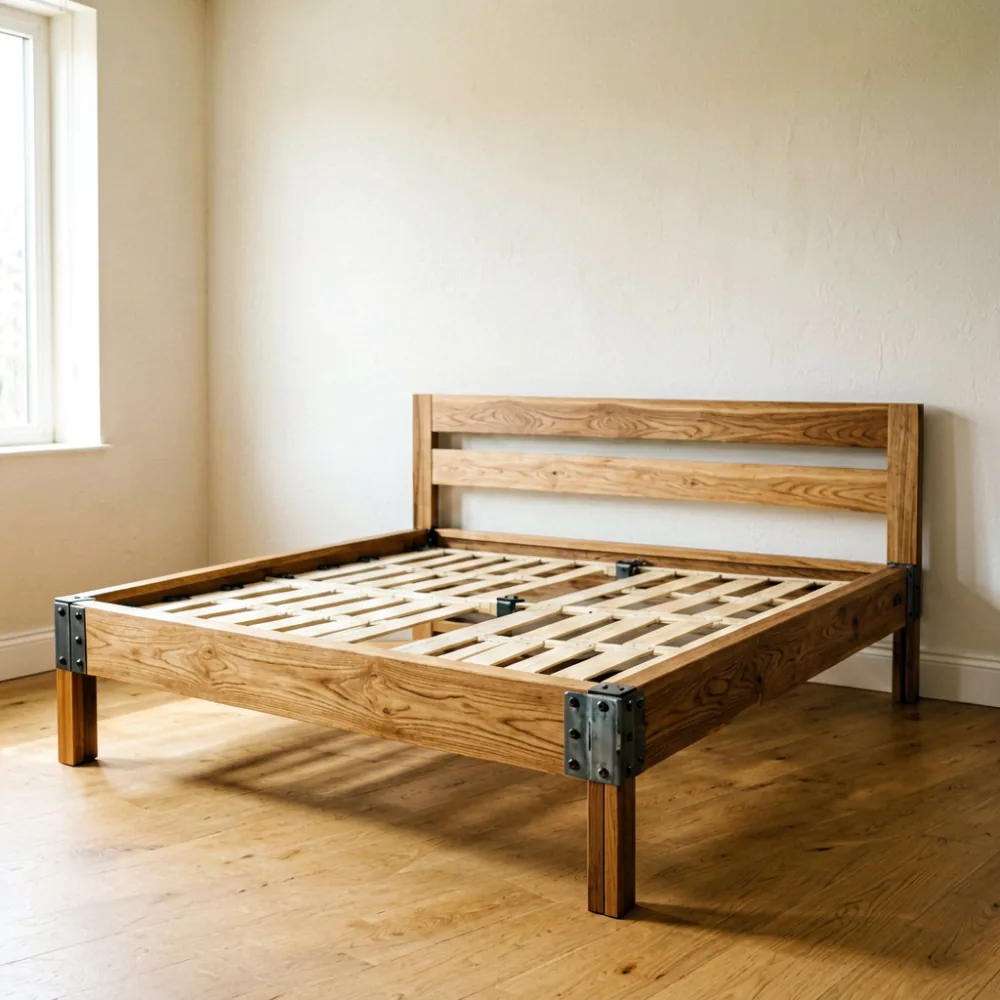
What 250 kg to 350 kg Ratings Really Mean
Bed frame weight capacity isn’t just about static load; it’s about dynamic stress from getting in and out, tossing, and long-term sag resistance. A frame rated for 250 kg should comfortably support a 120 kg person plus a heavy mattress without excessive deflection. I recommend aiming for a capacity at least 30 percent above your expected total weight for longevity.
In local market testing, frames with evenly spaced slats at 5 cm intervals and a center support leg perform better than those with only perimeter supports. Durable furniture brands often publish independent load tests, but many don’t. When in doubt, ask for details on slat material (birch or oak beats pine) and leg thickness (minimum 4 cm square or 5 cm diameter).
Brands like MIDHILL, established in 2008 as a Foshan solid-wood furniture maker, back their frames with a 10-year structural warranty, signaling confidence in joint integrity and material stability. That warranty typically covers cracking, warping, and joint failure under normal household use—a useful benchmark when comparing offers.
Storage Solutions: Hydraulic Lift vs Drawer Beds
Height, Effort, and Dust Considerations
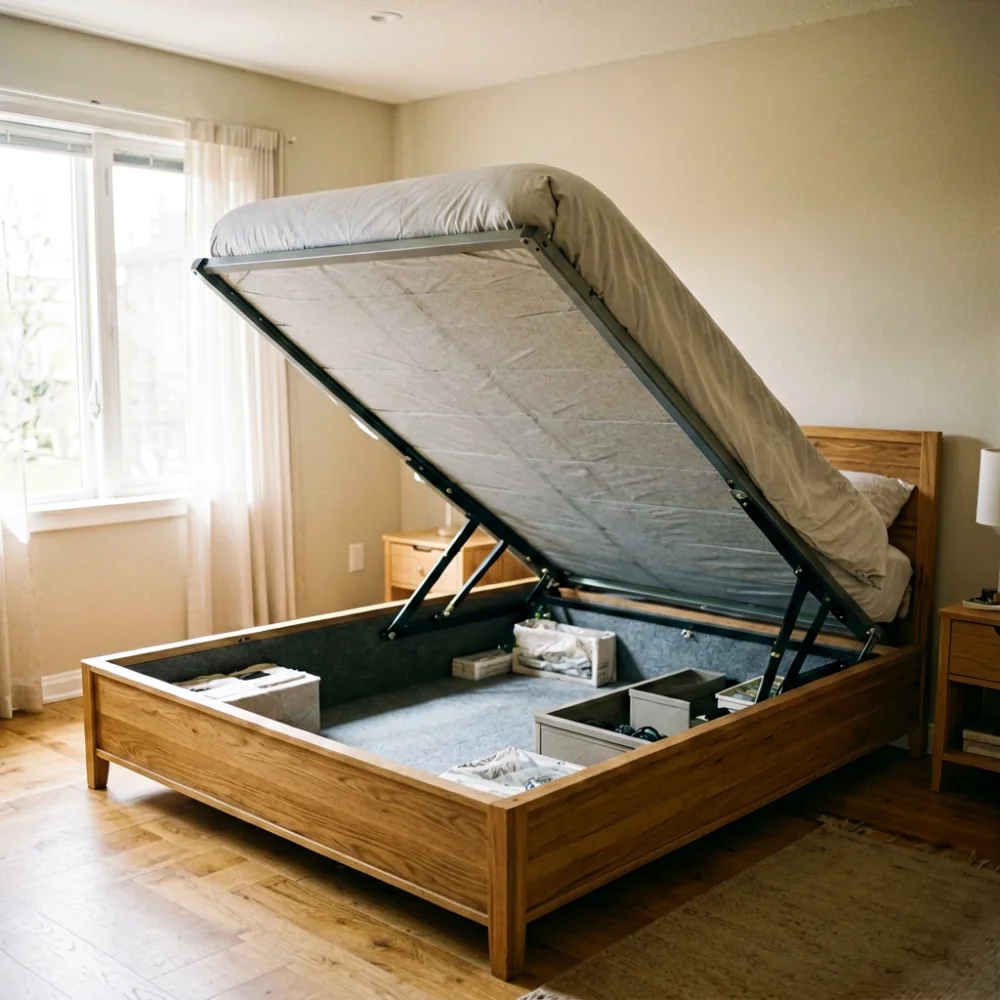
Storage beds are a popular answer to Singapore’s limited closet space, but the mechanism matters. Hydraulic lift frames raise the entire mattress platform to reveal a deep cavity underneath, while drawer beds feature pull-out bins integrated into the frame sides.
Hydraulic lifts usually require a base height of 35 to 45 cm when closed, leaving 25 to 35 cm of storage depth. They work well in rooms with low ceiling clearance because the lifted platform doesn’t intrude sideways. However, lifting a heavy mattress alone can be tricky if the hydraulic struts are undersized for a 100+ kg mattress.
Drawer beds consume floor space when pulled out—they need at least 60 cm of clearance in front. They’re easier to load and unload but can trap dust in the runners. For custom furniture orders, you can specify drawer slide quality (soft-close ball-bearing runners are worth the extra SGD 150) and whether you want ventilated bases to reduce mold risk.
- Choose hydraulic lifts if your room width is under 250 cm after bed placement.
- Pick drawer beds if you prefer organized, labeled storage and have ample floor space.
- Ensure any storage frame has a raised base of at least 15 cm to allow airflow and reduce dust mite buildup.
Assembly and Delivery Realities in Singapore
Lift Sizes, Stair Flights, and Tool Needs
Buying a bed frame online is common, but delivery and assembly can surprise you. Most HDB blocks have service lifts measuring 110 cm wide by 140 cm high, while condo passenger lifts are slightly larger. A king-size bed frame in flat-pack form usually fits, but assembled frames or platform beds with attached headboards may not.
For ground-floor units or homes with narrow staircases, consider frame sections no longer than 120 cm. Assembly typically takes 45 to 90 minutes for two people using basic tools (hex keys, screwdrivers, occasionally a hammer). Some brands offer paid assembly for SGD 50 to SGD 100, which is reasonable if you’re unsure about aligning slats or tightening joints evenly.
When selecting ergonomic furniture that includes adjustable height features, verify that all hardware is included and that instructions are pictogram-based rather than language-heavy. Delivery to District 9 or 10 condos often requires advance booking because of restricted access hours, so factor that into your timeline. Plan for your frame to be in the room for at least 24 hours before making the bed, allowing any compressed wood to acclimatize to indoor humidity.
Material Breakdown: Teak, Rubberwood, and Engineered Options
Cost, Maintenance, and Lifespan Expectations
Singapore’s market offers a range of materials, each with trade-offs. Solid teak is the gold standard for durability and natural oil content that repels moisture, but it commands prices starting around SGD 1,200 for a queen frame. Rubberwood is a more affordable solid wood option, reasonably stable if properly dried, and often used in mid-range frames priced SGD 600 to SGD 900.
Engineered wood (MDF or particleboard) frames are budget-friendly, often under SGD 400, but they’re vulnerable to humidity swelling at unsealed edges. They work in air-conditioned bedrooms where humidity is controlled, but may warp within a few years in non-AC spaces. veneer-covered MDF can mimic wood grain but doesn’t improve structural strength.
For long-term value, a well-constructed rubberwood or teak frame from a reputable manufacturer will outlast two or three engineered alternatives. Look for frames finished with polyurethane or acrylic sealants rather than cheap lacquers that peel. Regular maintenance involves wiping with a dry cloth and avoiding wet mops near joints. If you choose durable furniture built for Singapore’s climate, you’ll likely replace it only when upgrading mattress size, not because the frame failed.
Budget Tiers and Where to Invest
SGD 400, SGD 800, and SGD 1,500+ Breakdowns
Bed frames in Singapore span a wide price range, and spending more usually buys better materials, stronger joints, and longer warranties. At the SGD 300 to SGD 500 tier, you’ll find mostly engineered wood frames with basic slat systems. They’re suitable for guest rooms or short-term use but may need replacement within three to four years in humid conditions.
The SGD 600 to SGD 1,000 bracket is the sweet spot for most homeowners. Here you can get solid rubberwood or imported pine frames with reinforced center supports, better slat spacing, and warranties of five years or more. Many local brands and Chinese importers operate in this range, offering competitive value.
Above SGD 1,200, you’re paying for premium hardwoods like teak, designer aesthetics, and extended warranties. These frames often include features like integrated LED lighting, USB ports, or advanced hydraulic mechanisms. For a primary bedroom where the frame will see daily use for a decade or more, investing in the mid to upper-mid tier delivers the best cost-per-year. Remember that mattress support is only as good as the frame beneath it, so skimping here can shorten your mattress lifespan too.
Frequently asked questions
What is the minimum bedroom width needed for a king-size bed frame with comfortable walking space?
For a 193 cm wide king frame, you ideally need a room width of at least 373 cm to allow 90 cm clearance on each side. In smaller HDB rooms, reducing clearance to 60 cm per side may be acceptable, requiring a minimum width of 313 cm.
How can I prevent my wooden bed frame from squeaking in Singapore’s humidity?
Choose frames with mortise-and-tenon joints and metal reinforcement at stress points. Ensure slats are secured with clips or screws, not just laid loosely. Apply a thin layer of paraffin wax to slat contact points annually, and keep bedroom humidity below 70 percent with air conditioning or dehumidifiers.
Are hydraulic lift bed frames safe for heavy mattresses like latex or hybrid models?
Yes, if the hydraulic struts are rated for the combined weight of the mattress and platform. Latex mattresses can weigh 30 to 50 kg; hybrid frames add another 15 to 25 kg. Check the manufacturer’s weight rating for the lift mechanism and opt for dual-strut systems on wider beds for even lifting force.
What’s the difference in assembly time between flat-pack and pre-assembled bed frames?
Flat-pack frames typically take 45 to 90 minutes for two people using basic tools. Pre-assembled or partially assembled frames can reduce this to 15 to 30 minutes, mainly for positioning and securing slats. Professional assembly services charge SGD 50 to SGD 100 and often complete the job faster with proper experience.
Questions about specifications, fabric or delivery? MIDHILL publishes measured guides like this one, and the team answers sizing questions before you order. See the full collection or contact the team.