How Southeast Asian Humidity Affects Solid Wood Furniture in Singapore
Singapore’s tropical climate can change the dimensions, joints and surface finish of solid wood furniture. The effect is particularly noticeable in HDB flats and condos in Tampines, Bedok and Punggol, where indoor relative humidity may shift from about 55% in air-conditioned living rooms to 80% or more near windows, after rain and during periods when the air-conditioner is switched off. Wood naturally exchanges moisture with the surrounding air, so a solid wood sofa, bed frame, dining table, wardrobe, nightstand or marble table should be treated as a long-term household investment rather than an object that can ignore the room around it.
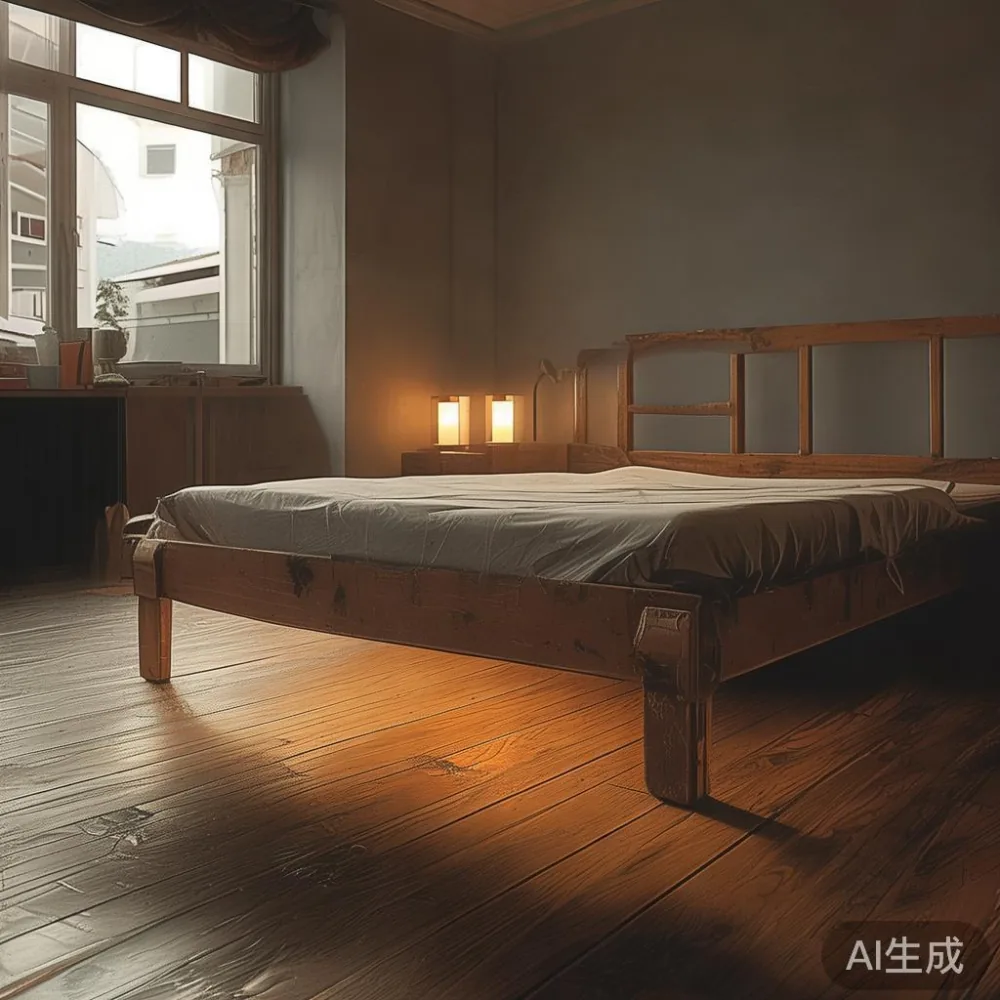
MIDHILL has manufactured solid wood furniture since 2008 and exports to more than 15 countries. Its structural warranty covers 10 years, while refinishing service is available for the lifetime of the product. That long-term support matters in Singapore, where seasonal humidity and everyday air-conditioning create a recurring cycle of expansion and contraction. A well-designed piece should remain stable through that cycle, provided customers understand how moisture is managed after delivery.
Why does humidity change solid wood furniture in Singapore?
Wood is hygroscopic: it absorbs atmospheric moisture when the air is humid and releases it when the air becomes drier. Movement is measured as a change in width, length or thickness. Movement is measured as a change in width, length or thickness. For a solid timber panel, a change of 1% in moisture content can produce roughly 0.2–0.3% dimensional movement across the grain. The visible result may be a drawer that feels tight in the morning, a sliding wardrobe door that catches in the afternoon, or a tabletop that appears slightly uneven along one edge.
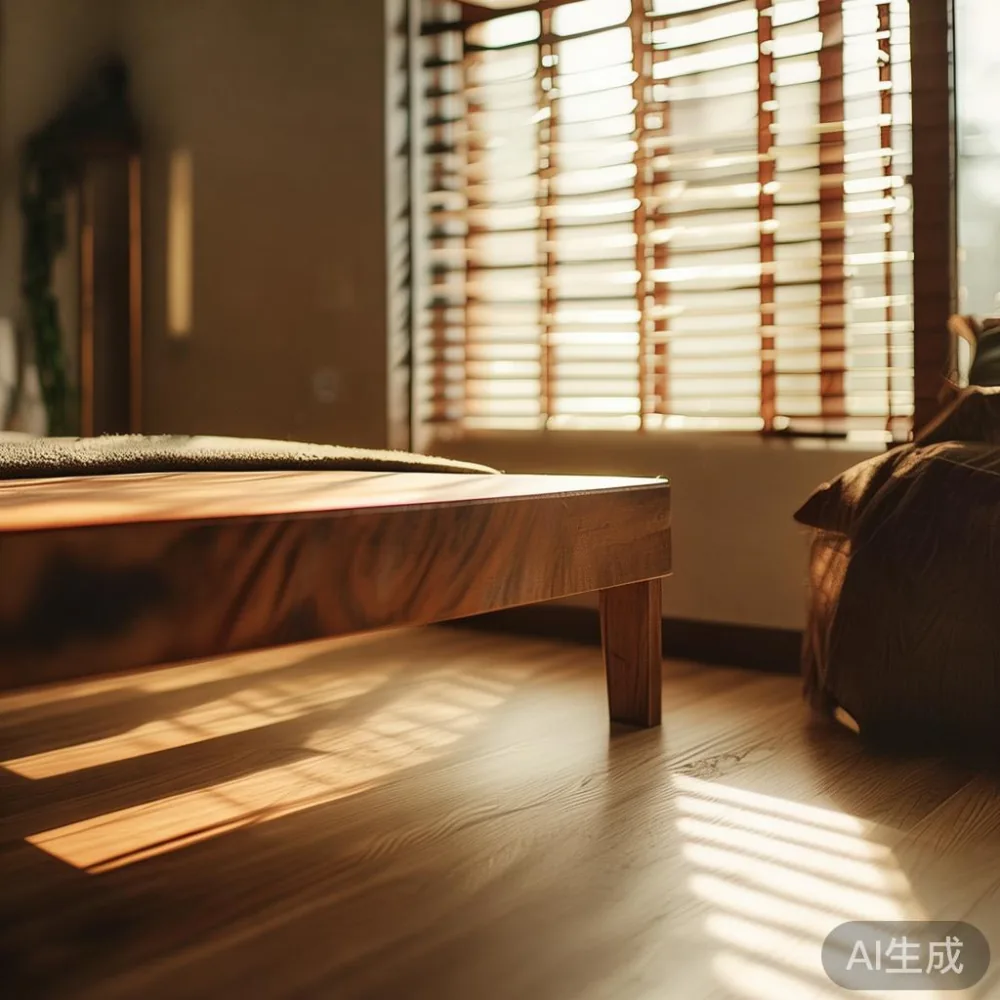
Singapore’s outdoor relative humidity commonly ranges from 70% to 90%, while air-conditioned interiors may be maintained between 50% and 65%. An apartment without dehumidification can experience wider swings, especially during the wetter months from November to February. Air-conditioning lowers humidity quickly, yet the abrupt transition from a cool room to a humid corridor or balcony means that furniture near the entrance may still receive moist air.
Temperature also affects the surface. A timber bed frame in a room at 30°C may behave differently from the same frame at 23°C. The frame itself does not need to be placed in a perfectly constant environment, but repeated and severe fluctuations are more demanding than stable, moderate conditions. The aim is not to eliminate normal seasonal movement; it is to avoid keeping a piece in persistently wet conditions.
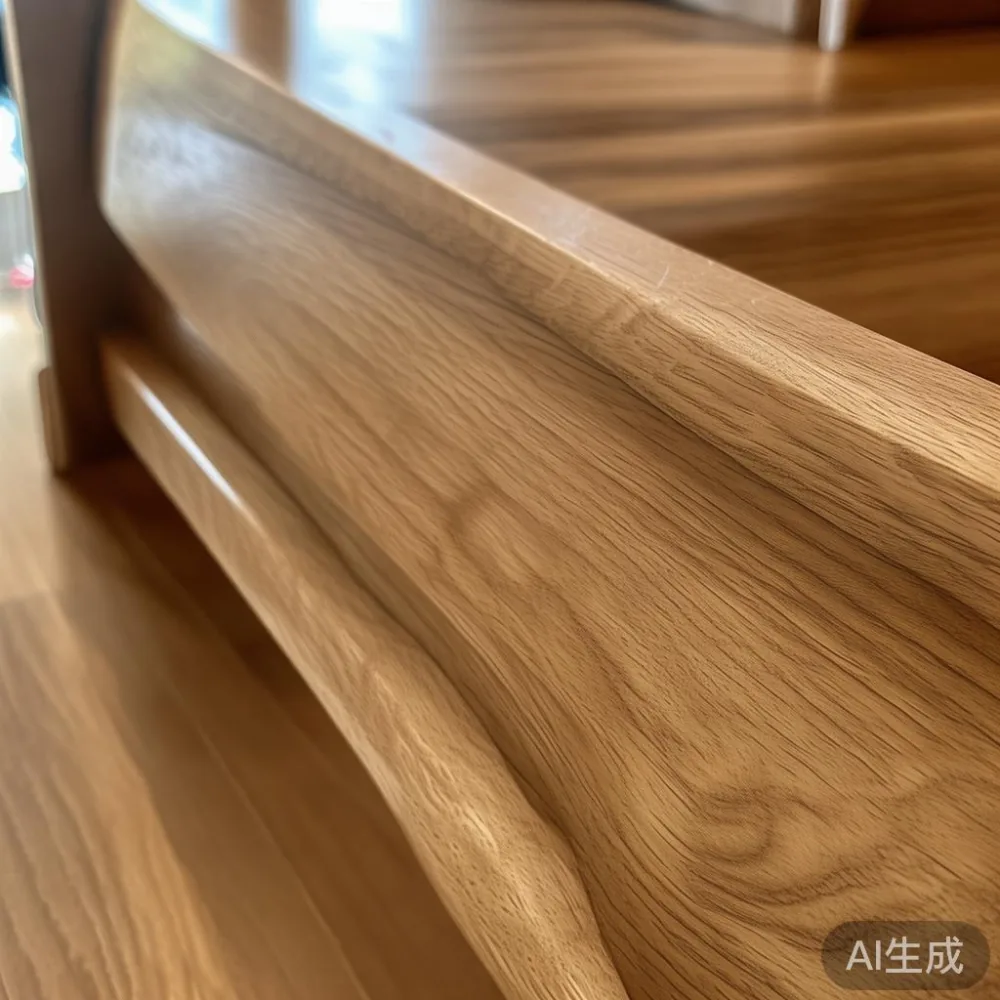
How humid can an HDB flat or condo become?
Living conditions vary by orientation and building design. Tampines HDB flats near open landscaping can receive more moisture than a tightly enclosed unit, while Punggol homes with east-facing windows may experience stronger morning sun and afternoon humidity. Bedok apartments close to the sea also face salt-laden dampness, which can affect metal hardware and finishes even when the timber is protected.
A practical indoor target for wooden furniture is approximately 50–65% relative humidity, with room temperature around 22–26°C. These are guidelines, not laboratory settings. A bedroom occupied every night may settle into this range, whereas an unoccupied room can become much more humid. The difference between a master bedroom and a seldom-used spare room may be more relevant than the building’s average reading.
Lift and corridor widths should also guide delivery planning. A bed frame sg order may arrive in separate cartons, but the assembled or partially assembled frame still needs to clear the HDB lift, corridor turns and bedroom door. For a typical queen bed frame, the headboard may measure 160–180 cm wide and 90–120 cm tall. A lift door of 80–90 cm and a corridor bend of 100–120 cm can make delivery difficult even when the furniture fits inside the flat.
Before ordering, measure the lift entrance, the shortest corridor width, the door opening and the intended bed position. Allow at least 5–10 cm of maneuvering space. If stairs are involved, the crew needs to know the stair width, landing depth, handrail clearance and floor level. Clear access reduces the need to tilt a frame sharply, which can stress joints during transport.
Which wood species handle Southeast Asian humidity better?
No wood is completely moisture-proof. Dense hardwoods such as teak, oak, ash and rubberwood generally move less than softer, more porous species, although the actual panel construction and finish matter. Malaysian teak is widely appreciated for its dimensional stability and naturally oily resistance to moisture. Oak offers a pronounced grain and a substantial European or American character, but it still responds to humidity. Rubberwood is economical, readily available and suitable for painted furniture; it requires careful sealing because its broader pores can take up more moisture.
Solid wood construction is not automatically safer than engineered wood in every situation. A well-made solid wood bed frame uses properly dried timber, sound joinery and a finish that allows the surface to age naturally. A lower-quality solid wood panel with weak adhesive joints can still fail, while a well-engineered product may perform consistently. Look for stable frames, flush joints and supportive centre rails rather than judging only by the species name.
Finishes also influence maintenance. Water-based coatings are clean and generally repairable, while oil and wax finishes can deepen the timber’s colour. Neither seal wood against atmospheric moisture completely. Most manufacturers recommend avoiding standing water, wiping spills promptly and using a damp cloth followed by a dry cloth. A protective coaster under a drink reduces the risk of rings and localised swelling around a nightstand or dining table.
How should I choose a bed frame for a humid Singapore bedroom?
Begin with stability, ventilation and placement. Keep the frame at least 15–30 cm from a wall where space permits, especially beside a window or balcony door. This allows air to circulate and gives you room to inspect the side rails, centre support and floor contact points. Avoid placing a solid wood bed frame directly against a cold exterior wall, and do not use it as a shelf for piles of clothing or bedding.
For slatted bases, use slats of suitable thickness and spacing rather than thin decorative strips over a wide unsupported span. A queen frame around 152 × 190 cm needs a centre support system for a mattress that will be used for several years. The slats should sit securely in their rails, with roughly 2–3 cm of clearance below the mattress for ventilation. A slatted platform is more comfortable in a humid climate than a fully sealed base because air can move beneath the mattress.
The size and shape of the mattress matter. A tight-fitting mattress can trap moisture around the frame rails, particularly if it is vacuum-packed and installed in a humid room. Follow the maker’s guidance on unpacking and ventilation. Let the mattress and bed frame adjust to the bedroom’s conditions for about 48–72 hours before making tight bedding arrangements.
Design references can help with appearance, but performance comes first. Comparing American bed vs French provincial bed makes sense when deciding between carved details, deeper posts and a lighter, more decorative profile. A French provincial style may look generous in a Tampines master bedroom, while a straight American frame can suit a narrower Punggol room. Neither style compensates for poor humidity control.
For a restrained interior, the question of light luxury bed vs Italian light luxury bed may narrow the choice through proportions, upholstery and finish rather than construction. An Italian-inspired bed might use a pale upholstered headboard, while a light-luxury version may combine solid timber with clean lines and tactile fabric. Whichever direction is chosen, verify the dimensions, centre support and moisture-care requirements before payment.
Search phrases such as best Japandi bed for 2026 can surface useful ideas for calm, uncluttered bedrooms, but they should remain a starting point rather than a purchasing criterion. Confirm the seller’s dimensions, timber information, warranty, finish-care advice and delivery terms. For a bed frame sg purchase, the local fit of the product and the building access should carry more weight than a trend label.
Does air-conditioning protect furniture, or can it cause other problems?
Air-conditioning is useful because it lowers humidity and temperature. Running it in the bedroom for several hours before sleep can create a stable indoor environment. However, moving between a 24°C bedroom and a 32°C corridor causes rapid surface changes, and direct cold airflow over a wooden headboard may dry one area more quickly than another. Aim for moderate cooling, regular circulation and sensible settings rather than extreme temperature separation.
Dehumidifiers can help during persistently damp periods. A unit suitable for a 30–40 m² room often removes 10–20 litres of water per day, depending on conditions. Place it near the room entrance with space around its intake and outlet. Empty the tank every 1–2 days and clean the filter every 2–4 weeks. A hygrometer placed near the bed frame is more informative than one near the bathroom or a frequently opened doorway.
Do not use a dehumidifier immediately after a cold shower or while windows are open. If condensation appears on a window, improving ventilation and reducing indoor moisture sources is preferable to trying to warm the room with a heater alone. Singapore homes also need ventilation after renovation; paint, adhesives and wet plaster can raise indoor moisture independently of the weather.
How do I prevent mould, musty smells and joint movement?
Use the 24-hour observation method. Look at the underside of a dining table, the back of a wardrobe and the floor beneath a bed frame. If a surface feels damp, inspect nearby windows, bathroom walls, laundry areas and air-conditioner condensate drains. Persistent condensation around a window can encourage mould within 48–72 hours. Clean affected silicone joints and correct the source of moisture rather than relying on wood polish alone.
For daily care, dust with a soft cloth, avoid steam cleaners and keep cleaning liquids away from joints. A damp cloth should be wrung out properly; the aim is to remove dirt, not soak the timber. Let the piece dry fully. Apply a suitable maintenance product every 12–24 months, or according to the finish and use. Test it on an inconspicuous area and allow approximately 24 hours before checking the result.
Check bed-frame fixings every 6–12 months, particularly after heavy rain seasons or if the frame has been moved. Tighten screws only where needed, because over-torque can compress wooden parts and split a rail. For a dining table or marble table, inspect the underside for water rings and ensure coasters, placemats and stable humidity levels are used. A marble table is not affected by wood movement, but its adjacent timber furniture may be.
Woven fibres and cushions should also be managed. Use a mattress protector, rotate loose cushions every 2–3 months and avoid damp laundry against a wardrobe. A solid wood sofa positioned close to an open balcony door may absorb more moisture than the same sofa in a dry living room, so its position should be reviewed after monsoon conditions.
How should solid wood sofa and wardrobe shoppers read supplier information?
A credible supplier should explain timber species, finish, construction, tolerances and care before delivery. Photos should show actual product details rather than substitute stock images. Ask whether panels are kiln-dried, whether drawer and door components are solid timber or specified veneer, and how seasonal movement is managed. A 10-year structural warranty is more useful when the supplier also has a lifetime refinishing option and clear service process.
Style comparisons can be useful during planning. European light luxury sofa vs Mid-century modern sofa focuses on upholstery, leg profile and visual proportion, while European sofa vs Modern sofa may compare decorative carving with clean geometry. For example, a light-luxury solid wood sofa with a pale oak frame can suit French-inspired interiors, but it should not be placed in a persistently damp conservatory or balcony.
Wardrobes require similar attention. When considering how to choose American wardrobe, check the internal depth, rail spacing, drawer construction and the treatment of moving panels. A wide wardrobe experiences more movement across each door than a narrow one. In high humidity, adjustable hanging rails and properly fitted catches help doors remain functional. Allow airflow behind the unit and keep the floor beneath it dry.
For a nightstand, choose one with stable joinery and a surface that can tolerate occasional damp wiping. Keep electronics and liquids on protective mats, and avoid placing the unit directly beside a bathroom or outdoor laundry area. If a small tray, coaster or felt buffer is used underneath an appliance, it can reduce localised moisture transfer.
What should happen when a bed frame sg order is delivered?
Inspect the cartons and furniture before the delivery crew leaves. Check for cracks, loose joints, chipped corners and water marks. Photograph the freight lift and the furniture at arrival if access is complicated. Keep the frame in its packaging until it is in the correct room, particularly if the unit is being assembled in a corridor. Moving a heavy frame through narrow passages creates avoidable risk.
Confirm that all slats, rails, fixings and hardware are present. Keep moisture-absorbing packaging away from the floor until the furniture is ready to be installed, and remove plastic wrap after the frame is positioned so that trapped moisture is not retained. Allow roughly 48–72 hours for the timber and mattress to adjust to the bedroom environment.
Delivery charges, GST and access conditions should be confirmed before checkout. MIDHILL provides free shipping for orders over US$350, although local buyers should ask about the final SGD delivery quotation and whether lift or corridor surcharges apply. Singapore orders should also confirm the estimated delivery window, usually in a stated number of business days, rather than relying on an unlimited freight estimate.
Returns are accepted within 14 days under the stated policy, so customers should inspect and assemble the furniture promptly. If a product arrives damaged, photograph the carton, damage and access route before accepting it. This record helps the supplier investigate packing, handling or manufacturing issues.
How do I maintain a solid wood bed frame through the humid season?
My colleague tested a MIDHILL solid oak bed frame in a Bedok condo bedroom last month. The room ranged from 58% to 79% relative humidity over 12 days, with the window closed during daytime air-conditioning and opened after the evening shower. The frame’s slats remained secure, and the drawer movement stayed consistent. A lightweight digital hygrometer, placed at mattress height rather than directly beside the window, made the daily differences easier to manage. The result also showed why stable placement matters: the side nearest the balcony was repeatedly inspected for condensation.
A simple routine is enough. Check the hygrometer twice daily, wipe condensation from nearby surfaces and maintain 50–65% indoor humidity where practical. Vacuum or dust the frame every 2–4 weeks. Inspect fixings every 6–12 months, renew finish protection as directed and report movement that exceeds the product’s stated tolerance. Avoid leaning stored bedding against solid wood panels and keep the area beneath the frame dry.
For Singapore homes, the most durable approach combines quality construction with measured indoor conditions. Keep large timber pieces away from persistent dampness, allow air circulation, respond quickly to spills and check access routes before delivery. A properly selected bed frame can remain structurally sound for decades; protecting it from unnecessary moisture exposure helps preserve its movement, joinery and finish across changing seasons.