What Really Drives the Price of a Solid Wood Bed Frame in Singapore
Walk into any Tampines or Bedok HDB flat on a Saturday morning and you will probably see at least one family arguing about a bed frame. My colleague in Punggol spent S$3,200 last year on a glossy white "solid wood" queen size from a Punggol Way retailer, only to discover six months later that the slats were veneer-wrapped MDF and the side rails had cracked along the laminate seam. The replacement quote came back at S$1,800. That story is exactly why I wanted to write this article: most Singapore shoppers cannot tell, just by looking, why one solid wood bed frame costs S$2,400 and another costs S$9,800, even when both sit in a showroom at the same height and same size. The price difference is real, but the labels on the showroom tag rarely explain it. This guide breaks down the eight factors that genuinely move the number on a piece of solid wood bedroom furniture, with a special focus on the bed frame sg market because that is where most of the questions I receive at MIDHILL originate.
Is the wood actually solid, or is it a clever mix of materials?
The single largest price driver is also the easiest to lie about. A bed frame advertised as "solid wood" in Singapore might mean any of three things, and the gap between them can be 60-70% of the ticket price.
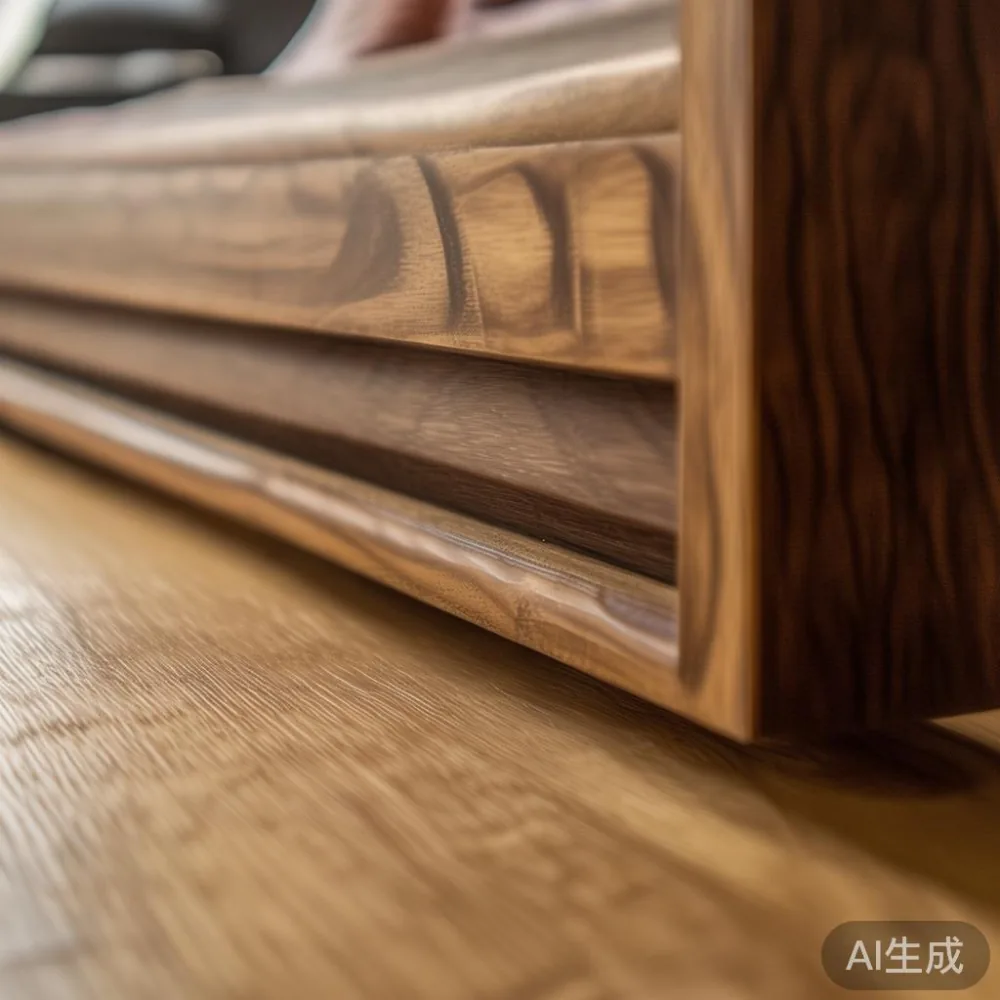
The most expensive option is 100% solid hardwood throughout — every slat, every side rail, every headboard panel is cut from one piece of timber. Common species for a queen size bed frame sg buyers see today include North American white oak, German beech, Burmese teak, and New Zealand pine for entry-level pieces. White oak from a responsibly managed Appalachian forest can add S$1,200 to S$2,000 to the landed cost of a queen compared with rubberwood, because the drying time alone for white oak is 9-14 months versus 3-4 months for plantation rubberwood.
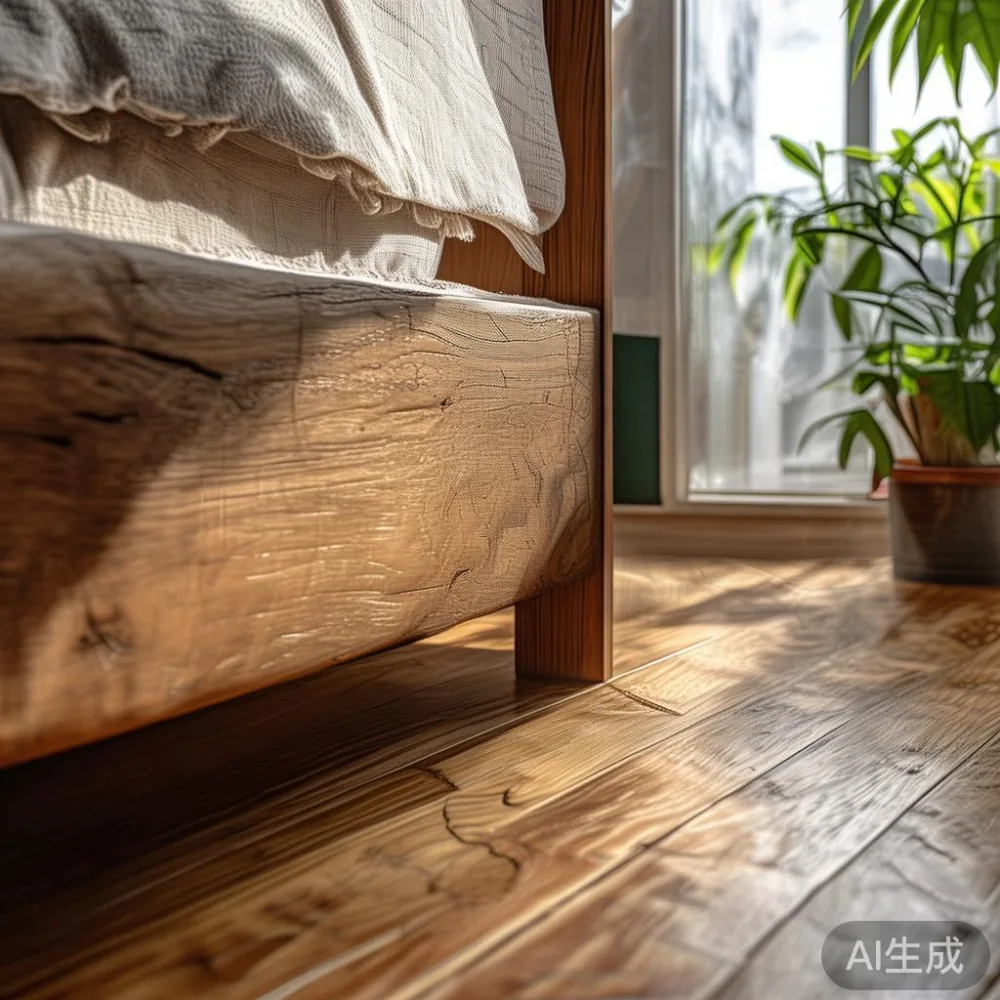
The middle tier is solid wood plus engineered panels. Many designers working in the post-modern light luxury style use solid oak for the visible rails and headboard, then high-grade birch plywood (11-13 layers, formaldehyde-free E0 glue) for the internal slat platform and the wardrobe back panel. Plywood is not a cheat — it is structurally superior to solid wood for large flat panels because it does not cup or twist. The price lands somewhere between all-solid and all-engineered.
The cheapest option is the one that surprises people: a bed frame that is "solid wood" only on the parts you touch when you push it against a wall. The headboard, the footboard, and the two outer side rails might be 2cm solid oak, while the slats you sleep on are 1.2cm MDF with a 0.6mm oak veneer. It looks identical on day one. By month 18 the MDF slats sag and the veneer peels where humidity from a non-aircon bedroom hits 85%. This is the category that damaged my colleague's S$3,200 purchase.
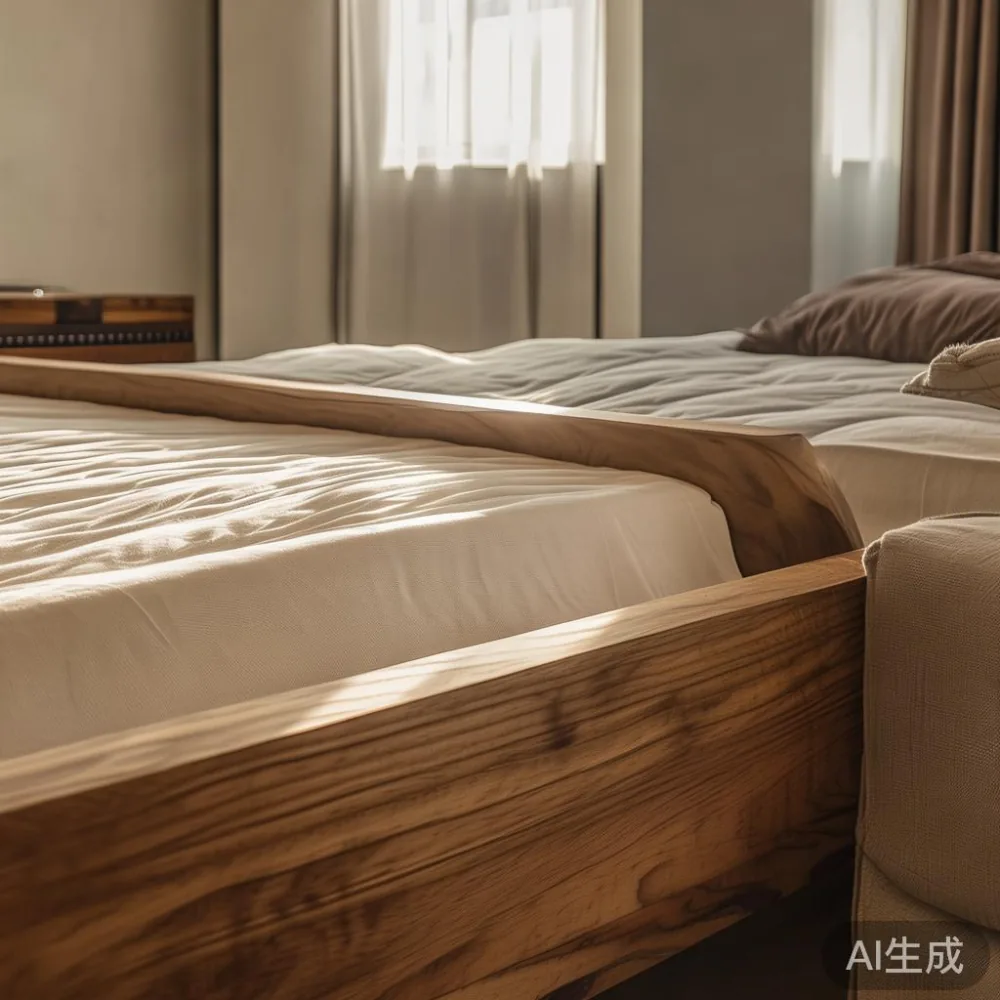
At MIDHILL, every bed frame sg piece we build uses solid wood for the load-bearing structure (rails, legs, slats), and we document the species in the workshop card that travels with each order. That level of traceability is part of why the same queen size in our workshop runs S$3,800-S$5,200 rather than S$2,200.
How does the species of timber change the final number on a quote?
Not all hardwoods are priced equally, and the difference is not subtle. Here is what I see on our factory floor in Foshan when raw materials arrive each month, converted into Singapore dollars after 9% GST, freight, and 15-22% import duty for temperate hardwoods.
Rubberwood (Hevea brasiliensis), plantation-grown in Malaysia and Thailand, lands at roughly S$480-S$620 per cubic metre of kiln-dried board. It machines cleanly, takes stain well, and is the workhorse of mid-price solid wood furniture. A queen bed frame sg made from rubberwood will sit in the S$2,000-S$2,800 range at retail.
Beech (Fagus sylvatica), usually imported from Germany or Romania, runs S$1,150-S$1,400 per cubic metre. It has a tight grain and a pinkish tone that designers working in the French light luxury aesthetic love because it pairs well with brushed brass hardware and a marble table top. A beech bed frame in this style typically retails from S$3,400.
White oak (Quercus alba), North American, lands at S$2,200-S$2,800 per cubic metre after current tariffs. Quarter-sawn white oak, which has the dramatic ray fleck pattern visible in American light luxury interiors, can push past S$3,400 per cubic metre. This is what you are paying for when a bed frame retails above S$6,000.
Burmese teak (Tectona grandis) and Indonesian teak now sit at S$3,800-S$5,500 per cubic metre due to forestry restrictions. Teak is largely reserved for outdoor furniture and for wardrobes and dining tables where the customer specifically wants the natural oil resistance. A teak-framed king size bed frame will rarely be priced under S$7,500 retail.
Walnut (Juglans nigra), the dark-veined timber so popular in Italian light luxury with storage pieces, has climbed to S$4,200-S$5,800 per cubic metre. A walnut bed frame with an upholstered headboard panel can reach S$9,000-S$12,000 at retail. The walnut supply is constrained because European and American demand now competes with Chinese factory orders for the same grade.
What role do joinery and hardware play in the final ticket?
Joinery is the second largest cost driver, and it is invisible until you move the bed. A bed frame sg piece joined with dowels, glue, and staples will retail for S$1,500-S$2,200. The same dimensions joined with mortise-and-tenon, corner blocks, and through-bolts will retail for S$2,800-S$3,600, even with the same wood species. The price difference is roughly S$200-S$400 in labour plus S$150-S$250 in additional timber for the corner blocks.
Last month I visited a competitor showroom in Jurong and watched a salesperson try to assemble two identical-looking queen frames side by side. The first frame locked together with four metal brackets and eight wood screws in 11 minutes. The second frame, from a workshop that uses traditional mortise-and-tenon with hidden metal figure-8 locks, took the same salesperson 38 minutes. The bracket frame had a retail of S$1,980. The joinery frame had a retail of S$3,450. Both were solid rubberwood. Both were the same size. The hardware and joinery alone explained a S$1,470 gap.
Drawer slides on a bedroom set (a bed frame sg with a storage headboard, a nightstand, and a wardrobe) account for another S$300-S$900 of the price depending on whether you get standard side-mount roller runners or soft-close Blum Movento full-extension runners rated for 30,000 cycles. Blum runners for a three-door wardrobe will add roughly S$420 to the wholesale cost and about S$1,100 to the retail price. Italian light luxury with storage designs rely heavily on these soft-close systems because the customer expects the same feel as a kitchen from Scavolini or Poliform.
Does the finish and the number of coatings change the price much?
Yes, and most shoppers underestimate this. A solid wood bed frame sg piece can go through anywhere from 3 to 11 finishing steps depending on the look.
A basic three-coat lacquer (sealer, colour, topcoat) sprayed in a dust tunnel adds roughly S$180-S$260 to the production cost. This is the open-grain, slightly orange look you see on most entry-level rubberwood furniture sold at S$1,800-S$2,400.
A mid-range five-coat finish (sealer, sanding sealer, stain, glaze, conversion varnish topcoat) adds S$420-S$560. Conversion varnish is more resistant to humidity swings — important in Singapore where bedroom humidity can sit at 78-82% during the monsoon months from November to January. A five-coat finish is what most American light luxury styled pieces carry.
A French light luxury hand-rubbed finish goes through 7-9 steps, including a tinted wax topcoat applied by hand and buffed with a cotton wheel. The labour alone adds S$800-S$1,200 per bed frame. The result is a piece that looks like it has been aged for 30 years, with subtle highlights in the grain. This is the finish style you see on pieces inspired by Restoration Hardware and on Italian light luxury with storage designs where the customer wants a slightly weathered, premium feel.
For a marble table or a marble-topped nightstand, the stone cutting and sealing adds another S$300-S$1,400 depending on whether the marble is a standard Carrara or a book-matched Calacatta Gold with continuous veining across two panels.
What does shipping from Foshan to a Singapore HDB actually cost?
Shipping is the most variable line item and one Singapore buyers rarely think about when comparing two local quotes. A queen size solid wood bed frame sg piece weighs between 62 kg and 95 kg depending on species and joinery. Shipping that weight from Foshan to a Singapore warehouse runs S$240-S$380 by sea freight, plus S$120-S$180 for last-mile delivery up the lift and into the bedroom.
That last-mile cost deserves a closer look because most HDB blocks in Tampines, Bedok, and Punggol have lift doors that are 90 cm wide and 210 cm tall, and corridors that narrow to 110 cm at the stairwell turn. A king size bed frame in solid walnut will not fit in one piece through a 90 cm lift door. The workshop has to design the headboard and side rails as two detachable modules, which adds S$180-S$260 in extra joinery hardware and packaging. If your condo has a service lift that is 120 cm wide, this becomes a non-issue. If you live in a walk-up on the eighth floor of an old Bukit Merah block, delivery costs can climb by another S$300-S$500 because two movers plus a rigging specialist are required.
MIDHILL includes delivery above a US$350 order threshold, which works out to about S$475 in Singapore dollar terms at current exchange rates, so most bed frame sg orders above S$2,400 ship without an extra line item. We have also shipped into Punggol HDBs and into private condos along the Bukit Timah corridor without any lift-access surcharge so far in 2025.
Does design complexity genuinely add value, or is it just a markup?
Some complexity adds value; some does not. A headboard with a single curved crown and a recessed panel takes about 1.4 hours longer in the CNC than a flat slab, which adds roughly S$70 to the production cost but allows a retail price lift of S$400-S$600 because the silhouette reads as light luxury for bedroom rather than utility furniture. That is a fair exchange.
A headboard with nine hand-applied tufted panels in full-grain Italian leather and a brushed brass inlay strip takes 6-7 hours of skilled labour plus S$420 in materials. The retail lift is S$2,200-S$3,000. That is also a fair exchange if the customer actually wants the look and intends to keep the piece for 15+ years. Where the markup becomes unfair is when a brand charges S$1,800 extra for a headboard curve that cost S$80 to produce, simply because the showroom is in a high-rent District 9 location.
The same logic applies to a solid wood sofa, a dining table with a trestle base, and a wardrobe with a full bank of soft-close drawers. Each design feature carries a real labour and material cost, and a transparent retailer will break that down. The best question to ask any salesperson: how many hours of skilled labour are in this piece, and what is the hourly rate? A reasonable range for a Foshan-trained furniture maker is S$8-S$14 per hour, so a 22-hour bed frame carries about S$175-S$310 in pure joinery labour before wood, finish, hardware, and overhead.
How should a Singapore shopper compare two bed frame quotes fairly?
When you put two quotes side by side, normalise them first. Strip out GST (9% in Singapore, added at the till). Strip out delivery if one quote includes it and the other does not. Then ask each retailer for four specific numbers: (1) the wood species in the load-bearing parts, (2) the joinery method, (3) the number of finish coats and the type of topcoat, (4) the drawer slide brand if the piece has storage. With those four numbers, you can usually explain 80-90% of the price gap between two bed frame sg quotes.
The remaining 10-20% is brand, warranty, and after-sales service. A 10-year structural warranty on joinery, a lifetime refinishing service, and a 14-day return window have a real cost to the seller — typically 4-7% of revenue absorbed into overhead — and that cost shows up in the retail price. Whether it is worth paying for depends on how long you intend to keep the piece. For a bed frame you expect to use for the next 12-15 years, paying S$300-S$500 extra for a brand that will refinish the headboard when the kids scratch it and replace a broken slat at year nine without argument is, in my experience, a fair trade.
For a buyer who wants a specific look — a modern light luxury wardrobe running floor to ceiling, a how to style European light luxury wardrobe in apartment guide for a 12-square-metre HDB master bedroom, a how to style European light luxury wardrobe in room setup with a fluted glass panel — the design language itself will narrow your supplier list to about four or five workshops that actually understand how to translate that aesthetic into production. Price shopping those four or five against each other is the only comparison that will give you an accurate answer. For shoppers staring at a how to style light luxury sofa in apartment mood board and wondering whether the bed frame should match, the answer is no — match the wood tone within a 10-15% shade range, not the exact piece.
A final note from the workshop floor: the cheapest solid wood bed frame sg piece I have ever seen come back for a warranty claim was S$1,490, made from unbranded pine, dowel-joined, two-coat finish, sold by a Bedok Mall popup. The most expensive warranty claim I have seen was a S$14,800 walnut bed frame where the customer wanted the headboard re-leathered after seven years because two dogs had scratched it. The workshop absorbed the labour cost of S$1,100 and only charged for the leather at S$380. That is what a real warranty looks like in practice.