Tackling Humidity with Solid Wood Furniture in Singapore
Singapore’s tropical climate can change the moisture inside a solid wood furniture piece throughout the day. Outdoor relative humidity may rise above 80% during a wet spell, while an air-conditioned HDB flat can remain near 50%. For a bed frame sg supplier, this movement matters because timber expands across its grain, contracts along its grain, and reacts at different rates in different parts of a board.
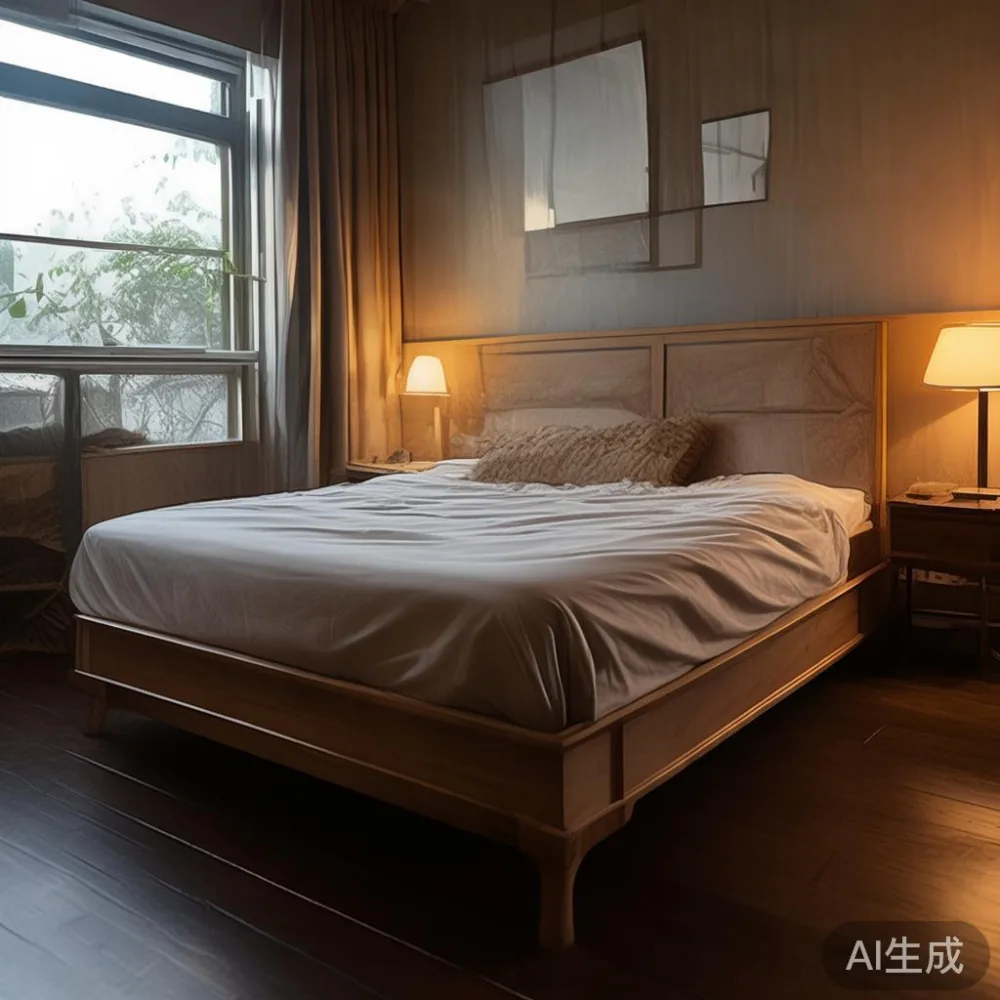
The effects are usually manageable. A well-made solid wood sofa, dining table, wardrobe, nightstand or bed frame should tolerate normal household variation without splitting. The harder task is keeping movement slow and moderate through material selection, protective finishes, sensible placement and attentive care. In Southeast Asian conditions, indoor humidity is rarely a reason to avoid solid wood; it is a reason to buy carefully and maintain the furniture properly.
MIDHILL has manufactured solid wood furniture since 2008 and exports to more than 15 countries. Its practical approach suits Singapore homes: build for real rooms, use stable joinery and finishes, and explain care clearly. MIDHILL also offers a 10-year structural warranty, lifetime refinishing, free delivery above SGD 350 and a 14-day return policy.
Why does humidity make solid wood move?
Wood is hygroscopic, which means it absorbs moisture from the surrounding air. When humidity rises, the cells gain water and the board swells. When air becomes drier, the board loses some of that water and shrinks. The largest dimensional movement normally occurs across the grain, not along the length.
A 180 cm long solid oak dining table might change by only about 1–2 mm along its grain during ordinary seasonal movement. Across a 90 cm width, movement of roughly 3–6 mm can be more realistic, depending on the species, board width, finish and indoor conditions. That amount is small compared with the table’s size, but fixed fasteners, tightly fitted joints and unsupported unsupported panels can turn it into twisting, bowing or joint stress.
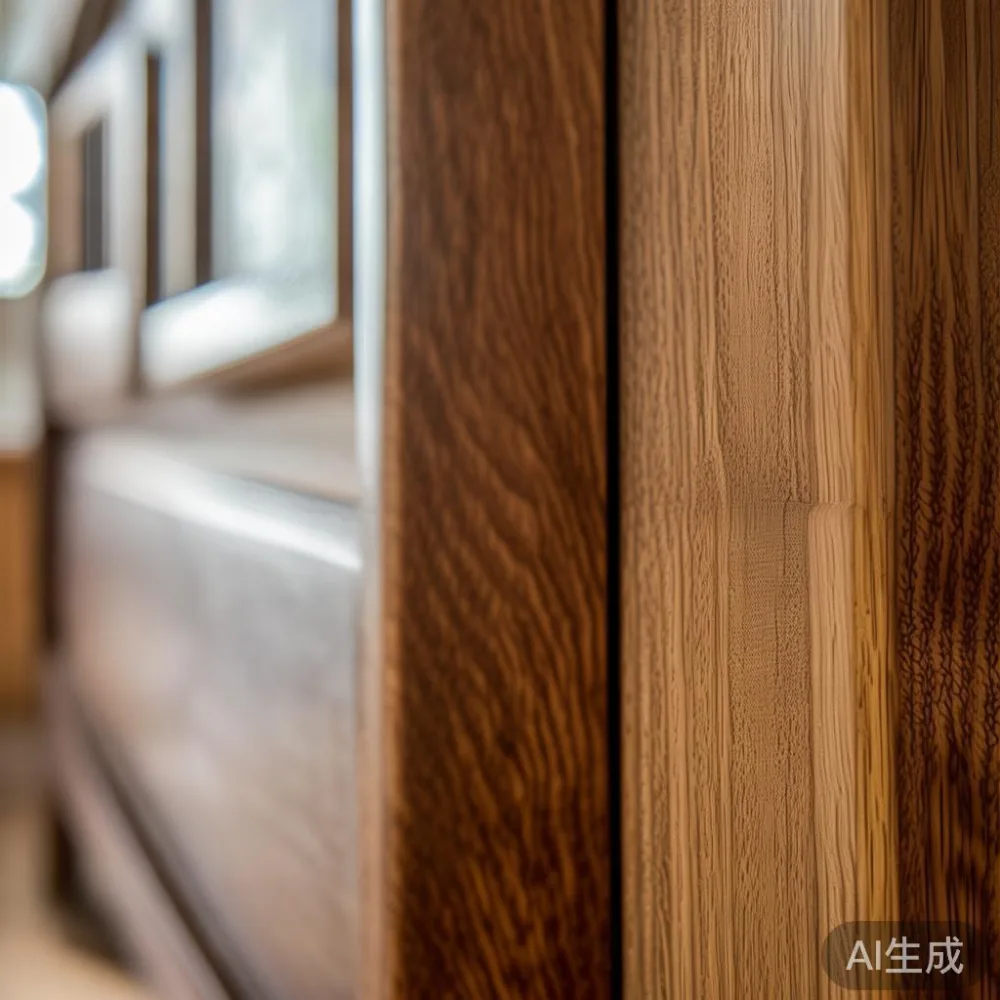
Seasoning helps, yet no kiln-dried timber remains completely moisture-neutral. It continues to respond as the surrounding humidity changes. A construction designed for humid tropical conditions allows the wood to move through joinery details instead of trapping the movement inside a rigid frame.
Consider a solid wood bed frame with rails, legs, slats and headboard components. Each part must use compatible moisture levels and be joined so seasonal expansion does not pull the structure apart. Veneer, plywood and engineered wood may be useful inside furniture because their construction can improve dimensional stability. They should still be protected from moisture, especially along edges.
How much humidity is normal in Singapore?
Singapore’s monthly outdoor relative humidity commonly sits around 70–85%, with short periods above 90% during heavy rain or near coastal areas. HDB flats and condos differ substantially because of air conditioning and dehumidification. A bedroom at night may be comfortable at 23–26°C and 50–60% relative humidity, while a corridor that receives humid outside air can sit above 80%.
A hygrometer gives a more useful reading than a weather forecast. Place one near a bed, dining table or wardrobe rather than directly against an exterior wall. For most wooden furniture in a Singapore home, keeping relative humidity near 45–65% is a practical target. Short excursions outside that range rarely cause immediate damage. Persistent readings above 70% call for stronger moisture control.
Typical internal moisture changes can be illustrated with relative humidity shifting from 55% to 75%. The surface of a finished board may lose or gain roughly 1–3 percentage points of moisture content in response. The exact figure depends on pore size, thickness, finish and temperature. Rapid surface changes can be more disruptive than a slow, uniform shift, so avoid repeatedly moving a heavy dining table between a damp living room and a much drier bedroom.
Temperature also matters. Warm air can hold more water vapour, while an air-conditioner lowers both temperature and humidity. Keep furniture at least about 30 cm away from a direct air-conditioning vent. A gap of 60 cm is preferable for a large wardrobe side. Direct cold airflow can dry one face of a panel faster than the other, which encourages surface checks.
What happens in HDB flats, Tampines, Bedok and Punggol?
Local conditions affect furniture more through access, airflow and use patterns than through a neighbourhood’s name. Tampines HDB flats may receive humid air near windows and a compact corridor, while Bedok’s coastal air requires the same attention as any exposed Singapore balcony. Punggol homes can experience rapid indoor-to-outdoor humidity shifts when families return from outdoor activities and doors are opened frequently.
Many HDB lift lobbies and apartment corridors are narrower than furniture delivery teams assume. A king-size bed frame should be measured before dispatch, not after it reaches the block. The mattress may be 180 × 200 cm, but a lift opening of only 100 cm wide and a 200 cm-deep car can still create a difficult turn. Protective wrapping and removable rails or legs can make a difference.
Record at least four dimensions: lift door width, lift car depth and height, corridor width, and the narrowest turn. Add 10 cm of working clearance where possible. A 12-person lift with an internal height of 210 cm may suit a tall 205 cm wardrobe, but a 195 cm ceiling opening can rule out standing delivery on that route.
Condo loading areas are often easier, yet parking bays, basement ramps and security access can narrow the path. Confirm whether the lift reserves SGD 3–12 for a move, whether the booking must be made 3–7 days ahead, and whether the building imposes a delivery window. For larger orders, MIDHILL can coordinate the practical delivery details rather than assuming every lift can handle every product.
Keep at least 5 cm between the back of a wardrobe and a cold exterior wall, and about 10 cm from the floor where cleaning is needed. Avoid placing a bed frame sg directly under a leaking window seal. A 2 cm gap beneath a low nightstand can help inspection and drying, although it should not create a trip hazard.
How do I choose a bed frame that suits Singapore humidity?
Start with stability rather than appearance alone. Look for straight rails, sound corner joints, secure slat supports and fasteners that allow controlled wood movement. Ask whether the bed uses solid hardwood, laminated components, veneer or engineered panels in moisture-sensitive locations. A clear material description is more useful than a broad claim such as “wooden”.
For an HDB room, a solid hardwood frame often feels substantial, but the mattress must receive proper support. A slat spacing around 7–12 cm can suit many queen and king systems; however, the bed frame manufacturer should follow the mattress or slat system requirements. Leave ventilation under the bed and do not store damp bedding beneath it.
Check the finish on all faces, not only the visible top. Sealed, lacquered or oil-waxed surfaces slow moisture exchange, while an open oil finish needs more frequent care. The current finish should be described accurately because refinishing options depend on what is already on the timber.
Buyers researching is French provincial bed worth it should consider more than its carved profile. French provincial styling often combines pale timber, curved details and layered bedding. Those curves can create sheltered areas where dust collects, so cleaning matters. A lightly toned solid wood bed with restrained carving can fit an HDB bedroom without overwhelming a 10–12 m² room.
The French provincial accent chair belongs naturally beside a dressing table or reading corner, but it should not be confused with the bed’s structural parts. An Italian light luxury sofa can use similar pale woods and refined proportions, yet its frame, cushions and loose covers require different humidity checks. Design language should support the furniture’s function.
Can humidity ruin a dining table, wardrobe or nightstand?
Humidity does not automatically ruin furniture. Problems appear when moisture is repeatedly absorbed and lost, edges are exposed, or finishes fail. A dining table may develop a slight seasonal top waviness if its construction is too rigid. A wardrobe can show movement at tall panels, doors or joints. A nightstand can suffer if a damp cleaning cloth runs down its side and enters a joint.
For a dining table, wipe spills promptly and use a felt pad beneath a hot cooking pot. Place a 3 mm silicone mat under tableware if scratches matter, and keep the table away from persistent dampness near a balcony. Solid wood should not be treated like a non-porous marble table. Wipe it dry within 15 minutes rather than leaving water sitting overnight.
A wardrobe needs airflow behind its back and careful attention to the top. Check wall contact, moving doors and any musty odour after rain. Do not pack clothes tightly against a damp wall. Use 4–6 cedar blocks or breathable收纳 inserts where practical, and clean the tracks every 3 months.
A nightstand is small enough that care is easier. Keep coasters under glasses and avoid using it as a laundry shelf. If a silicone coaster is 8 cm across and the ring mark appears, remove it quickly and dry the surface. For ongoing maintenance, apply the specified furniture oil or polish no more than every 6–12 months, following the finish instructions.
For those researching how to style light luxury wardrobe in room, leave practical clearances intact. A 60 cm passage allows one open door in many compact rooms, while a 90 cm route feels more comfortable. A 180 cm wardrobe may look impressive but cannot function well if its doors collide with the bed or corridor.
What should I do before the monsoon season?
Inspect every window and door seal. Replace a cracked 2 mm foam strip rather than relying on adhesive cloth in a permanently damp corner. Use a dehumidifier when indoor readings remain above 70%, and empty its tank every 2–3 days. A compact unit rated for 15–25 L per day is suitable for many bedrooms, although the actual extraction depends on room size and temperature.
Move solid wood furniture 30–60 cm away from outside walls and air-conditioning outlets. Do not place it against a cold slab or behind a shower screen. If a fitted wardrobe must remain beside a damp wall, use a 15–20 mm ventilated plinth and inspect behind it twice a year.
Check the delivery route before a new wardrobe or bed frame arrives. Measure the lift door, cabin and corridor, and compare them with the packed dimensions. Leave at least 10 cm of manoeuvring room at turns where possible. For a dining table, remove legs only if the design permits; protect the connectors from moisture and reinstall them by hand rather than forcing the structure.
Use coasters, placemats and felt pads, but do not stack multiple loose mats under a warm object. Clean with a lightly damp cotton cloth, then dry immediately. Oils every 6–12 months can maintain a suitable finish, whereas solvent cleaners and soaking cloths may damage it.
Furniture textiles deserve separate attention. Keep upholstery away from direct airflow, rotate cushions every 2–4 weeks and vacuum with a brush attachment every 2–3 months. Remove covers only when their care label permits washing. Relative humidity above 75% increases the risk of mildew on cotton and linen, especially in a closed wardrobe.
Which finish gives the most protection?
A film-forming lacquer or hard wax finish can slow moisture exchange and make routine wiping easier. A penetrating oil or wax offers warmth and repairability but needs renewal more often. The finish must suit the timber species, expected use and maintenance preference. No coating makes solid wood immune to humidity.
Ask for details on coats, edges and maintenance. Re-painting only the top while leaving end grain untreated can create uneven moisture movement. End grain absorbs water readily, so edges and underside components deserve complete coverage where the design allows.
For a French light luxury or American light luxury bedroom, a warm matte finish often complements pale oak or ash. For a Post-modern for small living room arrangement, clean lines and restrained profiles can prevent a humid corner from feeling crowded. That design theme does not change the moisture rules: maintain a 5 cm wall gap, provide ventilation and control indoor humidity.
MIDHILL’s lifetime refinishing service is relevant because furniture should be maintained rather than discarded after one humid season. Confirm what is included, how to request service and which surfaces or parts qualify. The 10-year structural warranty also gives buyers a distinct point of reference, but normal care remains part of using solid wood furniture.
How can I tell if my furniture has a moisture problem?
Watch for changes that exceed ordinary seasonal movement: doors binding repeatedly, a tabletop developing deep splits, a leg lifting from the floor or a finish peeling in broad patches. Small checks under 0.5 mm in a finished surface are often less concerning, but deep splits, fungal growth or structural movement should be inspected.
Measure the room and check the furniture before adjusting anything. Use a hygrometer for 24 hours, record morning and evening readings, and inspect the most affected piece. If the wood is swollen, increase airflow and reduce humidity gradually. Rapid heating or direct sun can worsen drying.
Do not glue a loose joint while the timber is still wet. Let the piece return to a stable condition and follow the maker’s repair guidance. Photographs taken from 1 metre away can help document gaps, finish changes and door alignment, especially if the issue continues after humidity falls to 55–65%.
For a solid wood sofa, remove loose cushions from the frame and let the frame air separately. For a bed frame sg, rotate the mattress every 2 weeks when practical and inspect slats, fasteners and the floor clearance. For solid wood dining furniture, compare both ends with a straightedge; a 200 cm top that differs by 2–3 mm may reflect normal movement, while a larger change deserves closer attention.
Good humidity care is a rhythm rather than a single treatment. Check readings weekly during wet periods, wipe surfaces immediately after spills, keep furniture 30–60 cm from damp walls and avoid heat or airflow striking one face. With sensible care, solid wood can serve a Singapore family for many years, not merely survive one monsoon.