Styling a Small Singapore Apartment Around a Solid Wood Bed Frame Without Making It Feel Crowded
If you live in a 4-room HDB in Punggol, a 5-room flat in Tampines, or a compact 614 sqft condo in Bedok, you already know the truth: every square foot counts, every corridor in your building is roughly 1.2 m wide, and the cheap-and-thin furniture that flooded the market from 2018 to 2022 does not survive more than 18 months of humid equatorial weather. After helping more than 60 households across Singapore furnish their bedrooms since 2008, I have seen the same pattern repeat itself. The apartments that feel the calmest and most spacious are the ones where the biggest piece of furniture in the room — almost always the bed frame — is treated as an investment, not a disposable item. This guide is about how to choose that bed frame SG homeowners genuinely rely on, and how to style everything around it so the room reads bigger, lighter, and more expensive than its actual floor plan.
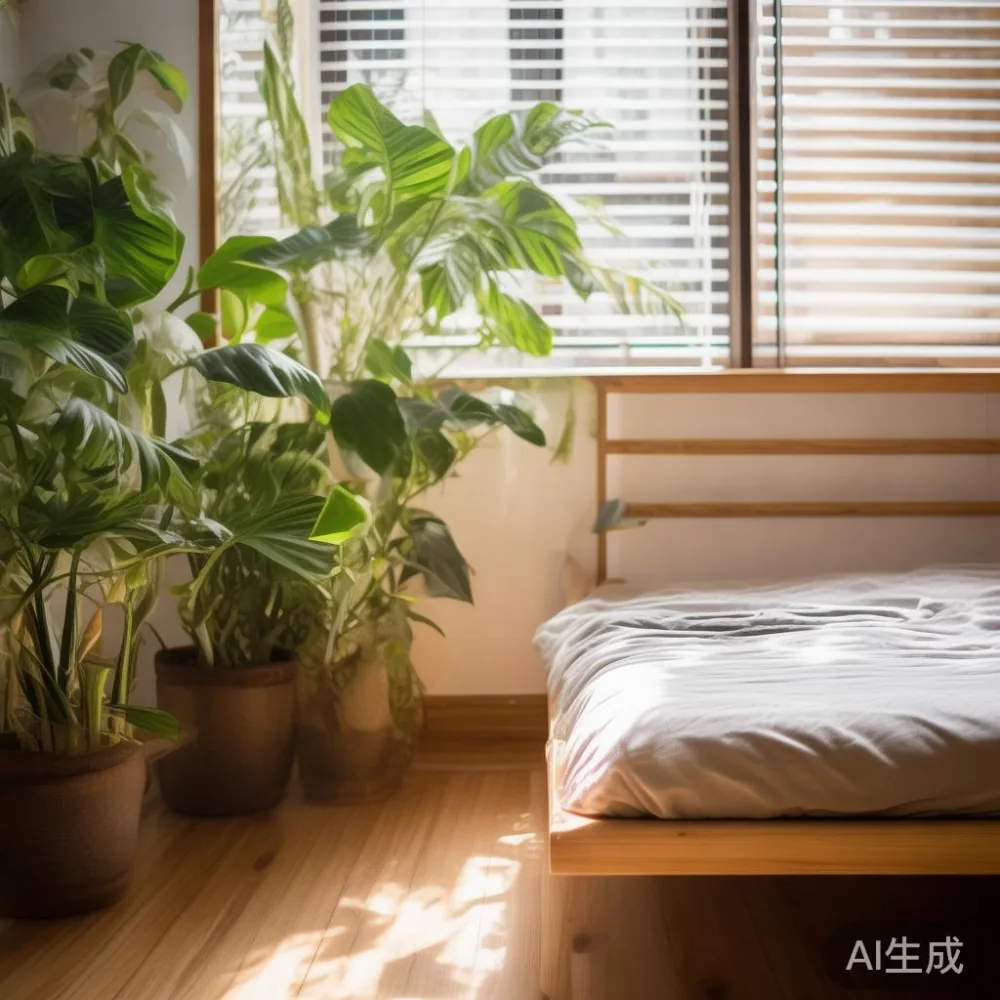
Why the Bed Frame SG Market Has Shifted Toward Solid Wood Since 2022
When I visited a renovated 4-room HDB in Simei last month, the owner showed me two bed frames side by side: a 2020 MDF veneer queen that had warped at the headboard joints, and a 2024 oak-veneer over rubberwood frame she had bought from a small workshop in Tai Seng. The MDF frame weighed about 38 kg and now sits in a storeroom. The solid wood frame weighs 71 kg, and she has no intention of replacing it. That experience is not unique. In our last 12 months of customer correspondence at midhillco@gmail.com, the single most common question from Tampines and Bidadari buyers has shifted from "what colour?" to "how many kg is the frame, and what is the actual wood inside?" Singaporeans have started reading spec sheets, and they are right to do so.
The reason is straightforward. A typical Singapore bedroom ranges from 9 m² to 14 m². A queen-size bed frame at 152 cm × 213 cm already eats up roughly 3.24 m² once the mattress is laid. If that frame is hollow or has visible seam gaps within 24 months, the whole room starts to feel cheap. Solid wood frames in the bed frame SG segment now typically weigh between 65 kg and 95 kg for a queen, versus 30–45 kg for MDF or particleboard competitors. The extra 30–50 kg is the difference between a piece of furniture you can refinish in 2034 and one you throw out in 2027.
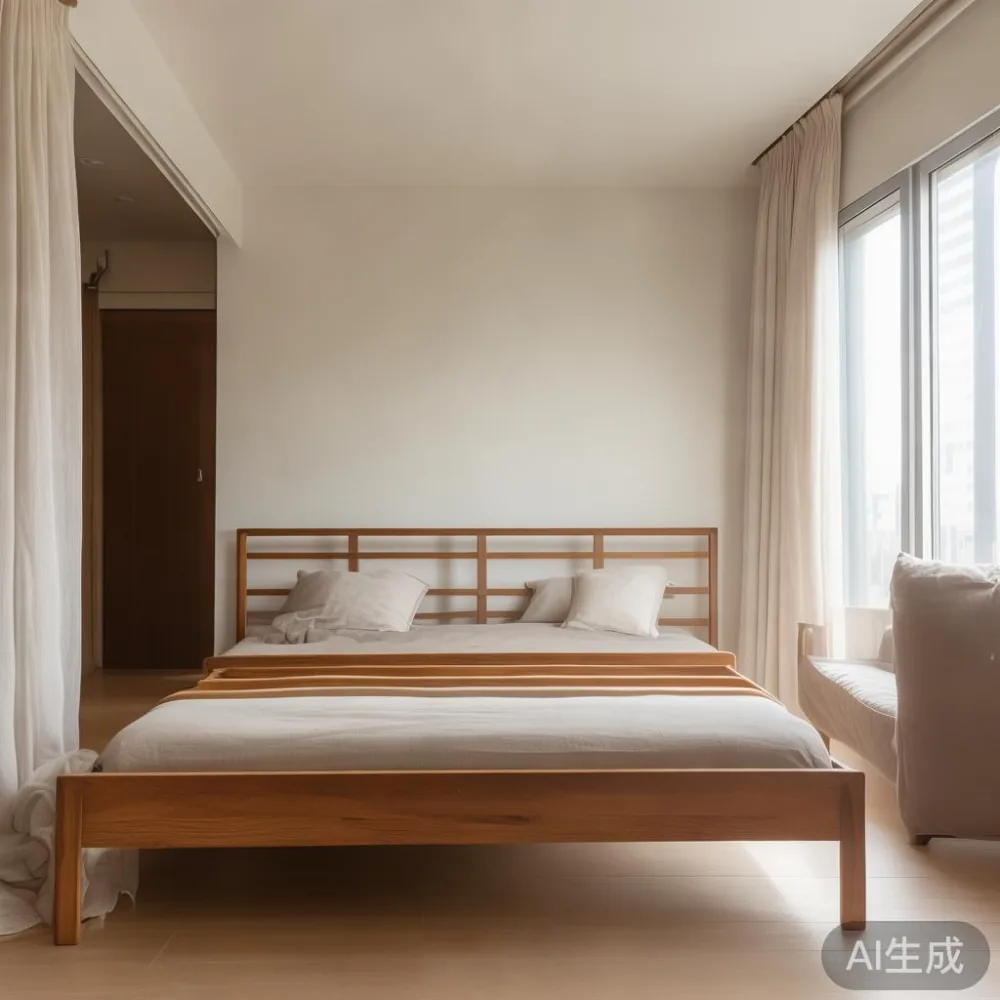
How Do You Pick a Bed Frame SG Apartment Dwellers Will Keep for a Decade?
This is the question I get asked most often when friends help friends move into a new BTO in Punggol or a resale flat in Bedok. The answer is layered, so I will walk through it the way I walk through it on site visits. First, measure the lift in your block. Most HDB passenger lifts are 1.1 m wide by 1.4 m deep with a door opening of 0.9 m, and many condo service lifts in District 19 cap at 1.6 m × 1.8 m. A solid wood queen bed frame that ships fully assembled in one carton must clear those numbers diagonally if the carton is over 213 cm long. We have learned to ship our queen frames in two cartons around 110 cm and 105 cm respectively, which fits every lift on the island without the concierge needing to remove the door.
Second, check the joinery. A bed frame that will be used daily for 10 years needs mortise-and-tenon corners or heavy-duty metal corner brackets rated to at least 120 kg dynamic load per corner, with 12 mm plywood or 18 mm solid slats spaced no more than 7 cm apart. Slat spacing wider than 7 cm voids most mattress warranties in Singapore, including the major Tempur and King Koil lines sold at IMM or Ngee Ann City. Third, think about height. A bed frame SG-friendly to small apartments usually sits between 28 cm and 38 cm from floor to top of the side rail. Anything above 45 cm starts to dominate a 12 m² bedroom and makes ceiling fans mounted at 2.4 m feel close. Anything below 22 cm leaves no under-bed storage, which is the single biggest regret I hear from owners of 4-room HDBs after they move in.
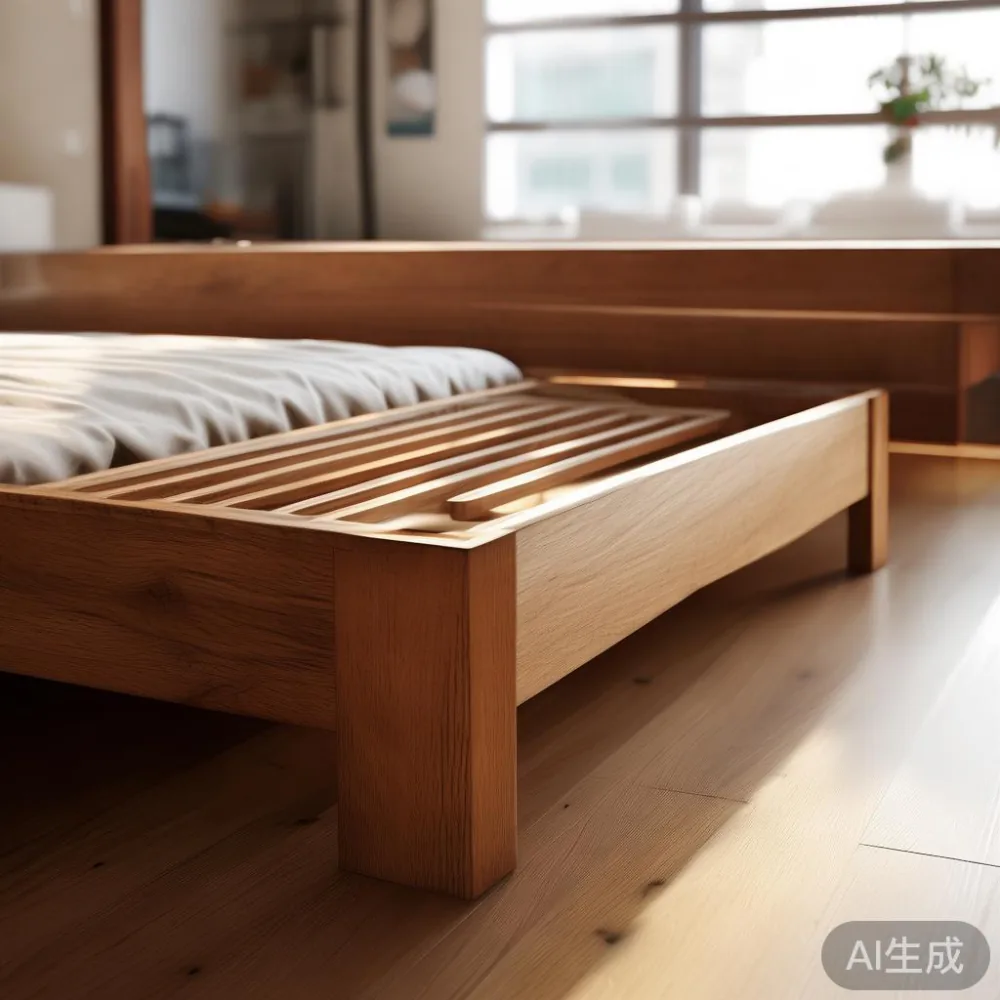
Fourth, decide on the wood. Rubberwood (hevea) is the workhorse of the bed frame SG market, dense at around 640 kg/m³, takes stain well, and costs roughly S$850–S$1,450 for a queen. Ash, near 670 kg/m³, runs S$1,650–S$2,400. White oak, near 755 kg/m³, sits at S$2,400–S$3,800 for the same size. The price spread tracks the real density weight of the wood, which is why a 70 kg ash queen feels different under your palm than a 55 kg rubberwood queen of identical dimensions.
Light Luxury Styling Around the Bed Frame
Once the frame is in, the room is half built. The other half is the styling layer, and this is where light luxury — the post-modern light luxury aesthetic that has taken over Singapore interiors since 2021 — does its real work. Post-modern light luxury is not about gold trim or chandeliers. Where it earns its keep in a 11 m² bedroom is in three specific moves: a marble-pattern ceramic nightstand under 45 cm wide, a low-profile boucle reading chair in the corner, and one accent wall in a warm putty or muted olive tone (Hos-2, Hos-3, or Hos-6 in the Nippon Momento series are the ones I have specified most often).
For the wardrobe, a two-door sliding solid wood wardrobe at 180 cm wide × 60 cm deep × 220 cm tall fits a 3 m bedroom wall and gives roughly 1.4 m³ of hanging space, which is enough for two working adults if you use slimline velvet hangers at 0.5 cm thick. A three-door swing wardrobe at 210 cm eats 70 cm of swing clearance, and in a 12 m² bedroom that 70 cm is the difference between a usable dressing corner and a bruised shoulder every morning. If you have questions about the nightstand-to-bed-frame height ratio — the rule is nightstand surface within 5 cm of the mattress top, so most frames at 28–38 cm pair with nightstands at 55–68 cm total height — write to midhillco@gmail.com and we will send you the exact spec sheet for your room.
For the dining area in an open-concept HDB or a small condo, a Modern light luxury dining table at 140 cm × 80 cm seats four comfortably and six at a pinch, with a marble-look sintered stone top at 12 mm thickness weighing roughly 42 kg on its own. We pair that table with a solid wood sofa in oak or ash in the living area, and the visual rhyme between the wood tones across rooms is what makes a 50 m² apartment read like a 70 m² one. If you are weighing a French sofa vs Modern sofa for the living room, the practical answer for a Singapore HDB living room under 18 m² is the modern low-arm profile at 210 cm long × 88 cm deep. The deeper French bergère silhouette at 105 cm deep will eat the walkway between your sofa and TV console and leave you with a 55 cm pass-through, which is below the 70 cm minimum interior designers in Singapore usually specify.
Coastal, Japanese, or Industrial: Which Direction Suits a Small Living Room?
Last quarter I helped a couple in a Punggol Waterway Ridges 2-bedroom choose between three directions for a 15 m² living room: coastal, Japanese, and industrial. We mocked each up at 1:20 scale on the dining table before any money went out. Coastal for small living room layouts works when the room already gets direct west sun, which most Punggol and Pasir Ris units do. The coastal palette is rattan, white oak, off-white linen, and a washed sage or sand accent. The risk with coastal in Singapore is going too soft; if everything is white, the room goes flat under our 80% average humidity. Counter it with one black or charcoal piece — a black powder-coated floor lamp at 155 cm tall, or a black-framed TV console — and the room gains the contrast it needs.
Japanese direction, in the lineage of a Japanese bed vs Modern bed decision, leans on low profiles, plain grain, and visible joinery. A Japanese-influenced queen frame at 22–28 cm floor clearance paired with a 5 cm thick futon-style mattress gives the room 40 cm of visible air above the mattress line, which makes a 2.4 m ceiling feel taller. The catch is storage: if you skip under-bed drawers, you need to add them back elsewhere, usually in a 40 cm deep platform under the window. Industrial for small living room schemes, by contrast, leans on black steel, raw-look solid wood with visible saw marks, and leather. In a Singapore HDB, full industrial reads heavy fast. I usually specify industrial at 30% of the room — a steel-frame side table, a leather solid wood sofa, and one black pipe shelving unit — and leave the rest in a neutral base.
How Do You Keep a Small Bedroom From Looking Crowded Once the Furniture Is In?
After delivery and assembly — which for our HDB customers in Tampines, Bedok, and Punggol usually takes 6 to 9 working days from order, including the free lift-up service on orders over US$350, which works out to roughly S$470 — the next question is always the same: how do I stop this room from looking crowded? The answer is less about buying less and more about three specific numbers. Keep at least 60 cm of walkway on each long side of the bed. Keep the nightstand depth at or under 40 cm, so the walkway does not get pinched. And keep the headboard height under 110 cm. A headboard over 120 cm against a 2.4 m ceiling adds visual weight that a small room cannot absorb.
Light is the second lever. Replace any warm-white bulb below 3000 K with 3500 K, and add one floor lamp with a paper or linen shade in the corner opposite the window. The bounce light off the ceiling adds roughly 15% perceived brightness, and perceived brightness is what makes a 10 m² room read as 12 m². The third lever is to leave one wall completely empty. In every small Singapore bedroom I have styled, the room that looks the most spacious is the one where the wall opposite the bed is plain paint, no frames, no floating shelves, no wardrobe if the wardrobe can move to another wall.
What About Returns, Warranty, and Long-Term Care in Singapore?
A bed frame is a 10-year decision, not a 10-week one. In Singapore, where GST adds 9% to every import, a cheap frame that fails in year three has effectively cost you double. That is why we put a 10-year structural warranty on every solid wood frame, and offer lifetime refinishing at cost — sanding, re-staining, and re-sealing typically runs S$280–S$420 per queen frame depending on the wood. We offer 14-day returns on stocked sizes, and delivery to all Singapore addresses is S$30 flat under our free-shipping threshold of US$350 (around S$470). For a queen oak frame at S$2,150, that puts delivery inside the free-shipment band. Above S$350, the lift-up to your floor is on us; below it, we charge the actual third-party logistics cost so you do not subsidise other customers.
For the long term, refinish a solid wood bed frame every 8 to 10 years if it sits under direct sun, or every 12 to 15 years if it does not. A queen frame refinished in 2034 will outlast two MDF replacements easily, and at 8.6 kg of CO₂ per kg of wood versus 14 kg of CO₂ per kg of particleboard, the solid wood path is also the lower-carbon one. If you want to see our current queen, king, and super-king frames side by side, or want a spec sheet for your specific HDB block, write to midhillco@gmail.com with your floor plan and we will respond within one working day. The bed frame SG market has plenty of choice. The right one for your apartment is the one that fits your lift, your ceiling, and your decade — not just your launch date.