Factors Influencing Solid Wood Furniture Prices Explained
Solid wood furniture can cost SGD 380 for a compact nightstand or more than SGD 12,000 for a tailored wardrobe, yet the price tag alone tells only part of the story. Species, moisture, joinery, hardware, finish, dimensions and delivery access all affect the final figure. For Singapore homes, even a well-made piece must fit through the HDB lift, corridor and staircase before it reaches the bedroom or dining room.
This guide examines how pricing is built, using bed frames, dining tables, wardrobes, nightstands and occasional solid wood seating as practical examples. It also explains why two visually similar pieces may differ by SGD 1,500 or more. Prices discussed are indicative Singapore retail ranges in 2026, and a quotation should always confirm material, dimensions and access conditions.
Is a higher solid wood price always better?
No. A higher price can reflect a rare timber, thicker boards, more machining, better hardware or a more demanding finish, but it can also reflect an inefficient supplier or weak merchandising. Compare like with like: ask each seller for the wood species, board thickness, moisture target, joinery method, finish system and warranty period.
For example, a queen bed frame made from engineering-grade solid timber may retail around SGD 900-SGD 1,500. A comparable design in selected hardwood with shaped rails, dowelled or mortise-and-tenon joints and a harder-wearing finish may reach SGD 1,800-SGD 3,200. Neither is automatically right. The first may suit a rental flat; the second may suit an owner-occupier who wants the frame refinished over decades.
The useful question is not whether the price is high, but what remains after ownership costs are considered. A difficult finish may need care every 6-12 months, while a simpler factory finish may be easier to maintain. A 10-year structural warranty is also more useful than a vague promise that every component will last 10 years.
1. Timber species and board thickness
Timber accounts for a substantial share of a solid wood furniture price. Different species have different densities, grain patterns, workability and market prices. Rubberwood is commonly used for affordable Asian furniture, while oak, ash and beech offer a different visual and structural character. Walnut and other premium hardwoods can push a small nightstand from SGD 280 to SGD 700 or more.
Species alone is not enough. Check whether the piece is solid timber throughout, solid timber only in visible areas, or a veneer over an engineered core. Veneers can be appropriate for curved forms and stable sheet panels, but the board construction must be described accurately. A 25 mm tabletop usually feels more substantial than an 18 mm top; the difference can add roughly 10-25% before finish choices are counted.
Solid wood also moves with humidity. In Singapore, relative humidity often ranges around 65-85% during more humid periods. A responsible maker should dry timber gradually and aim for stable indoor performance rather than treating wood like a fixed, inert material. A maker that explains its drying and storage process is giving buyers useful information.
French provincial for dining room is a useful design direction when the dining table becomes the visual focus of an HDB dining area. A 180 cm table with a 25 cm top may retail from SGD 1,600 to SGD 3,500, depending on species and finish. The table must remain practical too: allow about 75-90 cm for each diner and 90 cm behind a seated person for circulation.
2. Joinery, shaping and labour
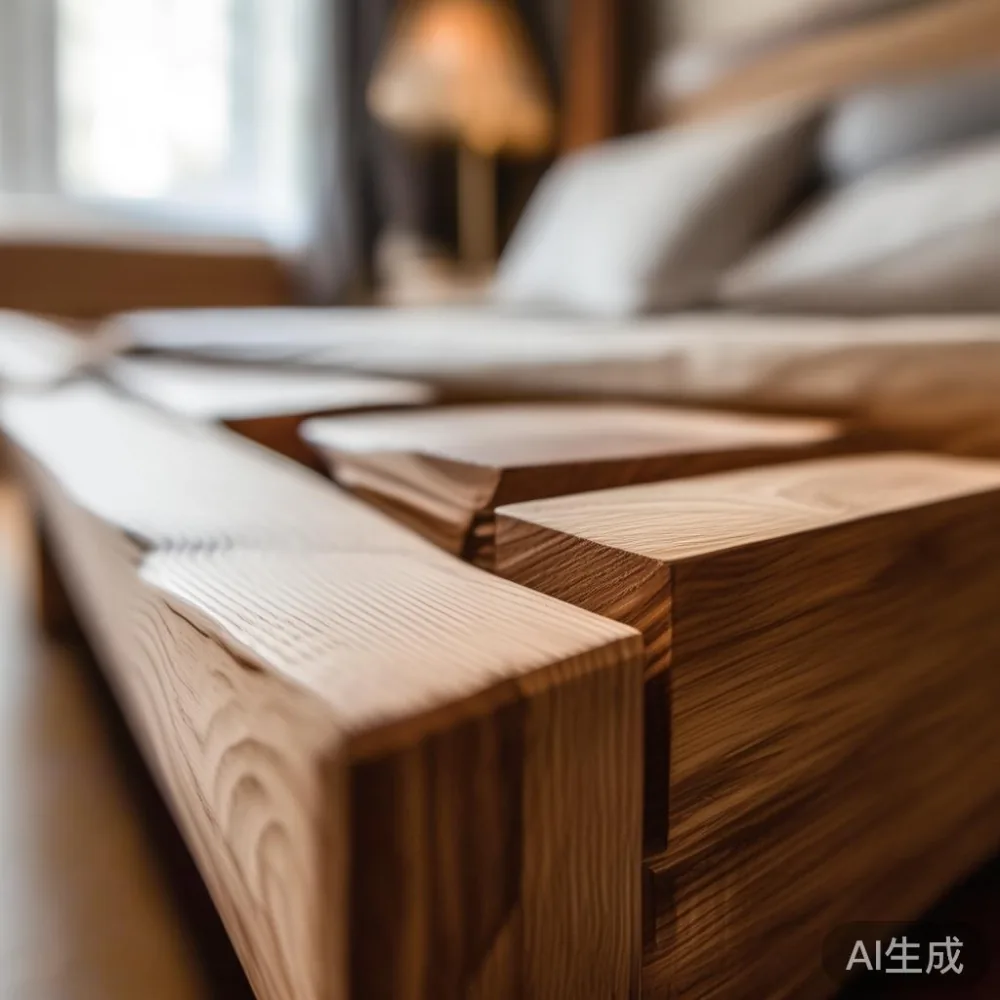
The hidden work often explains the price gap. A simple straight rail can be cut quickly, whereas a sculpted apron, carved leg, curved headboard or hand-finished edge needs more setup, inspection and time. Dowels improve alignment; mortise-and-tenon joints are traditional and durable; metal inserts or concealed fasteners can serve different purposes. None describes quality perfectly.
For a solid wood sofa, frame construction affects both price and longevity. A kiln-dried hardwood frame with reinforced seat joints may cost more than a lighter frame held together mainly with screws, but the sofa also depends on suspension, cushion density and upholstery. A frame alone is not the sofa. Similarly, a marble table combines stone selection, edge treatment, support structure and weight distribution; a 140 cm marble table can range from SGD 1,200 to SGD 4,000, while shipping damage and access planning become important.
My own recent visit made the labour point concrete. Last month I inspected a sample bed at a supplier in Foshan and compared a straight oak frame with a version using shaped rails and more complex jointing. The samples looked close from 2 metres away. At close range, the second showed 14-18 extra minutes of sanding and careful edge work, and the final quotation was about 20% higher. That difference was not mysterious; it was machining and finishing time.
3. Finish quality changes the price
Finish can alter appearance, texture, maintenance and cost. Lacquer, oil and wax are not interchangeable. A water-based finish may have a clean colour and a relatively straightforward care routine. Oil brings out grain but may require periodic reapplication. Matte coatings can hide some small marks; high-gloss surfaces often show fingerprints and scratches more readily.
Colour matching also costs money. Requesting a specific grey, warm brown or off-white can involve primer coats, sanding, stain samples and correction passes. A natural finish on a SGD 1,000 dining table may be comparatively straightforward; a matched custom finish can add SGD 150-SGD 450. For a wardrobe, a low-sheen finish that hides daily marks may be more practical than a highly reflective surface.
Ask what cleaning products are permitted, how long full cure takes and who handles refinishing. A lifetime refinishing promise has long-term value only if the service terms, logistics and exclusions are written down. If a supplier offers 10 years of structural coverage, find out whether it covers the frame, joints and documented structural components, rather than implying that cushions and surface finishes last the same period.
How much should a solid wood bed frame cost in Singapore?
A compact single bed frame may be around SGD 380-SGD 900; a queen solid wood bed frame commonly falls between SGD 900 and SGD 2,800; and a king frame with thicker timbers, wider side rails or more detailed shaping can reach SGD 2,000-SGD 5,000. Slat spacing, centre support and whether a mattress or base is included can shift the figure further.
Measure before choosing. A standard queen mattress in Singapore is often about 152 cm by 203 cm, while external frames can be 160-170 cm wide. Compare the internal mattress fit with the outside dimensions. In an HDB bedroom, a narrow 8-12 cm frame edge may make circulation easier, but a large headboard can still dominate a wall.
Searchers often use “bed frame sg” to compare local prices, yet an online image can hide access problems. Record the lift door width, lift car depth, corridor turns and staircase landing. A 180 cm frame may turn through a 90 cm landing only with careful angling. Confirm the delivery route in metres, not just whether the building has a lift.
For style questions, a French bed vs Japandi bed comparison usually comes down to visual detail rather than quality. A French bed may use curved headboard lines and decorative shaping; a Japandi bed tends to emphasize simpler lines, pale timber and visible joinery. Neither style should determine the structural standard. Check the screws, slats and centre leg before choosing the profile.
4. Dimensions, design and the amount of usable space
More timber is not always better in a compact home. A dining table that is too large can make a 70-90 cm HDB corridor feel unusable after delivery and may make a 3-person dining zone awkward. A sofa with deep 95 cm seats can feel luxurious in a new condo but reduce the walking path in a compact flat.
For a dining table, confirm the room width, chair pull-out space and delivery route. For a nightstand, compare top width and drawer opening rather than relying on a photograph. A 45 cm nightstand may fit beside a queen bed; a 60 cm unit may be needed for a lamp, books and charging cables. Japandi for small living room planning often favors visual lightness, but the real measure is whether the piece fits without blocking sockets, vents or the wardrobe door.
A solid wood sofa priced from SGD 2,500 to SGD 8,000 may include more than wood. Frame timber, seat suspension, foam density, cover material, cushion fill and the number of modules all contribute. The wording of how to choose light luxury sofa should focus on proportions, seat depth, support and maintenance. A pale oak frame with low-sheen fabric can deliver an American light luxury mood without heavy carving.
5. Hardware, movement and delivery are part of the product
Drawers, doors and lift-up mechanisms add cost because they must stay aligned after years of opening. Soft-close hinges, metal runners and reinforced pivots can add SGD 40-SGD 300 per wardrobe door set or drawer group. A wardrobe also needs a stable plinth, adjustable feet and enough wall clearance for movement.
Singapore logistics have their own cost. A pallet delivered to a private condo may be straightforward; an HDB block may require carrying only 10-30 metres, or substantially more if the lift cannot be used. A bulky queen frame may require a two-person delivery team and an extra SGD 80-SGD 250 service charge. Marble tables can need stronger packaging because the material is brittle in transit.
Confirm whether the quoted delivery is kerbside, room-of-choice or fully placed. Ask about assembly, damage inspection and the expected delivery window, such as 5-12 working days for in-stock Singapore stock or 25-45 days for a made-to-order piece. Duties and GST should be shown clearly; Singapore GST is currently 9%, and a supplier should not blur a tax-inclusive and tax-exclusive figure.
Where does the light-luxury design premium come from?
Light luxury is less about covering a room in ornament and more about proportion, material restraint and repeatability. A solid wood bed frame with a softly shaped headboard, modest side rails and a matte finish can feel more refined than a heavily carved unit. Post-modern light luxury may combine warm timber with simple metal details, while French light luxury may use curved silhouettes and textile softness.
The phrase best light luxury bed for 2026 should be treated as a search prompt, not a guarantee of quality. Look for current dimensions, stable timber, readable joinery and a finish that suits humid Singapore conditions. A design trend can disappear; the ability to repair or refinish the frame should matter more.
The same logic applies to a MIDHILL wardrobe. A 220 cm wardrobe with adjustable shelves, soft-close hinges and durable drawer runners may cost more than a visually similar imported unit. Confirm carcass thickness, back-panel construction, hanging space and whether the service includes delivery and assembly. A useful warranty should be documented, and free shipping over SGD 350 is a delivery benefit, not evidence that every item costs the same.
6. What should a quotation show?
Ask for a quotation that lists at least 8 items: timber species, solid-wood coverage, board thickness, and internal dimensions, joinery, hardware, finish, delivery terms and warranty. Add expected production time, access assumptions, care instructions and GST treatment. A seller who cannot answer a question about moisture or frame construction is giving you incomplete pricing information.
Return policy matters too. A 14-day return window can protect against size mistakes, but the item must be unused, correctly packed and within the stated condition rules. Custom sizing may have different terms. Measure doorways, lift openings and the intended room before ordering a king frame or 220 cm wardrobe.
For an owner-occupier in Tampines, Bedok or Punggol, a practical budget may be SGD 700-SGD 1,800 for a solid queen bed frame, SGD 1,500-SGD 3,500 for a dining table, SGD 1,200-SGD 4,500 for a wardrobe and SGD 250-SGD 700 for a nightstand. Prices can move with timber, finish and design complexity. The best decision is the one whose construction, dimensions and long-term care match your home.