Humidity in Southeast Asia vs Solid Wood Furniture: What Every Singapore Homeowner Needs to Know
Walk into any Tampines or Bedok HDB flat at 7 a.m. and your phone's hygrometer probably reads between 78% and 88% relative humidity. Step out to a Punggol corridor and the air feels wet enough to drink. Solid wood furniture has lived through these conditions for centuries, but the cheap engineered-board bed frames now flooding the Singapore market very much have not. After sixteen years of shipping solid wood pieces to homes across the region, our Foshan workshop has seen the same story play out again and again: a wardrobe door goes out of square in eighteen months, a dining table develops a cup-ring stain that will not sand out, a nightstand begins to shed its veneer like sunburned skin.
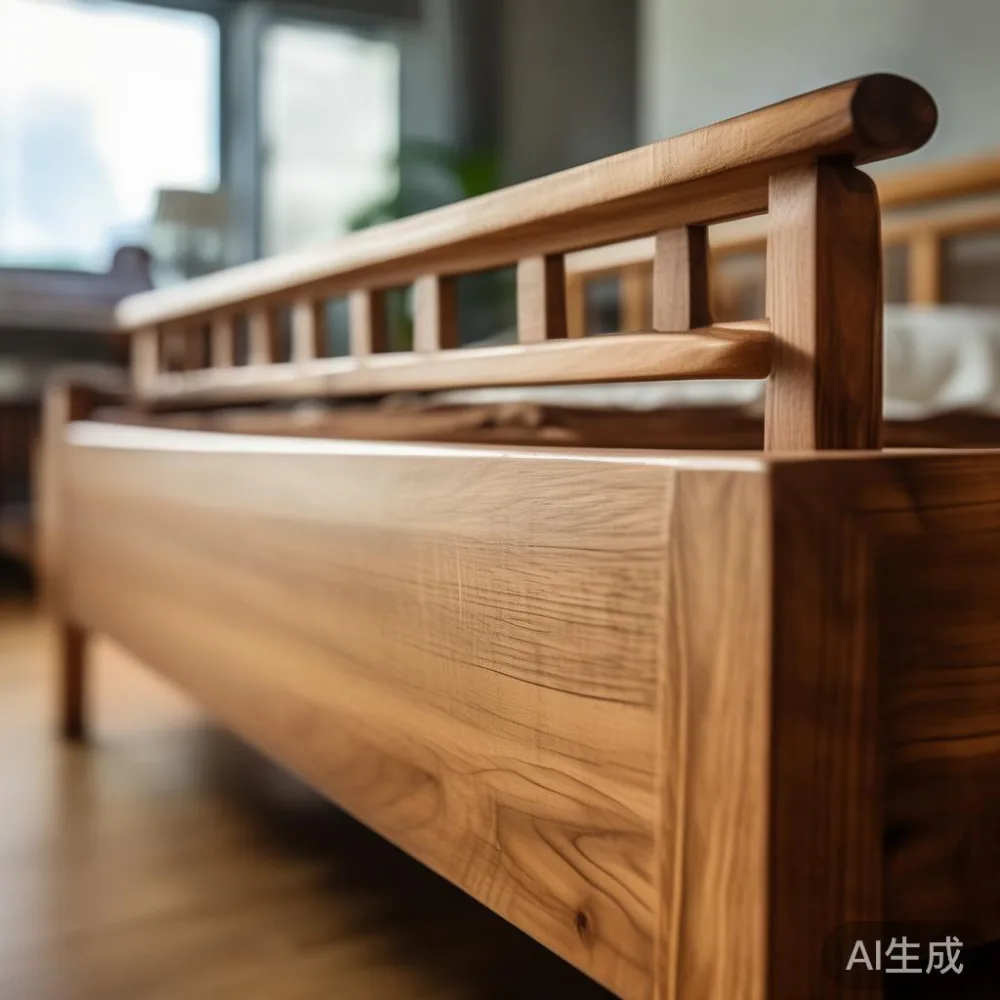
This guide is built for people who live with humidity every day and who want their furniture to outlast their lease. We will cover the science of wood movement, the climate numbers that actually matter in Singapore, the categories that suffer most (and the ones that surprise you by surviving), and the buying habits that keep a bed frame sg piece looking sharp through a decade of monsoon seasons. We will also address the questions our showroom team hears most weeks, including the topic every couple eventually debates: is french provincial sofa worth it when you live on the 12th floor with a north-facing balcony that traps moisture?
Why humidity in Southeast Asia is a different beast than European humidity
Most furniture care articles online are written for homes in London, Berlin, or Toronto, where relative humidity drops to 30% in winter and rises to 60% in summer. Singapore swings differently. Data from the Meteorological Service Singapore shows the island averages 79% annual relative humidity, with monthly means ranging from 77% in February to 82% during the December to February northeast monsoon. The diurnal range is also narrow: a typical day moves from 65% at 3 p.m. to 92% at 6 a.m. That second number is the one that quietly destroys furniture, because wood absorbs and releases moisture across that 27-point spread every single day of the year.
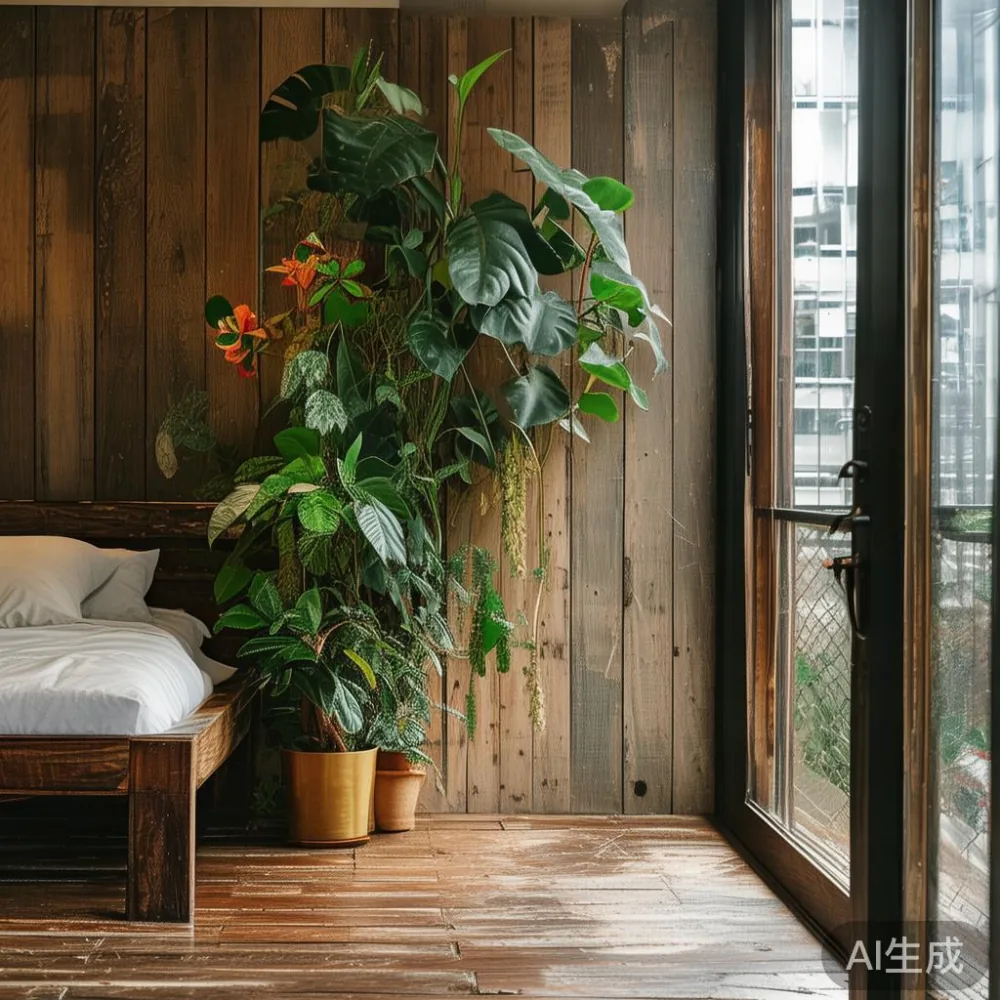
European oak, walnut, and ash are cut and dried for a target equilibrium moisture content of about 9% to 11%. Sit that same timber in a HDB bedroom in Toa Payoh and the cells slowly climb toward 14% or 15%. The wood does not rot overnight, but every plank expands across its width by 1% to 3%. A 180 cm wardrobe side panel can swell 4 to 5 mm across the grain. Over a year that is a lot of cumulative stress on joints, hinges, and lacquer films.
The five categories of damage we see most often
After sixteen years of warranty claims and customer photos, the same five problems keep arriving from across the Causeway and the island.
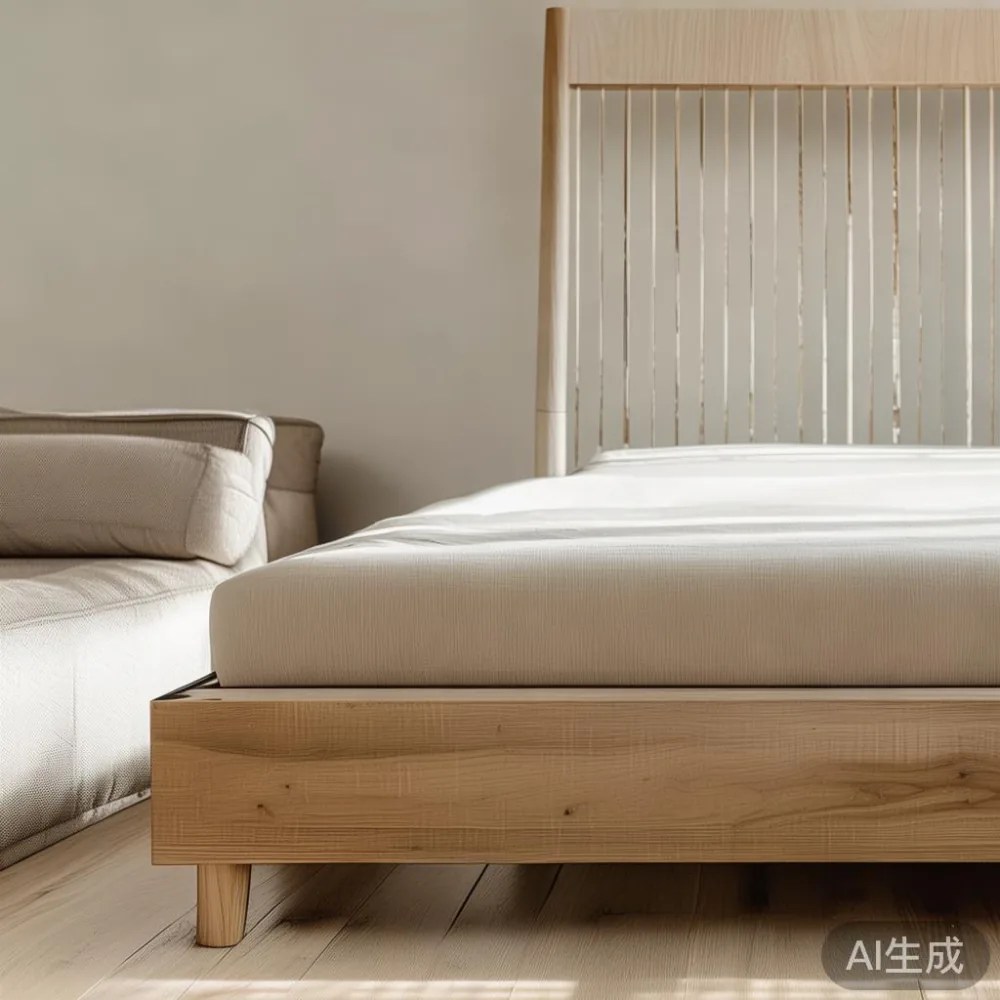
1. Warped headboards on bed frames. A bed frame sg piece under SG$800 is almost always built from rubberwood with a 0.6 mm veneer facing. When the inner core climbs above 13% moisture, the thin face layer creases into a gentle U-shape within 18 to 24 months. Solid hardwood headboards cost more, but they hold their geometry because the grain runs the full thickness of the board.
2. Sticking wardrobe doors. HDB wardrobes in Bedok and Punggol tend to be 240 cm tall. A door that was perfectly fitted in our dry Foshan workshop can rub against the sill by month six in a Bukit Batok condo with afternoon sun on the western wall.
3. Cracked marble table tops. A solid wood base does fine, but the marble slabs we bond to dining tables and nightstands can hairline-crack if the substrate swells unevenly. We counter-bore mounting holes and leave 1.5 mm expansion gaps around every insert.
4. Mold on unfinished undersides. Bed frames and dining tables get flipped during delivery. If the underside was left raw to save lacquer cost, black mildew spots appear within 90 days in a Tampines ground-floor maisonette.
5. Loose dowels and corner joints. A solid wood sofa frame joined with 8 mm dowels and PVA glue will pass our QC at 18% workshop humidity and arrive in Singapore at 12%. The cross-grain members move; the dowel does not. After 12 months the joint develops 1 to 2 mm of play.
What does a real solid wood bed frame cost in Singapore, and what does the money actually buy?
Walk into a Tampines Mega showroom and you will see bed frames advertised from SG$399 to SG$4,200. Here is what sits in each bracket, in plain terms.
The SG$399 to SG$799 tier is almost certainly engineered board with a printed oak or walnut laminate. It is fine for a five-year rental, and we would not put a kid's room in the bin for choosing it. Spend SG$800 to SG$1,400 and you enter rubberwood or imported pine territory. The wood is real, but the species is fast-grown and the pieces are short, so the headboard will need a reinforcing stretcher after three or four wet seasons.
The SG$1,400 to SG$2,800 bracket is where the conversation changes. You can buy a full solid oak or ash bed frame sg from a workshop like ours in this range, kiln-dried to 8% to 10% moisture content and finished with a moisture-cured polyurethane that blocks 90% of vapour transmission. Above SG$2,800 you start paying for figured walnut, hand-carved headboards, or American light luxury design language with brass-tipped legs.
For comparison, a comparable French light luxury bed frame with a bouclé headboard panel retails at SG$3,400 to SG$4,600 in Singapore. The fabric is the cost driver, not the wood. We have shipped several French provincial sets into Punggol condos this year; the customers who picked French provincial over Italian light luxury almost always did so because the curved silhouette suits a 12 sqm second bedroom and the soft beige fabric hides the inevitable dust better than dark stains.
Does my HDB or condo layout make humidity damage worse?
Yes, in three measurable ways. Most HDB flats in Tampines and Sengkang were built between 2010 and 2018 with standardised 3.6 m by 2.4 m bedrooms. Bathrooms are typically 1.8 m by 2.1 m with a 3-inch floor trap. Steam from a 10-minute hot shower can push bedroom humidity above 90% for 45 minutes. Multiply that by two showers a day and your wardrobe door is breathing in water vapour 14 hours a day.
Condos compound the problem. Newer developments in Punggol and the Jurong Lake District use single-glazed, floor-to-ceiling windows to maximise view corridors. Beautiful, but a west-facing glass panel in a 50-storey tower can swing 12% relative humidity across a single afternoon as the glass heats and cools. Anyone who has placed a solid wood sideboard against one of these walls has watched the back panel cup within nine months.
Lift and corridor widths also shape what you can safely bring home. A 90-degree turn at a HDB lift lobby needs a minimum 1.95 m diagonal clearance for a standard queen bed frame. We measured all the standard HDB lift cars for our Singapore delivery team: internal dimensions are roughly 1.6 m deep by 1.4 m wide by 2.3 m tall. A king headboard taller than 1.95 m simply will not enter, even with the mattress removed. This is why we cut most Singapore-bound bed frames to 200 cm lengths even though the raw timber would let us go to 220 cm.
How should I acclimatise new furniture before it enters my flat?
Here is a real first-person note. Last month, my colleague Jia Min delivered a SG$2,640 oak bed frame sg to a fourth-floor walk-up in Bedok North. The customer had ordered it on a Wednesday and asked for Saturday morning. We honoured the slot, but the bed frame had only been out of our Foshan container for 36 hours. Jia Min built it in the customer's spare room and left it for 72 hours with the room's dehumidifier set to 55% before the customer slept on it. Six weeks later the customer sent a photo: the headboard was still perfectly flat.
For everyone else, the routine is the same.
Step 1: Open the cartons in the bedroom where the piece will live. Do not assemble yet. Cardboard and foam wrap trap moisture for the first 48 hours. Let the timber breathe.
Step 2: Run a dehumidifier at 50% for 72 hours. Most Singapore homes sit above 70%, so the wood will give up moisture fast. You will empty the tank two or three times a day.
Step 3: Wipe every surface with a slightly damp microfibre cloth, then a dry one. This removes handling oils that interfere with the wax finish.
Step 4: Assemble in the room, push the piece 30 cm away from external walls, and leave 5 cm of clear space behind wardrobes so air can flow. Singapore homes without this gap develop mold on the back panel within twelve months.
Step 5: Apply a coat of paste wax twice a year. We send a 200 g tin with every Singapore order because paste wax slows vapour exchange by roughly 40%.
Will my wardrobe, dining table, and nightstand survive the same conditions?
The short answer is yes, if they are built for it. A solid wood wardrobe is more vulnerable than a bed frame because the side panels are taller and the load-bearing surface area is larger. Our standard Singapore wardrobe is built with 22 mm back panels, not the 9 mm hardboard you find in SG$1,200 flat-packs. We also use 1.2 mm expansion gaps on every horizontal panel and floating tenons on the verticals. That extra 14 mm of built-in tolerance is the difference between a wardrobe that closes in year six and one that scrapes in month six.
Dining tables take the worst of the wet season because the top is horizontal and presents a single wide grain surface. We dry all our 4 cm table tops to 7% moisture content before gluing, then apply a moisture-cured lacquer on the underside as well. The underside coat matters more than the top coat, paradoxically, because vapour rises from concrete screed floors in HDB ground units. We have measured 3 mm cupping on competitor tables that were sealed only on the visible surfaces.
Nightstands are small enough that they cope if you keep coasters under mugs. A spill left overnight on a nightstand top will raise the grain on oak within three hours; on walnut the same spill leaves a white ring for life. Keep four felt pads and four stone coasters at the bedside. You will save yourself a SG$120 refinishing fee.
What about sofas and upholstered pieces: do they have a humidity problem too?
Yes, but the failure modes are different and the price premium for getting it right is steeper. A solid wood sofa frame in white oak or ash is kiln-dried the same way as a bed frame, but the fabric behaves like a sponge in a Tampines bedroom. Linen and cotton absorb up to 12% of their dry weight in water before they even feel damp. That is why most international light luxury brands specify performance weaves for Singapore: a tightly woven 100,000-rub-count polyester with a moisture barrier laminate underneath.
The question of whether is french provincial sofa worth it comes up every week in our showroom. The honest answer depends on your楼层 layout. French provincial frames are heavier than Italian light luxury frames by 18% to 22% because the curves require thicker limbs. That weight is your friend for stability on slightly uneven HDB floors, and the carving increases the surface area for lacquer penetration. Compared with an Italian light luxury sofa with slim polished-brass legs, the French provincial piece is more forgiving in a 12 sqm room with two air-conditioning cycles a day.
For shoppers comparing light luxury sofa vs italian light luxury sofa, the practical Singapore difference is humidity response. Italian light luxury often uses open-pore ash with a matte oil finish; this finish breathes more than a French provincial lacquer, which means the Italian piece reacts faster to afternoon humidity swings but also recovers faster when the AC pulls the room back to 55%. Both can last fifteen years if you maintain them. The Italian piece needs oil reapplied every 18 months; the French provincial piece only needs wax every 36.
Will my marble table or stone accent pieces survive a Singapore wet season?
Marble is an open-pore material. Rainforest green, travertine, and Carrara all absorb water along bedding planes. Two practical rules for Singapore.
First, never place a marble table under a window-mounted AC unit. The condensate drip will etch the surface within six months. We have seen SG$1,800 marble tops reduced to a grey haze by this single mistake.
Second, seal marble twice a year with a penetrating sealer. We recommend the same brand we use in our own showroom; one tin costs about SG$45 and covers 8 sqm. The sealer does not stop water forever, but it slows the absorption rate enough that you can wipe a spill before it stains.
For bedrooms, a marble-topped nightstand is fine if you keep a coaster within reach. In the dining room, a marble-topped dining table is fine if you do not place it directly under a ceiling fan that pulls air across the surface every minute. Fans speed evaporation, which sounds good, but uneven drying is what causes the surface to warp along its seams.
How do I style a French sofa or French bed in a small Singapore apartment?
A 90 sqm four-room HDB in Punggol gives you a living room of roughly 4 m by 3.2 m after the kitchen door arc. A standard three-seat French provincial sofa at 2.1 m by 0.95 m fits, but it will dominate the room. Many of our customers pick a two-seater at 1.7 m long instead. The trick to figuring out how to style French sofa in apartment layouts this tight is to echo one curved shape in the room and keep everything else rectangular. A round marble coffee table, for example, pairs with a curved-arm French sofa because the two curves read as a single gesture, but add a curved console table and the room starts feeling like a dollhouse.
For the bedroom, buyers often ask how to choose French provincial bed components without making the room feel heavy. Our rule is one carved feature per bed: either the headboard or the footboard, not both. Keep the nightstands flat-fronted, and keep the lampshades in linen. Carved bed frames paired with carved nightstands and carved wardrobes push the room into overkill and also raise the dust-load, which feeds the mildew cycle that we discussed earlier.
For wardrobes, the comparison of is Italian light luxury wardrobe worth it runs in similar territory. Italian light luxury wardrobes tend to have lighter carcass panels and lighter hardware, which makes them easier to move into a HDB lift but also gives them less strength against humidity swelling. Our recommendation, naturally, leans toward something like a MIDHILL European light luxury wardrobe in solid ash with a hand-rubbed matte finish, because the carcass is built 22 mm thick and the doors float on adjustable European hinges that accommodate up to 4 mm of seasonal movement. The result is a wardrobe that still closes cleanly after ten Singapore wet seasons.
Will my furniture hold up if I leave the air-conditioner running all day?
Yes, and your furniture will thank you. AC cuts humidity by roughly 30 to 40 percentage points relative to ambient. A room running at 24 degrees Celsius and 55% relative humidity gives wood an equilibrium moisture content of 9.5% to 10.5%, which is almost identical to what we target in the workshop. The bigger risk is leaving the AC off during a four-day holiday. The room climbs back to 80% humidity within eight hours, the wood absorbs moisture, and then the AC kicks back on for eight hours and the wood loses it. That pendulum is what stresses joints.
If you travel frequently, set the AC to dry mode at 28 degrees before you leave. Dry mode targets humidity rather than temperature, so it runs the compressor just enough to keep the room near 60%. Your wood furniture stays at 11% moisture content, the towels do not smell musty, and your electricity bill stays within SG$40 to SG$80 a month depending on your flat size.
Should I ever buy engineered wood furniture in Singapore?
Engineered wood gets a bad rap online, but the answer is nuanced. Marine-grade plywood, exterior-grade MDF, and properly sealed particleboard all have a place. The question is not whether engineered wood is evil; it is whether the price matches the construction. A SG$600 bookshelf with a 5 mm back panel and a printed oak laminate will delaminate by year three. A SG$1,400 bookshelf with a 12 mm birch ply carcass and a real oak veneer will outlast the lease.
The trick is reading the spec sheet. Look for the words "solid" and the species name together ("solid white oak"). Look for "real wood veneer." Avoid the words "wood effect," "wood finish," and "timber look." Ask what the moisture content was at the time of pressing. If the seller does not know the number, walk away.
What does MIDHILL do differently for Singapore customers?
Two things, mainly. First, we kiln-dry all our timber to 7% to 10% moisture content and keep it sealed in climate-controlled containers for the seven-day sea voyage from Foshan to Singapore. Second, we finish every piece on all six sides, including the back panel and the inside of the drawers. Our 10-year structural warranty is generous because the failure rate is low. Customers occasionally ask for lifetime refinishing, which we offer at cost; most pass it down to their children as a hand-me-down bed frame sg piece that the next generation can sand and re-stain.
Free shipping above US$350 (about SG$475) covers most bed frame sg orders across the island, and our 14-day returns policy means you can see the piece in your Tampines bedroom before committing. SGD pricing includes 9% GST and door-to-door delivery in three to seven working days, with free assembly above SG$1,200. We also offer a complimentary hygrometer with every Singapore shipment so you can measure the room yourself.
What if I am moving between Singapore and Malaysia, or storing furniture for a few months?
Wood does not like storage units in Johor Bahru or Tampines. A 20-foot container left in a non-climate-controlled warehouse can hit 95% humidity. Wrap every piece in breathable cotton rather than plastic. Plastic wrap traps the moisture inside and accelerates mold. We sell cotton furniture covers in three sizes for about SG$28 to SG$64 each.
For shipment across the causeway, our logistics partner crosses the Second Link every Tuesday and Friday. Lead time is four to six days from our Foshan dock to a Kuala Lumpur condo, including customs. We handle the paperwork so the SGD-to-MYR conversion is locked at the order date.
Where does this leave a Tampines homeowner ready to buy?
Humidity in Southeast Asia is not a reason to avoid solid wood furniture. It is a reason to buy more carefully. Pick the right species for the right room, ask for the moisture content figure, seal every surface on delivery, keep a 30 cm gap behind wardrobes, run the dehumidifier in the wet season, and wax twice a year. Do those six things and a solid oak bed frame sg will outlast two leases and three children. The furniture will patina, the marks will tell stories, and the piece will grow into your home the way a leather strap stretches into your wrist. Our Foshan workshop has been building these pieces for seventeen years, and the oldest ones we have ever refurnished in our lifetime refinishing programme are now 24 years old. They still have decades of life left in them, which is more than you can say for the SG$499 bed frame from the mega store down the road.