How to Match Furniture to a Warm Minimal Interior
A warm minimal interior does not mean an empty room. In a Singapore HDB flat or condo, it means fewer visual interruptions, honest materials, and a measured balance between comfort and order. The right solid wood bed frame can make a compact bedroom feel calmer without making it feel severe. A restrained dining table, practical wardrobe, and slim nightstand then extend that same rhythm through the home.
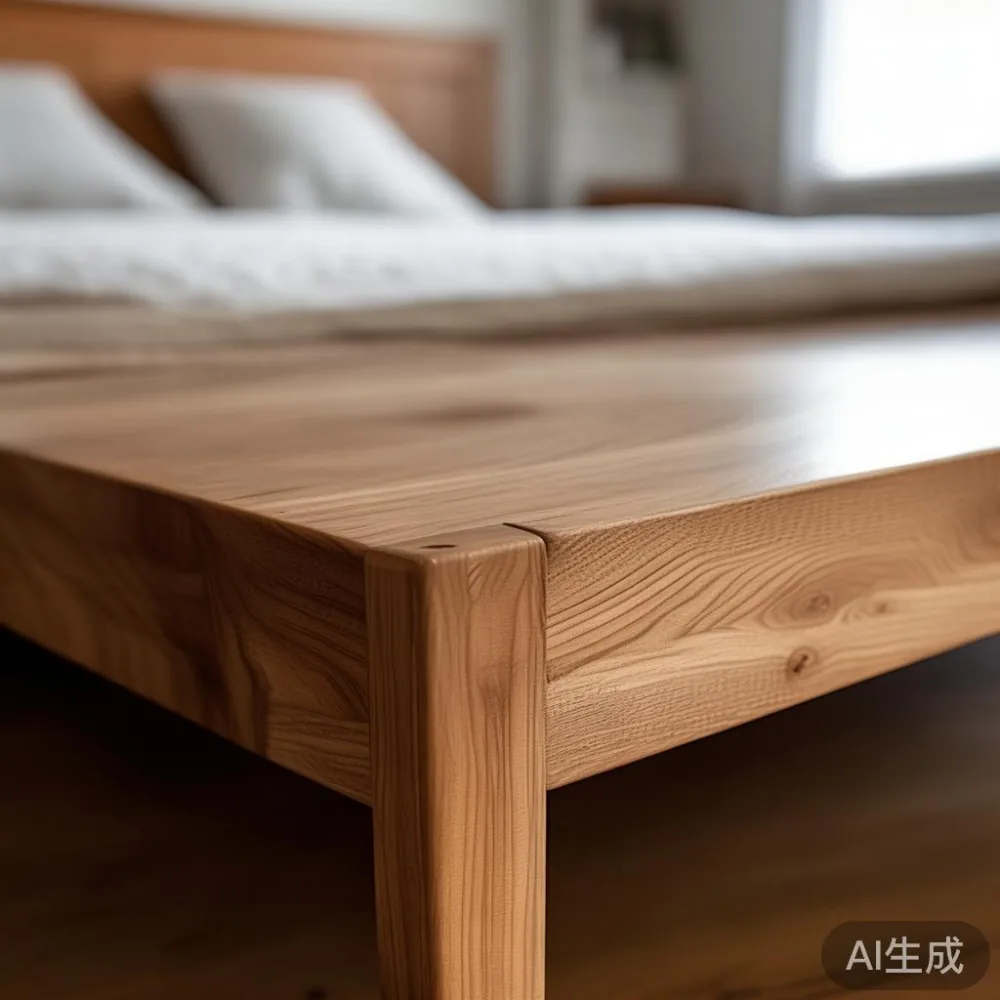
This guide focuses on the bedroom and its surrounding furniture, especially the bed frame sg choices suited to local apartments. Width, lift access, corridor turns, and humid conditions matter as much as colour. I explain how to combine oak, walnut, ash, and other solid wood finishes with warm whites, oatmeal textiles, and a few sculptural accents. Prices are shown in SGD and include GST where appropriate.
What makes a warm minimal interior work in Singapore?
Warm minimalism relies on proportion, texture, and repetition. Begin with one clear visual idea: pale walls, medium-toned timber, uncluttered circulation routes, and no more than 3 accent colours in one room. For a typical Tampines or Bedok HDB bedroom, 2 colours plus 1 material contrast is usually enough. That might be warm white walls, honey oak furniture, and matte black hardware.
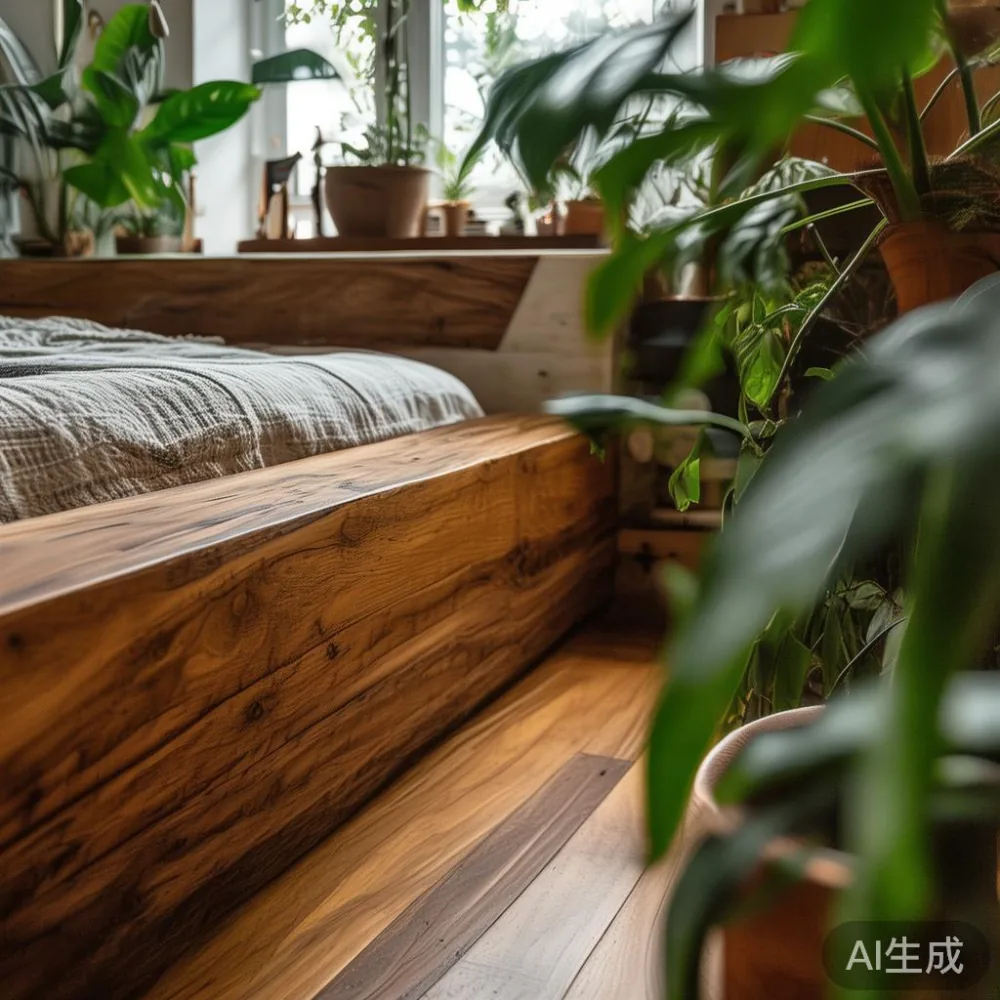
Scale is equally important. A low 25 cm platform bed can visually widen a 3.0 m by 3.3 m room, but it should not block the space needed to open drawers. Against a 2.7 m wall, a king bed may leave less than 45 cm on one side for a wardrobe; a queen or super king is often the more workable choice in a compact flat. In a Punggol condo with a generous 3.6 m wide bedroom, a 180 cm king bed leaves about 90 cm per side, allowing a slim nightstand and dressing table to sit comfortably.
Warmth comes from tactility rather than heavy decoration. Use cotton or linen bedding with visible weave, a wool-look throw, a woven basket, and one ceramic lamp. Keep the floor mostly clear. A 200 cm wide rug beneath a 180 cm bed extends the sleeping zone by 10 cm on each side and softens the transition between wood flooring and furniture.
How should I choose a bed frame for a warm minimalist bedroom?
Choose the bed frame before buying the bedding or artwork. Measure the room from the skirting to the opposite wall, then check the mattress size and headboard projection. A queen mattress measuring 152 cm by 203 cm needs a frame with at least 160 cm by 210 cm of external space. The 5 cm margin on each side prevents the frame from appearing cramped and leaves room for a 2 cm wall gap.
For local conditions, solid hardwood is preferable to a frame made mainly from thin panels or raw pine. Ask about the timber species, moisture treatment, centre-support system, and warranty. MIDHILL offers a 10-year structural warranty on its solid wood furniture and lifetime refinishing, which is useful for households planning to keep a frame for 10 years or more.
Slatted bases improve airflow in Singapore’s humidity and work well with foam or latex mattresses. The slats should sit inside a supporting rail rather than span the full width unsupported. Look for spacing of roughly 7 cm or less, a central support leg, and screw fixings rated for repeated assembly. If the frame includes drawers, confirm that each drawer has smooth runners and enough clearance for bedding.
The visual weight should stay low. A 28 cm high frame with a recessed plinth suits warm minimalism better than a thick, ornate headboard. For taller ceilings, a simple timber headboard between 90 cm and 110 cm high creates a vertical anchor without filling the wall. In standard HDB bedrooms with a 2.6 m ceiling, keep the headboard below 100 cm and allow about 30 cm of wall space above it.
Those researching the best Japandi bed for 2026 will usually find that the strongest examples use straight lines, low profiles, and visible but restrained joinery. Japandi can become too pale or too sparse in a humid apartment, so pair light ash or oak with oatmeal fabric, a warm grey rug, and blackened metal details. The contrast prevents the room from feeling clinical.
Buyers comparing the best American bed for 2026 should focus on the construction rather than a decorative label. A solid wood bed frame with a slatted base, reinforced centre rail, and stable platform is well suited to Singapore’s compact layouts. Avoid oversized headboards that project more than 8 cm into the room, and check that the assembled frame can pass through a lift and corridor before ordering.
Will a solid wood bed frame fit my HDB flat or condo?
Measure the complete route from the delivery point to the bedroom, not just the bedroom door. A standard HDB lift interior may offer about 1.1 m by 1.4 m of usable space, though this varies by block. Corridors can be 1.2 m wide, with right-angle turns at the void landing. A boxed king bed may be difficult to manoeuvre even if its dimensions fit the lift.
Record 3 measurements: the lift door width, the narrowest corridor width, and the bedroom door width. Add 5 cm of working clearance for each turn. Flat-pack or modular construction is valuable in this situation because the frame can enter in separate sections. For example, two 90 cm long side rails and a 160 cm headboard can pass through a 90 cm door individually before being assembled in the room.
Ask whether delivery is curbside or room-of-choice, and whether the delivery crew can carry the package to the bedroom. A heavy frame may require 2 people if each packed section exceeds 25 kg. MIDHILL provides free shipping for orders over US$350, but the figure appears in US dollars on its international store; Singapore orders should be checked for the final SGD amount, GST treatment, and delivery days shown at checkout.
Allow approximately 7 to 14 delivery days for a locally stocked Singapore order and 20 to 35 days for a made-to-order or shipped item, subject to production schedules. Installation adds another 30 to 60 minutes for a bed frame. Customers can request a delivery window that avoids peak HDB moving periods such as the weekend or month-end relocation rush.
One real test helped me understand the issue. Last month I visited a colleague in Punggol and watched a queen-size frame arrive in 4 boxes. The lift and corridor were sufficient, but the 1.4 m long side rail needed to be turned diagonally through the bedroom doorway. The solution was simple: the headboard and footboard were separated, the side rail entered at a shallow angle, and the frame was assembled without removing the door. Measuring 2 door widths and 1 lift width saved about 20 minutes and prevented damaged skirting.
How do I match timber, paint, and lighting without making the room feel heavy?
Match timber tones across the principal furniture pieces, but vary the finish so the room retains depth. A honey oak bed frame can sit with a slightly darker walnut wardrobe while a light ash nightstand keeps the bedside area bright. If everything has the same orange cast, the room may look visually crowded even when the layout is minimal.
Warm white walls work with almost every solid wood tone. Use a paint colour in the warm white or soft greige family rather than a cool blue-white, and keep skirting boards the same colour as the walls. A continuous field of colour makes the skirting disappear and enlarges the room. If the bedroom is naturally dark, lighter timber and matte surfaces will reflect more daylight than high-gloss lacquer.
Lighting should operate at 3 levels: ceiling illumination, task lighting, and accent lighting. A 2700 K bulb creates a warm residential tone, while 3000 K suits a brighter apartment. Avoid mixing more than 2 colour temperatures in 1 room. A bedside lamp with a linen shade around 30 to 40 cm wide gives sufficient light for reading without competing with the bed frame.
For 2026 Mid-century modern furniture, look for slender legs, tapered forms, and functional shapes rather than dense collections. A 160 cm dining table with a 3 cm thick top can support 4 to 6 chairs and introduce gentle curves into an open-plan home. Keep one feature piece in each zone: the bed in the bedroom, the dining table near the kitchen, and a compact wardrobe near the entrance. This repeated rhythm makes the apartment feel composed.
Material pairing helps. Pair timber with bouclé, linen, ceramic, woven cane, matte aluminium, or lightly veined marble. A marble table or marble-topped bedside surface can add cool contrast, but it should not appear in every corner. One 60 cm marble table in the dining zone may be enough to stop the wood-heavy palette from becoming visually flat. Test the marble in the actual light because grey veining can look warmer under 2700 K bulbs.
How do I style a French provincial bed in an apartment?
French provincial styling can feel too ornate for a compact apartment unless the shapes are simplified. The phrase how to style French provincial bed in apartment is better answered through scale control than by adding many carved details. Choose a queen-size bed with a gently curved headboard, tapered feet, and a light linen-look upholstered insert. Keep the frame below 110 cm in height and avoid deep tufting.
Use 2 patterned elements, not 5. One could be a striped cotton duvet cover; the other might be a small floral cushion placed against plain oatmeal pillows. Repeat the main fabric colour in the wardrobe curtains or a rug. This creates continuity without making the bed look like a standalone period set.
The surrounding furniture should stay quieter. A simple solid wood sofa in a neighbouring living room may use rounded arms and neutral upholstery, while a straight-front wardrobe gives the bedroom a contemporary counterpoint. A European light luxury nightstand with 1 drawer and open storage can support a lamp and book without crowding a 60 cm bedside gap.
French light luxury is a restrained interpretation of the style: pale timber, curved edges, tactile upholstery, and small amounts of aged brass or bronze hardware. It differs from heavily carved traditional furniture. In a warm minimal interior, the French influence should come from shape and texture rather than pattern-heavy decoration.
A European light luxury dressing table is another useful piece in a larger bedroom. Select a 100 cm wide table with 2 slim legs, a single drawer, and a mirror no wider than the tabletop. Place it opposite the bed only if the walking route remains at least 75 cm wide. In a smaller HDB room, a wall-mounted dressing table may preserve more floor area.
What should sit beside the bed, and how much space is needed?
Begin with 1 nightstand if the room is under 12 square metres, and 2 if the bed is a king against a wide wall. A nightstand should usually be within 10 cm of the mattress edge so a seated person can reach a lamp or glass of water. Its top can sit 5 cm above the mattress, but matching the bed frame’s finish creates a calmer line.
Choose a nightstand with dimensions around 40 cm wide, 35 cm deep, and 45 to 55 cm high. Deep drawer fronts can handle small objects, while an open shelf prevents the piece from looking heavy. Avoid placing a narrow nightstand directly under a window where the sill takes up space. A wall-mounted version can work if the wall fixing is suitable and the drawer load is limited.
For charging, place the socket or USB point behind the nightstand rather than routing visible cables across the floor. Cable channels should be no more than 1.5 m long and secured with clips. This small detail matters in a warm minimal room because loose wiring breaks the visual calm.
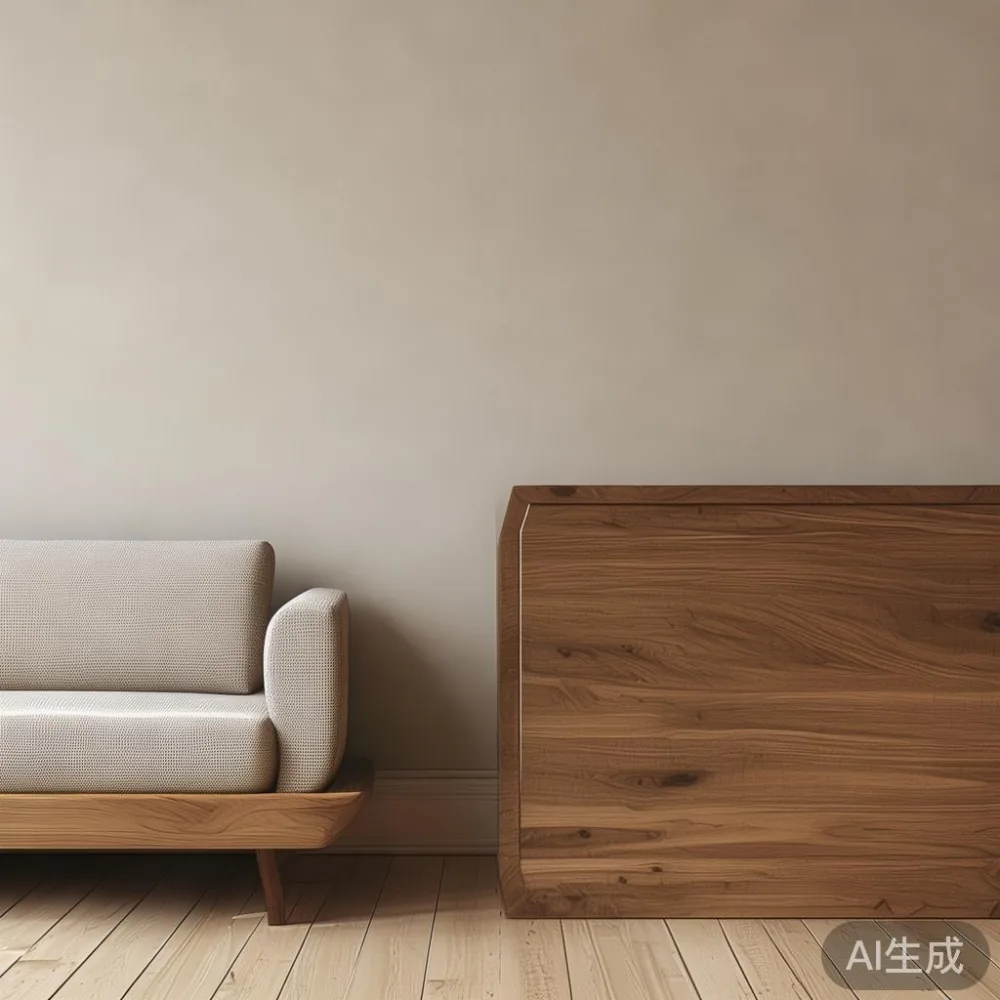
A solid wood sofa in the living room should follow the same timber logic as the bedroom, although the colour can be lighter. If the bed frame is walnut, choose an oatmeal sofa; if the frame is pale oak, use a stone-grey sofa with warm beige cushions. A dining table nearby can repeat the bed’s timber family, but avoid making every major item identical.
Wardrobes require the most careful planning. A sliding-door model saves approximately 30 to 60 cm of clearance compared with hinged doors, while a hinged wardrobe offers better access to hanging sections. Leave at least 60 cm in front of sliding panels and 75 to 90 cm for hinged doors where drawers are opened. Internal shelving should include at least 1 shelf every 35 cm for folded clothes and a hanging rail around 150 cm high for adult garments.
How can I keep a warm minimal bedroom practical?
Practicality should be decided before the room is styled. List the items that must be stored: 2 suitcases, 12 kg of laundry, 20 pairs of shoes, 8 hanging garments per week, books, and bedside devices. Allocate storage before reducing furniture. A 180 cm wide wardrobe may suit 2 people, while a 150 cm model can work for 1 person or a couple with seasonal storage elsewhere.
Use closed storage for visually noisy objects and open shelving for a small number of books or ceramics. Closed doors reduce the appearance of clutter in a compact room. Keep the visible collection to roughly 70% full; an overfilled open shelf creates more visual weight than a closed wardrobe with generous internal capacity.
Air circulation is important in Singapore. Keep at least 5 cm between the headboard and wall where possible, use the bed frame’s slatted base, and avoid pushing a wardrobe tightly against a bedroom wall if ventilation is poor. Choose moisture-resistant finishes and wipe solid wood with a slightly damp cloth rather than soaking it.
Cleaning and care should follow a simple schedule. Dust the nightstand weekly, vacuum beneath the bed every 2 weeks, and check the frame’s fixings every 6 months. Avoid direct afternoon sunlight near pale timber, particularly for wood with a honey finish. A breathable mattress protector and a room humidity reading near 50% to 60% help preserve comfort and material quality.
How do I create one coherent look across a small apartment?
Repeat 3 anchors across the home: one timber tone, one upholstery colour, and one metal finish. For example, use light oak for the bed frame sg, a warm beige solid wood sofa, and matte black handles across the wardrobe and dining table. The result feels coordinated because the eye can follow those repeated details.
Then vary scale. Keep the bedroom visually light, the dining zone slightly more substantial, and the living area softer. A 200 cm dining table suits an open kitchen-dining area, but a 140 cm round dining table may be better for a compact kitchen beside an HDB corridor. A marble table can provide a brighter centre point without requiring ornate accessories.
Set a budget before shopping and separate the structural purchases from decorative additions. A mid-range solid wood bed frame may account for SGD 900 to SGD 1,800 before or after GST, depending on timber, size, and finish. A nightstand may add around SGD 180 to SGD 450, while a wardrobe can range from SGD 1,200 to SGD 3,200. These are planning ranges rather than fixed quotations; confirm current prices, GST, delivery charges, and delivery days before payment.
Leave about 15% of the furnishing budget for textiles, lighting, and small objects. That may mean SGD 250 to SGD 500 for a bedroom. Buy the bed frame and mattress first, live with the layout for 2 weeks, and then add visual pieces. This avoids a common apartment mistake: buying coordinated but visually heavy furniture that leaves no room for everyday movement.
MIDHILL’s 14-day returns policy gives buyers room to check colour, proportions, and comfort in their own space. Photograph the assembled furniture, retain the packaging, and follow the return instructions. Confirm whether a used or installed item can be returned and whether collection fees apply, especially for a large wardrobe.
A warm minimal home is ultimately about rhythm rather than emptiness. Let the bed frame provide the strongest timber line, give the nightstand a quieter role, and repeat colours across the apartment. Measure every access point, maintain 60 to 90 cm of practical clearance where possible, and allow warm light to reveal texture. The room can then feel composed, comfortable, and distinctly suited to Singapore living.